AMD to Launch Its Zen 5 AI Processors on July 31
- Paul Thurrott
- Jul 15, 2024
-
2
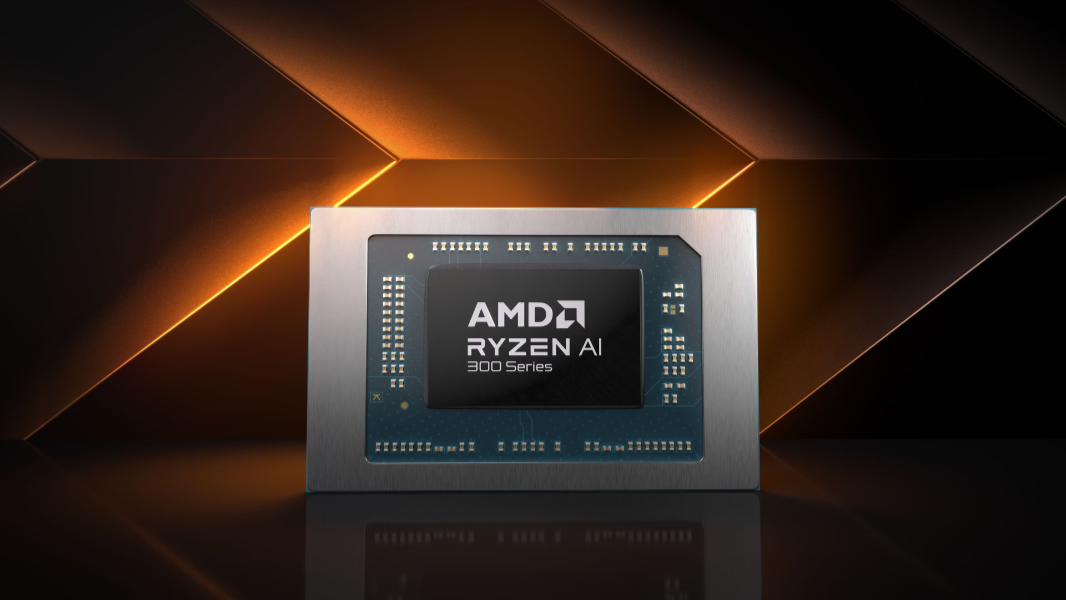
HP just announced its first AI PC based on AMD’s next-generation silicon, and now AMD is opening up about the broader release schedule for its so-called Zen 5 processors, the Ryzen AI 300 series for laptops and the Ryzen 9000 series for desktop PCs.
As you may recall, AMD announced these chips at Computex in June, neatly sandwiched between the Copilot+ PC reveal in May and the release of the first Copilot+ PCs on June 18. Like Qualcomm’s Arm-based Snapdragon X-based chips, the x64-based Zen 5 processors include integrated microprocessor, graphics, and NPU components, and the PCs that will be built using these chips can meet the Copilot+ PC specification. It looks like PC makers can’t call the Copilot+ PCs, at least not yet, thanks to a Microsoft exclusivity window with Qualcomm. But we expect that to change with the broader release of Windows 11 version 24H2 in October.
HP’s announcement is a bit vague on what we can expect from the AMD Ryzen AI 300 series chips it will use in the OmniBook Ultra: We know that the chips’ NPU has gotten a small upgrade from the 50 TOPS that AMD noted back to June to 55 TOPS. And with an early August release date, I figured we’d learn more about these chips, including the release time frame, as other PC makers will be using them as well.
There’s still no information about prices. But AMD has released some other interesting information, including some model branding and benchmark comparisons that pit its Zen 5 processors against those from Apple, Intel, and Qualcomm.
AMD is releasing two Ryzen AI 300 series processors on July 31, the Ryzen AI 9 HX 370 (12 cores split between 4 Zen 5 cores and 8 density-optimized Zen 5c cores, plus 24 threads) and the Ryzen AI 9 365 (10 cores, 4 Zen 5 cores, 6 Zen 5c cores, 20 threads). Thanks to advances across the microprocessor, graphics, and NPU, these chips will deliver what AMD calls “gaming leadership” in mobile, with dramatically better performance in games—1.27x to 1.63x over tested titles—than an Intel Core Ultra 9 185H or Snapdragon X Elite X1E-84-100.
The advantages in more pedestrian productivity-focused benchmarks are less impressive—7 to 21 percent, depending on the test—but these were all compared only to Intel, which may be telling. And the Snapdragon X Elite does outperform these AMD chips in single-threaded benchmarks, interestingly. AMD claims big advantages over Apple as well, of course, though the focus remains on the M3-based MacBook Air 15-inch.
In some ways, I’m more interested in efficiency, and here AMD is of course claiming big gains, though they are most notable generation-over-generation with AMD’s own products. AMD claims its 15-watt Ryzen AI 300 chips offer up to 32 percent better performance-per-watt than its Zen 4 range. But these chips handle power differently than previous generation AMD mobile chips: Instead of offering chip models with specific power consumption attributes, the Ryzen AI 300 series processors can each be configured by PC makers to run from 15 to 54 watts. I’m curious whether this will confuse matters, but it’s obvious that thinner, lighter PCs will be configured to run at lower power levels and will deliver less performance.
The NPUs in these chips are much improved. Where previous generation AMD hybrid designs delivered 10 and then 16 TOPS of hardware-accelerated AI performance, the NPU in the new chips hits 50 TOPS (according to AMD) or 55 TOPS (according to HP). They also deliver twice the power efficiency and should fulfill the goal of a good NPU, offloading AI tasks for long durations without impacting battery life. But it’s unclear how they compared to Intel or Qualcomm NPUs: The Qualcomm chips are close, but not broadly available, and Intel’s upcoming Lunar Lake chips include some of the same AI optimizations as AMD, and they’re not available for testing yet. All these NPUs blow away the NPUs in Apple’s M3-based and Intel Meteor Lake systems, of course.
I’m just focusing on the mobile chips for now, but AMD is also shipping desktop chips at the same time, and those will be available individually and with new motherboards for BYOPC types. So the next few months will be interesting, between these releases, the escalating delivery of Snapdragon X chips and PCs, Intel’s Lunar Lake, and whatever else is announced in September at IFA.