Apple iPhone 16 Pro Max Preview
- Paul Thurrott
- Sep 13, 2024
-
24
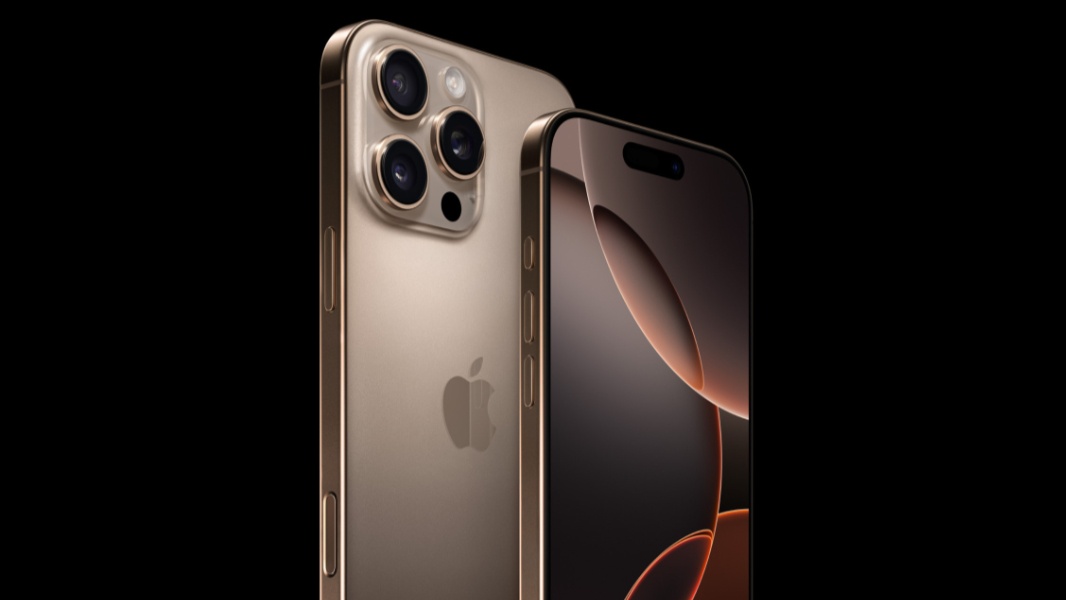
I seriously considered going with a non-Pro iPhone for the first time, but in the end, my choice was obvious and maybe even predictable: I preordered a 256 GB iPhone 16 Pro Max in Desert Titanium after “preparing” for the preorder in the Apple Store app and ordering (and receiving) an Apple Silicone case.
This wasn’t preordained. Watching the Apple event this past Tuesday, I was struck by how little differentiated the iPhone 16s and iPhone 16 Pros. And many of the new features that do differentiate the Pro models are aimed at professional video content creators, and thus don’t really apply to me. Was I missing something?
To find out, I did what any customer would do: I poured over Apple’s product pages, paying particular attention to the tech specs and compare iPhone models pages. And I read some of the coverage and commentary about the new iPhones, especially from trusted sources like The Wirecutter. This confirmed my suspicions. And, as always, there was a lot to learn that Apple never mentioned during the event.
I was able to narrow down my choices immediately to the two larger models, the iPhone 16 Plus and iPhone 16 Pro Max: I appreciate and maybe even need the larger displays. If anything, I wish my phone were a little bigger. That said, the tiny difference between the 6.9-inch Pro Max display (the largest iPhone yet) and the 6.7-inch Plus display is negligible. What does matter is that the Pro Max has an always-on display, as I like that “at a glance” capability and use it all the time. Also, the Pro Max supports ProMotion, which is Apple-speak for dynamic high refresh rate (10 Hz to 120 Hz); the non-Pro has a traditional 60 Hz display. That I don’t care about, but it’s a big deal for many people.
Interestingly, most key display features–the OLED panel at 460 pixels per inch (PPI), the typical max brightness, HDR max brightness, and outdoor max brightness ratings, and support for things like Ceramic Shield protection, True Tone, and P3 wide color–are common between the two lines. The Pro Max has a slightly higher 2868 x 1320 resolution (vs 2796 x 1290), but that’s only because it’s a slight bigger display. And it has smaller bezels, which is great but no reason to choose a particular phone.
Photography is obviously a big draw for me, and here, the Pro Max wins handily on paper, thanks to its superior camera system with a telephoto lens (5x optical zoom) and a new 48 MP ultra-wide lens (up from 12 MP in the Plus). But the delta is less than is immediately obvious, especially when I factor in my real-world usage and a few mitigating factors. I don’t use long-distance zoom all that much. The Plus now supports 2x “optical zoom” (really, a smaller image cropped from a 24 or 48 MP original) for the first time. And most of the camera features are identical between the two iPhones, including all the new Photographic Styles.
But the Pro Max does win this round: The new 48 MP ultra-wide lens is important, as it now matches the quality of the main lens and gives me the same 24/48 MP options on both lenses. (This is an area where Pixel still comes out ahead: All three of the Pixel 9 Pro series rear camera lenses are in the high-resolution 48 MP range.) And there are related features like 4K video at 120 FPS with Dolby Vision and a “studio quality” four-microphone array that are only on the Pro Max that I may want to take advantage of. (See today’s Ask Paul for my take on the foolhardy nature of “what-if-ism.”) Another new feature of interesting, Audio mixing, is available on all the new iPhones in another example of how different this year is.
Speaking of the cameras, Apple took the unprecedented step of launching a new hardware feature, the Camera control button/sensor, on the Pro and non-Pro models simultaneously. This is the type of thing it typically does first on Pro, as with Dynamic Island. And it is my experience with Dynamic Island–which I initially dismissed as pointless–that helped guide my decision to upgrade at all this year. Unlike that feature, I immediately see the value of Camera control, and I’m very interested to experience it now that I know it’s much more than just a full click/half click shutter-type feature. But for purposes of this discussion, that’s beside the point: Camera control is available on the Plus and the Pro, so it’s not a differentiator when it comes to making this decision.
The processors (and RAM) are also important: Yes, most on-device AI tasks are of little interest and that’s as true of the delayed Apple Intelligence as it is of the Copilot+ PC features in Windows 11 and some (not all) of the Gemini-based functionality on the Pixel 9 series. But that’s almost beside the point: Before the current AI mania took over our industry, Apple (like Google) was touting its AI-based computational photography functionality, and all that very much relies on the company’s A-series Apple Silicon processors. And here the Pro Max must come out ahead. After all, it has a new A18 Pro processor, while the Plus has the less impressive sounding A18 processor.
And it does, but not to the degree one might think. At a high level, both are 3 nm chips with 6-core CPUs and 16 core NPUs (sorry, Neural Engines), while the A18 Pro has a 6-core GPU compared to a 5-core GPU in the A18. But dig a little deeper, and there are some other differences. The A18 Pro also has a USB 3 controller (still stuck at 10 Gbps data transfer speeds), where the A18 is stuck with USB 2 and its pokey 480 Mbps data transfer speeds. It has larger cache sizes and more memory bandwidth, which will improve AI performance. It also offers faster video processing thanks to a unique image signal processor. Among these, the USB controller is the most important difference, though that won’t come up day-to-day.
Related to the processors, heat was an issue with the iPhone 15 Pro family, and while this wasn’t usually a problem for me personally, I did have a single instance in which my iPhone heated up too much while navigating with Google Maps on a hot car dashboard and warned me it needed to cool off. I just swapped it out for my wife’s Samsung, but it was my first experience with this kind of issue. (Oddly, my Pixel 8 Pro more recently had a similar issue, though it switched into dark mode as a precaution first.) Anyway, Apple addressed overheating in the iPhone 16 family by rearranging the internal chips and moving to a new aluminum/graphite thermal substructure. Anyway, this system is improved on both phones.
Last year, Apple obtained a nice weight reduction in its Pro model iPhones by switching from heavy stainless steel to the lighter Titanium. But this year, the Pros piled some of the weight back on: The iPhone 16 Pro Max weighs in at 7.99 ounces, while the iPhone 16 Plus is just 7.03 ounces. (By comparison the iPhone 15 Pro Max weighs 7.81 ounces, while its stainless-steel predecessor was–yikes–8.47 ounces.)
Battery life and charging experiences matter, too, and here the Pro Max does come out ahead. Both iPhones support faster wired and wireless charging–a 50 percent charge in 35 minutes, and MagSafe/Qi wireless charging at up to 25 watts–but the Pro Max supports about 16 percent better battery life on average, based on Apple’s numbers.
Both iPhones support Wi-Fi 7, Bluetooth 6.3, NFC , UWB, and 5G/LTE cellular capabilities. The same emergency SOS functionality with satellite support and crash detection. The same Face ID, IP68 dust and water resistance, and eSIM-only design (at least here in the US). They also have all the same sensors, mostly: The Pro Max has a unique LiDAR scanner for depth sensing in photography and a few standalone apps.
But the Plus comes out ahead in a few keys areas, and these contributed to my indecision.
I’m not sure why this is the case, but Apple always sells its non-Pro iPhones in fun, bright colors–Pink, Teal, and Ultramarine, the latter two of which I find quite fetching, plus Black and White–while the Pro line is saddled by duller colors–Black Titanium, White Titanium, Natural Titanium, and, this year, Desert Titanium–that I assume it feels are more professional. Except for the Midnight Green that was unique to the iPhone 11 Pro series, I’ve always preferred the color choices on the non-Pro models.
And then there’s the cost. Of course.
The iPhone 16 Plus starts at just $899, where a base iPhone 16 Pro Max is a gulp-inducing $1199, a full $300 more. Granted, this one is a bit nuanced: Where the Plus ships with just 128 GB of storage in the base model, the Pro Max starts at 256 GB. So a similarly configured 256 GB iPhone 16 Plus would cost $999. And that smaller $200 price difference makes the decision easier. Assuming you need that much storage.
Most people probably do. But I don’t: My 256 GB iPhone 15 Pro Max is a week shy of its one-year anniversary, it’s never been reset, and it still has 168.64 GB of free space, which indicates to me that I can exist quite comfortably with just 128 GB of storage, as I’ve long claimed. If I did buy an iPhone 16 Plus, I would choose the 128 GB configuration.
But there’s a caveat in there. After experimenting with different camera settings on the 15 Pro Max, I left the Camera app configured to use the Goldilocks 24 MP photo mode, with the understanding that only the main lens supports this. Otherwise, the photos I take with this iPhone are just 12 MP. And I use basic JPEG for the best compatibility. If all the lenses supports 24 MP photo mode, I would likely need more than 128 GB of storage. And with the iPhone 16 Pro Max, I’m taking a step in that direction, since this device has two lenses, main (wide) and ultra-wide, that support this. With the iPhone 16 Plus, that wouldn’t be a concern.
Point being, in my case, the $300 price difference is real. So I need to justify that additional expense in choosing the Pro Max over the Plus. And it was very close.
The advantages of the Pro Max that really matter to me are all related. It has the superior 48 MP ultra-wide lens and the superior telephoto lens with 5X optical zoom. It has a meaningful battery life advantage that I’ll notice most when I’m in Mexico City or elsewhere out in the world, taking numerous photos. And while this isn’t a daily need, the USB-C connection isn’t just faster, it’s up to 20 times faster, and that will be especially important for offloading video.
Other advantages are minor and don’t move the needle all that much. The Pro Max has a slightly bigger display with always on and ProMotion dynamic high refresh rate capabilities. It has a slightly better A18 Pro processor. And it has a studio mic array I may or may not ever use. I can’t say that any of these really factored into the decision.
The biggest thing the Plus has going for it is that the most important new features–Camera control, the basic processor and RAM configuration, and Audio Mix–not to mention all the coming Apple Intelligence features are identical (or nearly so, if we’re counting GPU cores). My suspicion that this generation has the smallest differences between the Pro and non-Pro iPhones was correct.
But the fun colors–especially Ultramarine and Teal–are a win for the iPhone 16 Plus. As is its lower price. None of these iPhones are “inexpensive,” but the non-Pro models are obviously great values in ways that Pro and Pro Max are not. And I was swayed.
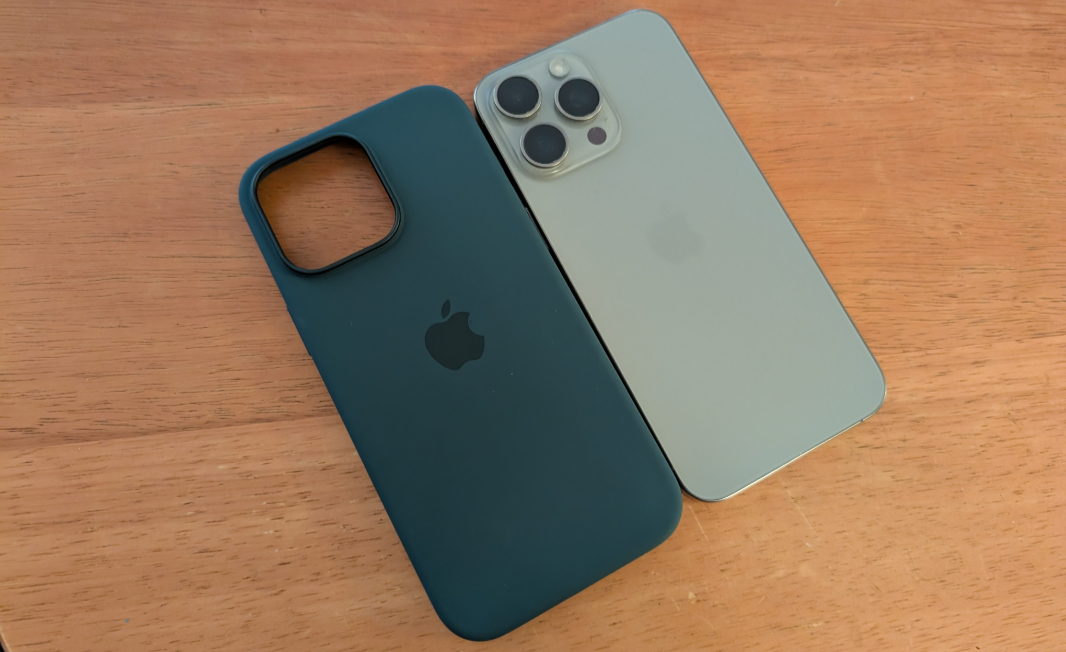
In the end, though, those photography and photography-adjacent advantages resulted in the same outcome as ever. And as noted, I preordered a 256 GB iPhone Pro Max in Desert Titanium that Apple says will arrive a week from today, on Friday, September 20. (Plus a Lake Green silicone case from Apple, separately, that arrived this past Wednesday.) Not counting the case, the total was $1199 before my $650 trade-in, and I had $465 in PayPal, so I almost broke even. Or something.
I’m not naive: I know this won’t be a big upgrade over the iPhone 15 Pro Max I already have. And I’m liking the Google Pixel 9 Pro XL so much that the future is as uncertain as ever. I should just get comfortable moving back and forth between the two platforms as needed and not worrying about which one “wins” or whatever. I’m sure I’ll figure it out eventually.