Google Shopping is Getting an AI Overhaul
- Paul Thurrott
- Oct 15, 2024
-
1
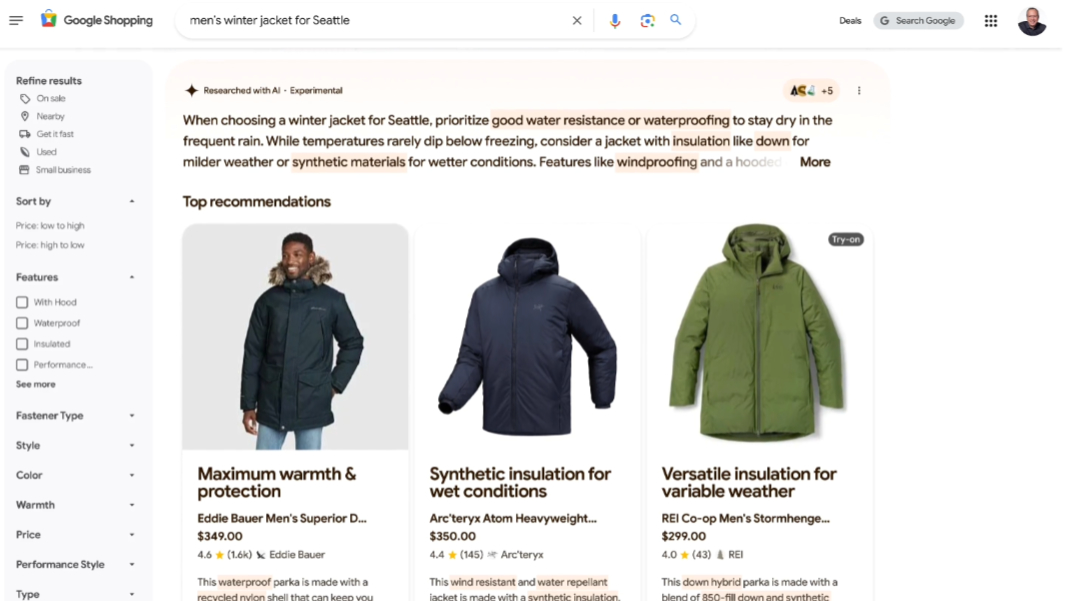
Google says it has completely rebuilt its Shopping service using its Gemini AI models to provide a more personalized experience. The new Google Shopping is rolling out first in the United States, starting today.
“People shop across Google more than a billion times a day to do things like virtually try on clothes before they buy, shop what they see with Lens and research prices,” Google vice president and general manager Sean Scott writes. “We’ve been using our advances in AI to make shopping on Google even easier, and today, we’re introducing a transformed Google Shopping — rebuilt from the ground up with AI. We’ve paired the 45 billion product listings in Google’s Shopping Graph with Gemini models to transform the online shopping experience with a new, personalized shopping home.”
The new Google Shopping uses AI extensively, for tasks such as displaying the most relevant products after a search, providing product summaries and recommendations, and so on. The site now offers dynamic filters that are specific to different products, explanations for why products are recommended, sources for those recommendations, and links to relevant articles.
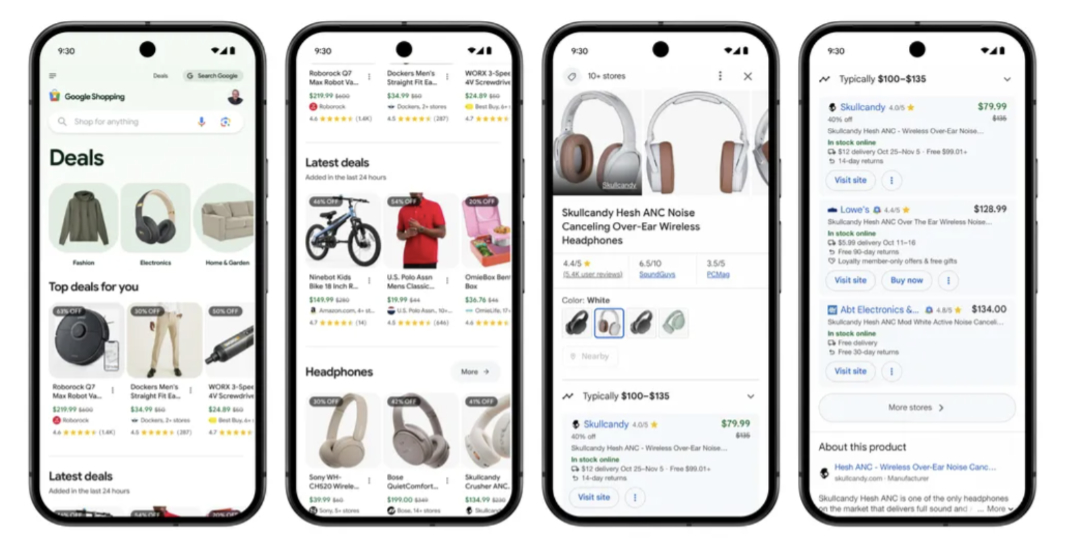
There’s also a personalized feed, so customers can see relevant products and videos based on their preferences. And a “pick up where you left off” feature for those who research products over several days. You can also turn off the personalization, of course.
Like other shopping services, Google Shopping has price comparison, price insights, and price tracking tools. But it also offers a new Deals view that again provides a personalized feed for items you might be interested in that are on sale.
For now, the AI-generated summaries are denoted as “experimental” for all the usual AI reasons–“this new, experimental feature may not always get it right,” Scott says–and Google is looking for feedback to help them improve this functionality.
You can visit Google Shopping directly, but it’s also available via the Google apps link on Google Search. The new version of the service won’t appear immediately for most, but will roll out over the next few weeks in the US.