Intel Now Says Lunar Lake is a “One-Off”
- Paul Thurrott
- Nov 01, 2024
-
29
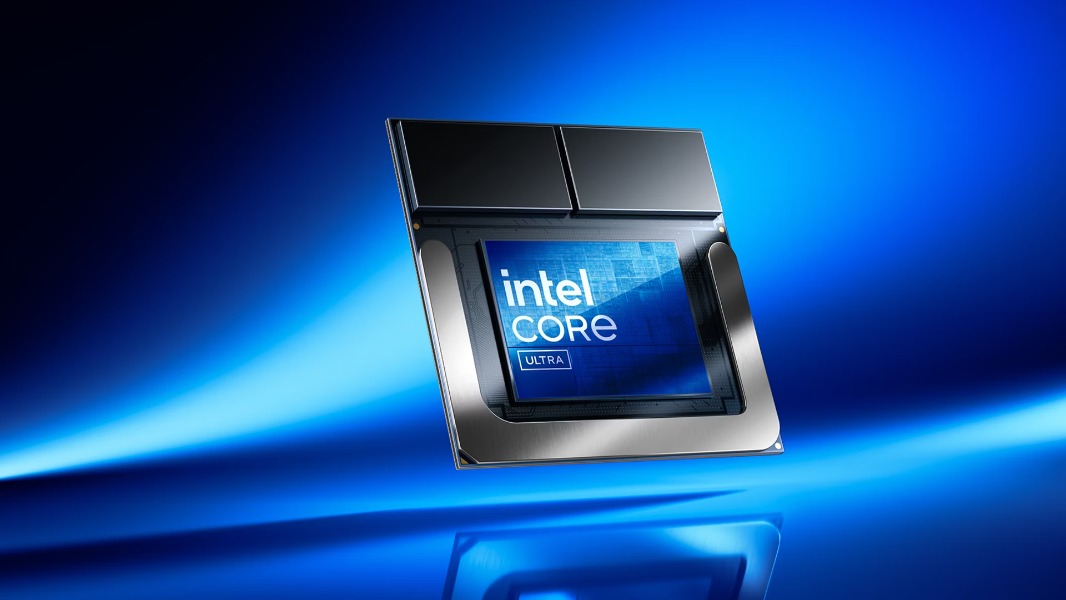
In its post-earnings conference call last night, Intel described its “Lunar Lake” chips as a “one-off” from a packaging perspective. With future-generation chips, the firm will return to more traditional packaging in which the RAM is separate from the processor.
“[With] a volume product in a volume industry like the PC industry, you don’t want to have volume memory going through that channel,” Intel CEO Pat Gelsinger said. “It’s not a good way to run the business. It really is, for us, a one-off with Lunar Lake. That [memory packaged with the processor] will not be the case with Panther Lake, Nova Lake, and its successors. We’ll build [them] in a more traditional way, with memory off-package, and the CPU, GPU, NPU, and I/O capabilities in the package. Volume memory will be off-package.”
Two comments to that.
First, on-package RAM isn’t just common these days, it’s the standard: Arm-based chips like those from Apple and Qualcomm, including the chips used for PCs and Max, all have RAM integrated with the CPU and other processor parts. It had seemed like Intel was moving to this design with Lunar Lake for the obvious performance benefits. But now it has made it clear that it not the case.
Second, when you consider that Lunar Lake’s predecessor, “Meteor Lake,” was also a one-off, in this case an architectural one-off, this news is rather incredible. Intel rushed Lunar Lake to market and heavily modified the design to meet the needs of Microsoft’s Copilot+ PC specification. In doing so, it shipped Lunar Lake well ahead of the original schedule, and it had to shift manufacturing from its own fabs–which weren’t yet ready for the advanced packaging Lunar Lake requires–to TSMC. I reported earlier that Intel loses money on Lunar Lake as a result: Its margins are much higher in part because it has to pay an external fab to make the chips.
“Lunar Lake was initially designed to be a niche product that we wanted to achieve [the] highest performance and great battery life capability,” Gelsinger added. “And then, AI PC [Copilot+ PC] occurred. With AI PC, it [Lunar Lake] went from being a niche product to [being] a high-volume product. Relatively speaking, we’re not talking 50 to 100 million units, but a meaningful portion of our total mix. As that shift occurred, obviously, this became a big margin implication. But we were pleased to have the option to scale Lunar Lake in higher volume because of the momentum and energy around the AI PC category.”
Intel didn’t admit that it loses money on Lunar Lake. But vice president David Zinsner described the on-package RAM in Lunar Lake, and the need to use TSMC, as having a “major impact” on margins.
“When we recognized how important the AI PC [Copilot+ PC] market would be, and how good this part [Lunar Lake] was competitively, we pushed the volume significantly up, and so that has put some reasonable pressure on the gross margins for the total company,” he said.
“[Lunar Lake is a great product,” Mr. Gelsinger said. “We’re happy that we have it in the portfolio, and we scaled it commensurate with the enthusiasm of the AI PC category.”
For Intel customers, this change is a mixed bag. This will allow PC makers and end users to configure PCs with different RAM configurations more easily, and to upgrade the RAM after the initial purchase. But as noted, external RAM isn’t as fast as on-package RAM, and it isn’t as efficient from a power management perspective. It’s probably the right decision, overall. And with Intel slowly ramping up in-house chip fabrication over Panther Lake and Nova Lake in 2025 and 2026 as part of its “bringing wafers home” strategy, the firm can grow its margins and profitability.
“This is super-important for us, our foundry business, and the industry,” Gelsinger added.