AMD PC Chip Demand Surges on Intel Woes
- Paul Thurrott
- Jan 09, 2025
-
4
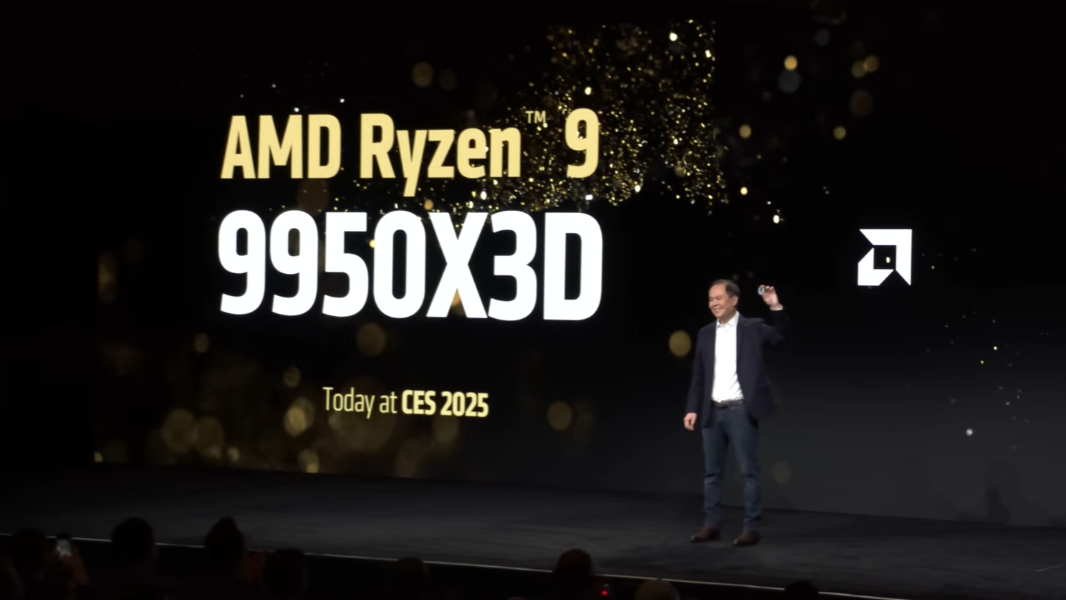
Representatives of AMD said this week that demand for its latest Zen 5 PC chips is unprecedented thanks to two key factors: The chips are fantastic, and Intel’s newest chips are terrible.
The company is ramping up production to meet the demand.
“Put it this way,” AMD chief architect of gaming solutions Frank Azor said this week during an interview at a CES . “We knew we built a great part. We didn’t know the competitor had built such a horrible one. So the demand has been a little bit higher than we had originally forecasted.”
The competitor he’s referring to is Intel: After shipping its lackluster one-off chip, the “Lunar Lake” Core Ultra Series 2, in September, Intel just padded out the product line this week with more Core Ultra Series 2 chips, all of which are based on a different “Arrow Lake” architecture that is, astonishingly, even worse.
So what happened?
“Arrow Lake” was the original successor to the first-generation Core Ultra (“Meteor Lake”) chips that Intel started shipping in late 2023. But told by Microsoft that both AMD and Qualcomm would meet its then-coming Copilot+ PC system requirements in their chips, Intel rushed “Lunar Lake” to market by cobbling together components from other projects and using TSMC to manufacture the chips with integrated memory. Key among these components is a more powerful NPU that competes well with those in AMD Zen 5 and Qualcomm Snapdragon X chips. But Intel spent billions on this effort, and it loses money on every “Lunar Lake” chip it sells, and both contributed to last year’s financial difficulties.
Meanwhile, “Arrow Lake” continued forward. So the chips Intel just shipped have less powerful NPUs, more akin to what it provided with its “Meteor Lake” chips. And none of them meet the Copilot+ PC requirements. This helps explain why Intel usually uses the term “AI PC” instead of “Copilot+ PC.” But “Arrow Lake” chips have other issues: Thanks to ongoing issues getting its own chip fabrication facilities modernized, “Arrow Lake” chips are also manufactured by TSMC, minus the RAM integration bit that will remain unique to “Lunar Lake,” but still making them pricier. And while these chips are more efficient and more powerful than its previous generation chips, they are falling short against AMD’s latest.
So much so that AMD’s Zen 5 chips are selling out, the company says. And it’s now announced a new family of chips with even better performance and efficiency: HP, for example, is using the latest high-end AMD chip family in its new desktop workstation and laptops. And Dell has adopted AMD for its commercial PCs for the first time ever. So this is a perfect storm for AMD … and, in a bad way, for Intel too.
According to Mr. Azor and AMD corporate vice president David McAfee, AMD is now ramping production to take advantage of the growing disparity between its chips and Intel’s.
“It’s crazy how much we have increased capacity over what we were planning,” McAfee said. “I will say that the demand that we have seen from 9800X3D and 7800X3D has been unprecedented … Through the first half of this year, you’ll see us continue to increase output of X3D, [which] has become a far more important part of our CPU portfolio than I think we, any of us, would have predicted a year ago. And I think that trend will continue into the future. And we are ramping capacity to ensure we catch up with that demand as long as consumers want those X3D parts.”
AMD also confirmed what I’ve seen as I’ve reviewed various recent PCs: The new AMD chips are incredible for gaming, even without discrete graphics.
“The X3D [chips] are such a great gaming part,” McAfee said. “For a pure gamer, there’s nothing else like it.”
AMD also addressed how or whether what it’s doing now is influenced in any way by Apple with its Arm-based Apple Silicon chips that bundle the CPU, GPU, and NPU into a single die package. According to vice president Joe Macri, no: AMD was building APUs that combine CPU and GPU into a single die long before Apple brought this architecture to the Mac. But he did credit Apple for proving that you don’t need discrete graphics for high-end workflows. Apple Silicon’s success inspired AMD to spend a “mind-boggling” amount of money developing its latest chips.
For its part, Intel says it could have packaged a Copilot+ capable NPU with “Arrow Lake,” but doing so would have sacrificed the CPU and/or GPU cores its customers want more. Intel executives call the “Arrow Lake” platform “balanced.” But PC World is just as concise. Compared to the latest AMD chips, the publication says “Arrow Lake” is “crappy.” Ouch.