Microsoft Introduces Xbox Ally to Developers
- Paul Thurrott
- Jun 15, 2025
-
9
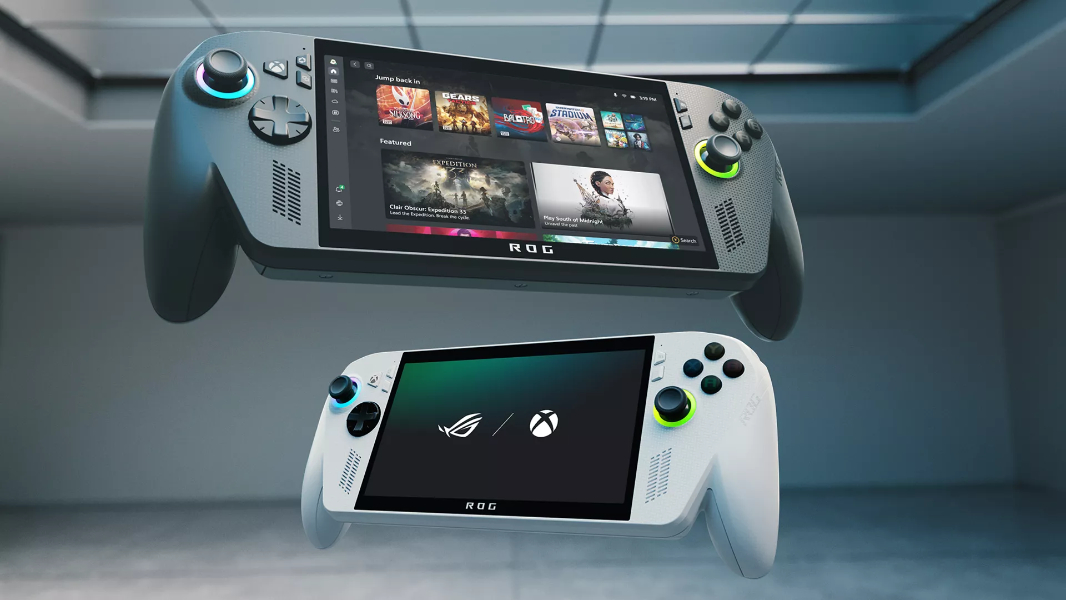
The Microsoft Developer site has a good overview of the ASUS ROG Xbox Ally that will be of interest to anyone who cares about the future of this platform, and not just developers.
“Together, ASUS and Xbox are ushering in a new era for gaming, one that empowers players to bring their games with them, anywhere they go,” the site explains. “It marks a milestone toward delivering a consistent, approachable experience anywhere, across handheld, console, PC, cloud, and more. The ROG Xbox Ally puts player choice at the center of the experience. When players power-on, they immediately land in the Xbox full screen experience, optimized specifically for handheld. With new modifications that minimize background activity and defer non-essential tasks, more system resources are dedicated specifically to gameplay. That means more memory, improved performance, and a fully immersive experience for your players, all made possible by the versatility and freedom of Windows.”
As I’m sure you know, Microsoft revealed the Xbox Ally gaming handheld a week ago during its Xbox Game Showcase. Like other Xbox fans, I’ve been trying to figure out where this things fits in the scheme of things. Based on what we’ve seen, I believe that Xbox Ally is the first peek at the future of Xbox as a hardware platform, one that combines Windows (PC) and Xbox (console), and that future Xbox hardware–whether it’s first- or third-party (or both)–will be PC-based. The quote above emphasizes what Microsoft had to do with Windows to make it more of a device-like experience. This would work as well on any PC as it would on this new class of gaming handheld.
A few other details from the Microsoft Developer site.
AMD processors. AMD’s Z-series processors are designed for handheld gaming PCs, as we used to call them, and the two Xbox Ally models use different second-generation Z-series chips. Based on my experience with the latest generation Intel and AMD chips in laptops, I am glad that Microsoft went with AMD. But the site notes that the beefier processor in the higher-end Xbox Ally model has an additional benefit. “The ROG Xbox Ally X features the AMD Ryzen AI Z2 Extreme processor, allowing us to power the latest AI features as they are introduced.” That said, Gaming Copilot will work on both devices.
RAM. The Xbox Ally X not only has a better processor, it has more RAM (24 GB vs. 16 GB) and, more to the point, better RAM: The LPDDR5X-80006 RAM it utilizes offers speeds of up to 8.5 Gbps, compared to 6.4 Gbps for the RAM used in the other model.
USB. We probably pointed this out somewhere, but the USB ports on these devices are different too. The Xbox Ally X has a single Thunderbolt 4/USB4 Type-C port with DisplayPort 2.1 (video out) and Power Delivery 3.0 capabilities, plus a single USB 3.2 Gen 2 Type-C port with DP 1.4 and PD 3.0. The lower-end model has two of the latter USB-C ports, but no Thunderbolt 4/USB4.
Challenges. Because of the unique form factor, Microsoft recommends that PC game developers ensure their titles work properly on the small, handheld devices. They should “check if the device is a gaming handheld” and then provide the appropriate UX defaults, make sure that gamers can enter text using only a gamepad and a virtual keyboard, handle the display size, aspect ratio, and resolution correctly, and so on. There’s a separate document on Microsoft Learn that provides more specifics. There is also a modern GameInput AI for native controller support, an XGameSaveFiles API for game saves with offline support, and other unique solutions all aimed at making PC gaming more seamless and reliable. (None of this is gaming handheld-specific.)
Xbox Play Anywhere. If Microsoft really is going to merge its Xbox and PC gaming platforms, supporting this key platform feature will be a lot easier. But there’s a separate document on Microsoft Developer that explains how to implement cross-progression, cross-entitlement and other aspects of Xbox Play Anywhere.