Google: Pixel Will Never Be a Major Player in the Smartphone Market
- Paul Thurrott
- Aug 21, 2025
-
5
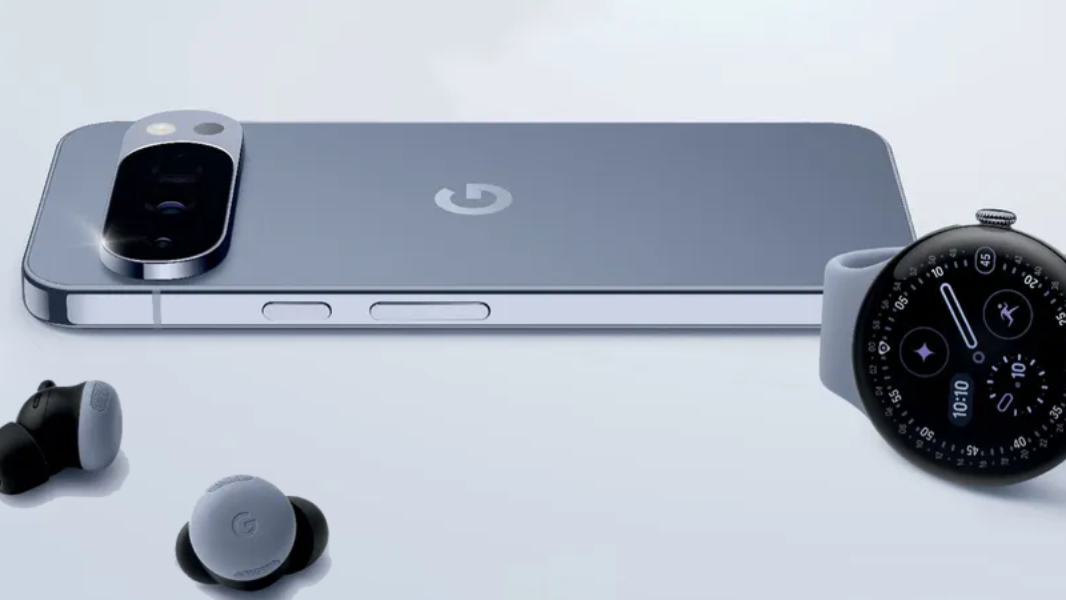
In an interview with Bloomberg, Google executives conceded that its Pixel family of smartphones will never beat the iPhone or Samsung in the smartphone market. But the executives also said that Pixel is “a good business” and important to the future of Google. And that should help if you’re worried, as I am, that the company may one day just lose interest in hardware and move on.
The interview is curious on a few levels. It was conducted by Mark Gurman, who clearly knows more about Apple than he does about Google and its hardware efforts. And it includes three Google executives, two of whom directly oversee Pixel hardware: Google senior vice president of devices and services Rick Osterloh, vice president of devices and services Shakil Barkat, and chief design officer Ivy Ross.
Some of the key insights here include:
Pixel improves roughly 30 percent each year. “If you look at any year at a time, maybe that’s not revolutionary change,” Osterloh told the publication, echoing a common observation about smartphones now. “But if you look at three years back, that is a huge difference.”
Yes, Pixel 10 is evolutionary, not revolutionary. As I wrote earlier today in Pixel Matters (Premium), the Pixel 10 Pro XL, in particular, is the most minor flagship smartphone upgrade I can recall. But that’s year-over-year. Osterloh said that the Pixel 10 overall is a “super strong release” in “a mature category.”
There is a schedule. Pixel has gone through several hardware design eras, the most recent beginning with the Pixel 6 family in 2021, which introduced the iconic camera bar-centric design. But now that we’re five years into this era, bigger changes are coming. “Every two to three years we look to try and do something with a new design language,” Ross said, noting that the 2026 refresh was almost finalized and work has already begun on the 2027 lineup.
From the magic of software to the magic of AI. There’s only so much you can do with smartphone hardware, but Osterloh says that the biggest Pixel differentiators will always be in the software. But this was always the case. “The revolution is going to end up being in the interface,” Osterloh said. That interface is increasingly AI-based and will span devices. Then it will “start to influence the design of” the phones too.
Magic Cue is the big-bang new AI feature this year. Magic Cue is “a new suite of AI capabilities that proactively suggests helpful information, right as you need it.” Whatever that means: My guess is that it’s an on-device orchestrator tied to apps that have been updated to support AI interfaces. But it’s exclusive to Pixel 10 for now, where it can take advantage of the Tensor 5 processor and the latest Gemini nano model. “It is up to us to make [AI] count in mobile over the next couple years where I think it’s pretty clear we have a definitive lead,” Osterloh said in what I assume is a dig at Apple. “If you’re using Android, you’re going to be on the vanguard of where AI is going.”
Natural interactions with shape future phone designs. Today, phones are “the best vehicle for AI,” but they will evolve as AI evolves. “There’ll be the ecosystem that will become equally important [that takes into account visual and verbal information],” Ross said. “This is a journey that is very exciting to creatives because it’s like a new set of additional challenges, right? It hasn’t been this exciting for a while because this has been a slow ramp in terms of AI and I think the next few years is going to be kind of great.”
Pixel is never going to dominate, but … Each of the executives admitted that the goal with Pixel isn’t to dominate the smartphone market. It has not seen an “avalanche” of switchers, and Pixel will never be “a giant player.” That said, “the growth rate is great” and Google is “selling a decent amount” of devices, with Pixel going from 1 percent of the U.S. market to 3 percent in just a few years. “Building a good business” was enough, Osterloh said. Plus, all it has to do is win with AI: Even those with iPhones can and will use Gemini, and “If there’s an Android partner that’s successful, that’s wonderful for us.” Meaning Samsung. Which is also using Gemini. Which now has over 450 million monthly active users.
Yes, it was supposed to be a reference design for other hardware makers. Many assume that Microsoft created the Surface in part to provide reference designs for other PC makers. That’s not entirely true, but Gurman says that Ross told him that was the goal for Pixel. “The idea was that we would have our own devices to model the best of what Google has to offer,” she said, which is exactly how Google has marketed Pixel. “It’s almost like having a muse. And why not? If you’re going to do that, offer it to the public as well.”
Battery life is the biggest issue with hardware design. This won’t be a surprise to anyone who owns a Pixel phone: Battery life is the biggest compromise with Pixel hardware designs. “It’s really a dance and it goes on for a while,” Ross said. “There is pushing and compromising until everyone is happy that we’ve explored every possible way of solving the problem. Because some problems you just can’t get around.”
The future of AI devices. Phones will inevitably give way to a new form factor and this is where Google’s long-term play with Pixel could pay off. It sees glasses and foldables as the future, possibly in combination with each other, where the glasses are the primary interface and the foldable comes out of a user’s pocket only when needed. But now that Google is partnering with Samsung on Android XR, will we see another Google smart glasses product? “We’ve been in the market in the past, but we think now is the time where it’s actually going to break through and be really interesting and useful,” Osterloh said. And yes, Google does have teams working on what could become Google-branded glasses.
What Google won’t make. Google has no interest in flip-style folding phones or smart rings, and it will leave those form factors to partners. And there are already too many devices for users to charge and keep track of. “Every time a new type of category of product gets added, the bar on maintenance for the end user keeps going up,” Barkat said. “It’s already pretty painful.”
It’s worth reading, but I wish it could have been a straight up interview transcript: I want to know what Osterloh and the others said, not the interviewer’s take on it.