Canonical Takes the Lead on Flutter Desktop
- Paul Thurrott
- Jun 01, 2026
-
0
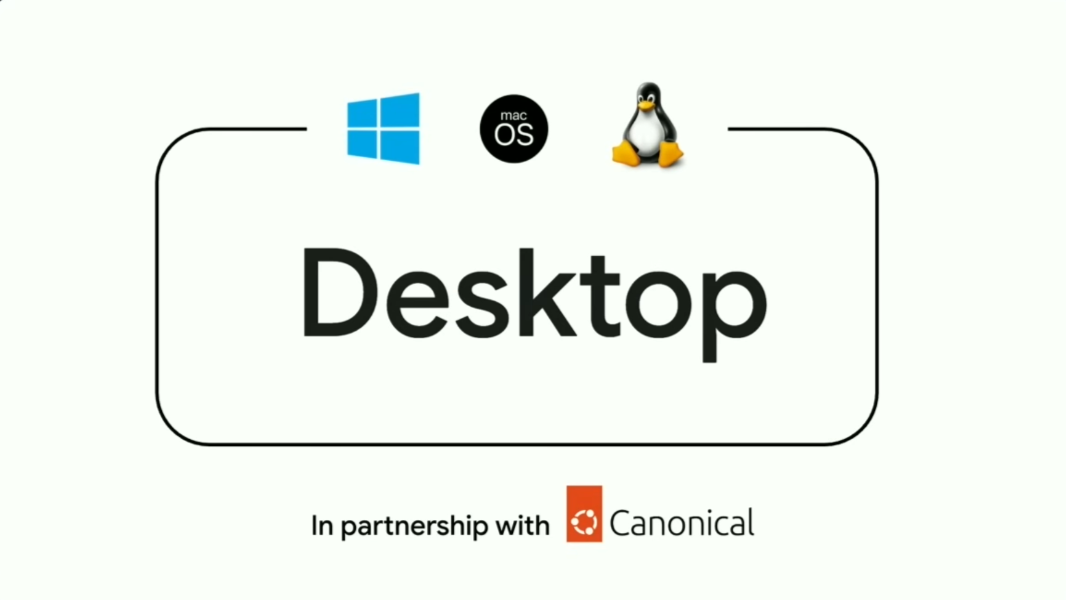
I was catching up on some Google I/O 2026 sessions over the weekend and came across a quiet announcement in one about Flutter: Four years after Google released its first implementation of Flutter for desktop, on Windows, it has ceded leadership of the Flutter efforts on desktop to Ubuntu maker Canonical.
“We are excited to announce an expanded partnership with Canonical, who will now serve as the lead maintainer and Strategic Steward for Flutter Desktop,” a Flutter post tied to Google I/O 2026 explains. “With their deep technical expertise, Canonical will lead the Flutter Desktop roadmap and oversee the maintenance of our Linux, Windows, and macOS embedders.”
It appears that more changes are coming: Google also notes that this collaboration is just the first step in a broader ecosystem expansion that will include it actively expanding its governance with more partners to bring Flutter’s high-performance, multi-platform experience to even more environments and industries.
For those unfamiliar, Flutter is a cross-platform, declarative user interface framework based on the C-like Dart language. It originally targeted iOS and Android, of course, allowing developers to create apps for both platforms using a single codebase. But it has since expanded to support web apps plus the Windows, macOS, and Linux desktop platforms.
Google announced other Flutter changes at Google I/O, including some tied to the desktop: Thanks to Canonical, which has started using Flutter to build apps for its Ubuntu Linux distribution, Flutter Desktop now supports experimental windowing APIs that support dialogs, tooltips, and popups, stylus support on Windows, and content views on Linux. Flutter is also beginning its decoupling of the Material and Cupertino UI libraries, for Google and Apple’s platforms, respectively, so it can move them into standalone packages that can updated outside of the core platform.
Google says that Flutter is also an ideal way to create apps targeting the Googlebook laptops that will appear in the market later this year.
“Because Flutter has mature desktop support across macOS, Windows, and Linux, Flutter apps will feel native and responsive on a Googlebook rather than looking like stretched mobile ports,” the company notes. “Existing mobile apps will feel at home on a Googlebook without requiring an extensive rewrite.”
And speaking of Googlebooks, Google also confirmed that this Android-based platform is just the next evolution of ChromeOS and Chromebooks like many thought. So it will eventually replace ChromeOS completely.