Valve’s Steam Machine Starts at $1,049 Without a Controller
- Laurent Giret
- Jun 22, 2026
-
17
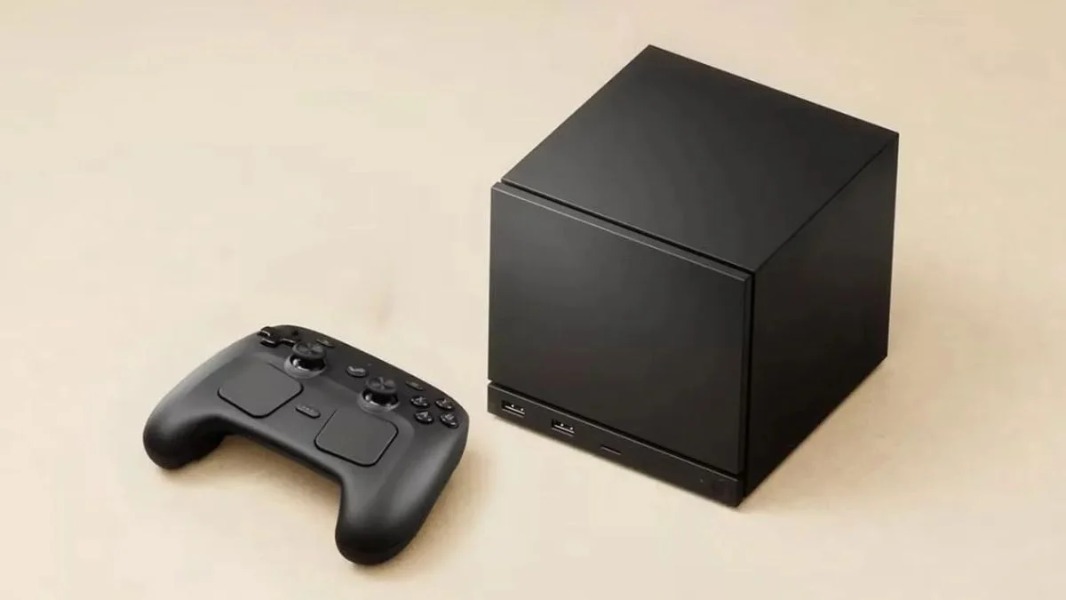
Valve has finally announced the price of its Steam Machine, its new console-like device for playing Steam games on a TV that was first announced back in November 2025. The Steam Machine will start at $1,049/€1,039/£879 for the model with just 512GB without a controller, and there’s also a 2TB version priced at $1,349/€1,359/£1,149 without a controller.
The Steam Controller has been available since last month, and it’s priced at $99/€99/£85 separately. While the Steam machine will work with any controller you can already use with Steam, including Xbox and PlayStation controllers, the Steam controller comes with two trackpads, a gyroscope, capacitive-touch thumbsticks, and capacitive-touch sensors on the grips. It also provides a console-like experience with a seamless 2.4 GHz connection and the ability to wake the Steam Machine without leaving your couch.
It’s actually cheaper to buy the Steam Machine with a bundled Steam controller: The 512GB version with a controller is priced at $1,128/€1,108/£938, while the 2TB version with a controller will cost you $1,428/€1,428/£1,208
The Steam Machine is much more powerful than Valve’s Steam Deck handheld thanks to ▪ Semi-custom AMD Zen 4 CPU with six cores and 16 threads, a semi-custom RDNA3 GPU with 28 compute units, 16GB of DDR5 memory, and 8GB GDDR6 VRAM. The device targets 4K at 60 FPS with AMD’s FidelityFX Super Resolution (FSR) technology, and it does so with a small form factor.
Compared to current-gen consoles, the Steam Machine looks like a roughly 6-inch (~160mm) cube with a built-in power supply, and Valve says that it “runs whisper-quiet, even while running the most demanding games.” The hardware includes one Gigabit Ethernet port, one DisplayPort 1.4. port, one HDMI 2.0 port, and one USB-C port and four USB-A ports. There’s also 2×2 Wi-Fi 6E, Bluetooth 5.3, and a built-in 2.4 GHz adapter for wirelessly connecting up to four Steam Controllers.
Steam Machine is here, and you can sign up now:
Steam Machine 512GB
Steam Machine 2TBPlus bundled versions with Steam Controller
Learn more and sign up here: https://t.co/n6RlOy3wHd pic.twitter.com/8W42GfYo6n— Valve (@valvesoftware) June 22, 2026
Just like the Steam Deck, the Steam Machine runs the Linux-based SteamOS, with access to a desktop experience via the KDE Plasma graphical shell. The first reviews of the Steam Machine are out today, and the critical consensus so far is that performance is generally solid, though it won’t beat current-gen consoles or midrange gaming PCs. “Steam Machine delivers what we’d call ballpark entry level performance for a mainstream PC capable of running the latest titles at decent resolutions,” the experts at Digital Foundry said today.
To avoid the scalping problem that recently affected the Steam controller, Valve has implemented a randomized reservation order system with separate lists for each shipping region (North America, United Kingdom/European Union, and Australia). You can already join the list before June 25 at 10 AM PT, which is when the list will be closed and randomized.
There are some criteria to join the waitlist, including having a Steam account in good standing and having made a purchase on Steam before April 27, 2026. While it’s possible to sign up for multiple models, Valve will limit signups to just one per household.
“Each model has its own list of sign-ups that will be randomized on June 25th at 10am. After that, if you are assigned a reservation queue spot for one or more models, you’ll automatically be allocated a reservation for the highest end one you’re in, and removed from all the others,” the company explained.
Overall, the Steam Machine is quite expensive, which is probably why it will likely have a niche audience, just like the Steam Deck before it. Valve also insisted that it’s not trying to compete with traditional gaming consoles. “The traditional console model is to sell hardware at a loss and make up the revenue with subscription services or by selling games that are locked-in to the hardware. We think this can make sense for a single business in the short term but that open ecosystems are better for customers over the long term,” the company explained in an FAQ.