EU Commission Threatens to Fine Meta Over Instagram and Facebook’s “Addictive Design”
- Laurent Giret
- Jul 10, 2026
-
6
The EU Commission said today that the “addictive design” of Facebook and Instagram is breaching the Digital Services Act (DSA), a new digital safety law aiming to protect European citizens using large online platforms with over 45 million monthly active users. The EU regulator started investigating Meta’s compliance with the DSA back in May 2024, and it determined in its preliminary findings that Meta is failing to protect Facebook and Instagram users from risks associated with physical and mental wellbeing.
The EU regulator pointed out the addictive nature of Meta’s algorithms, which are designed to increase the time users spend on its platforms. “For example, Meta did not consider certain design features of Instagram and Facebook, such as highly personalised recommendations, autoplay and infinite scroll, which constantly show users new content. These features fuel the user’s urge to keep scrolling and shift the brain into ‘autopilot mode’, contributing to unhealthy habits and compulsive use,” the Commission said today.
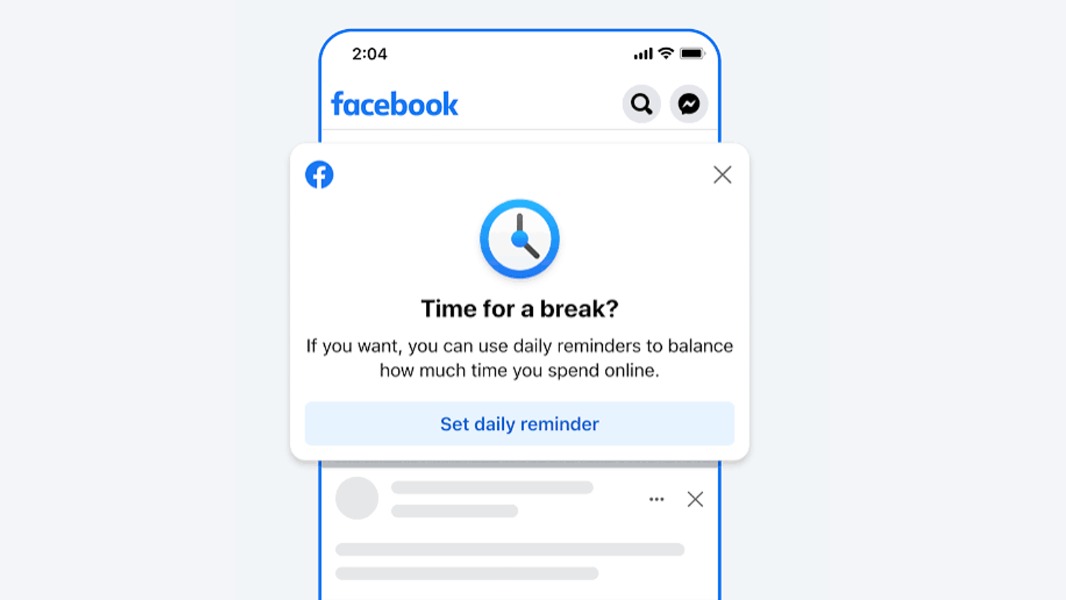
The EU Commission also pointed out that Instagram’s and Facebook’s time management tools, which are activated by default for teens, are too easy to dismiss and aren’t really effective for helping users to put their phones down. “Moreover, the Commission considers that Meta’s parental controls are only effective if parents and guardians possess adequate technical expertise, as well as devote effort and time to understand them effectively,” the regulator said.
To comply with the DSA, Meta will need to change the design of Facebook and Instagram to make the apps less addictive. “For instance, by disabling key addictive features such as ‘autoplay’ and ‘infinite scroll’ by default, implementing effective ‘screen time breaks’, and adapting its recommender system to make it less engagement-oriented,” the Commission said.
Meta faces a fine of up to 6% of its global annual turnover if the Commission ultimately issues a non-compliance decision. However, the EU regulator is giving the company some time to respond to its preliminary findings.
“We disagree with these preliminary findings, which don’t accurately take into account the significant steps we’ve taken to protect teens,” Meta spokesperson Ben Walters told Reuters. “Since this investigation began, we rolled out Teen Accounts that automatically protect teens and put parents in control – allowing them to block access to Instagram at night and cap daily screen time at just 15 minutes.” The company’s spokesperson added that Meta will continue to engage constructively with EU regulators.