Review: Steve Jobs in Exile by Geoffrey Cain
- Paul Thurrott
- May 26, 2026
-
3
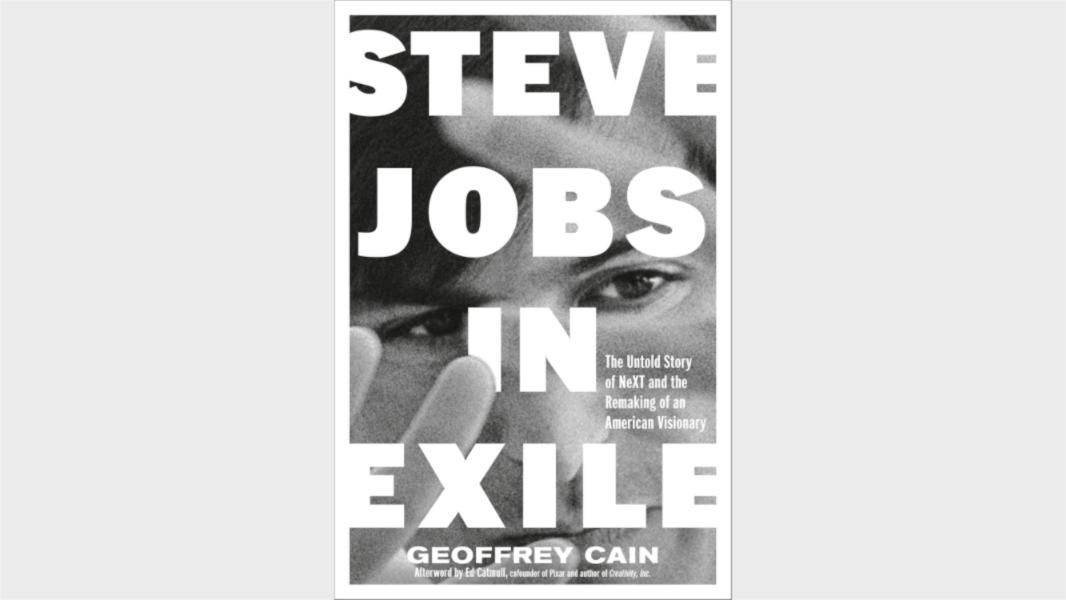
Early on in Steve Jobs in Exile: The Untold Story of NeXT and the Remaking of an American Visionary, there is a promising anecdote I’d never heard before tied to the naming of Steve Jobs’ second company. After storming out of Apple in the mid-1980s, Steve Jobs originally wanted to call his next company Two, a moniker that would have forever been aligned with second-rate or second-best. But he was convinced otherwise because a friend had just seen Bill Gates speaking about CD-ROM technology, and Gates kept saying next, as in “the next big thing,” “the next standard,” “coming in the next year,” and so on. So he told Jobs that the name for this new company had to be Next. After a few moments of silence, Jobs exclaimed “I love it!” and he registered the name Next Inc. with the state of California soon thereafter.
This, and a foreword by Next cofounder and industry legend Dan’l Lewin, who shared source materials with the author for this book, gave me hope that Steve Jobs in Exile would continually expose new information about a history I know very well, a history that was already ably told in The Second Coming of Steve Jobs, which was written and published by Alan Deutschman 25 years ago.
Mostly, it does not.
Once I got past Bill Gates’ unexpected influence on the name of Steve Jobs’ second company, I waded through hundreds of pages of text describing an all-too familiar story, and I learned nothing new of note. Unless you consider a funny but bizarre anecdote about an open fly at a funeral to be of note. And a chapter about an online pizza delivery service that I’m not sure I knew about. I guess there’s that.
But this history is well understood. Jobs and Next set out to build a $3000 “3M” computer (with 1 million instructions per second of computing power, 1 megabyte of RAM, and a 1 megapixel display) for the education market, and they would fail in spectacular fashion: The first Next Cube arrived several years late with a starting price of $6500 (over $10,000 in most configurations), it cost IBM, Ross Perot, Canon, and other investors a collective several hundred million dollars, and it sold in the hundreds of units per year at best while Next stuffed the channel with thousands of units to fake sales.
There was spectacular technology in the Cube, especially the Mach microkernel (named for a mistaken hearing of the term muck), the NeXTStep operating system, and the object oriented Interface Builder app creation suite. But Jobs was his own worst enemy, blowing up at cofounders and employees, ruining relationships with investors, partners, and customers while spending insane amounts of money on superfluous things like a logo ($100,000), a factory capable of building 150,000 units per year, expensive office leases, expensive office furniture, and other trappings of a success that never came. It was all in the name of perfection, and Jobs–on “the hero’s journey” in this telling–needed to fail so he could become a better person and a better leader, one who could later trigger the biggest comeback in corporate history when he returned to Apple.
None of this is new, and none of it is news. All of it–pretty much literally–has been available for decades in book form, as noted, via The Second Coming of Steve Jobs, which appeared in a far more timely fashion related to the end of Next and Jobs returning to Apple, and in other more recent books, including the official Steve Jobs biography. And via the various Computer History Museum video interviews that Mr. Cain references throughout the book. Anyone could find these videos on YouTube, and I do strongly recommend the two-video series with Avie Tevanian, which I’ve rewatched multiple times.
To be fair to the author and to Dan’l Lewin, Steve Jobs is endlessly fascinating, and this period of his career, whitewashed by fanboys and lost in the more successful later years at Apple, is important to understanding this complicated genius. And I do appreciate that he’s honest about Jobs’ shortcomings, which were many, though I also see that the bad behaviors are easier to digest in the context of his later growth.
But there’s precious little new here, and certainly nothing of note. If you’re familiar with this history, Steve Jobs in Exile is perhaps overly familiar. But if not, it’s a good place to start, especially if you like a story with a happy ending, at least from a character development perspective.
—
Steve Jobs in Exile: The Untold Story of NeXT and the Remaking of an American Visionary
By Geoffrey Cain with a foreword by Dan’l Lewin and an epilogue by Ed Catmull