Tech Nostalgia: Bill Gates, Jack Tramiel, and BASIC (Premium)
- Paul Thurrott
- Jul 05, 2023
-
17
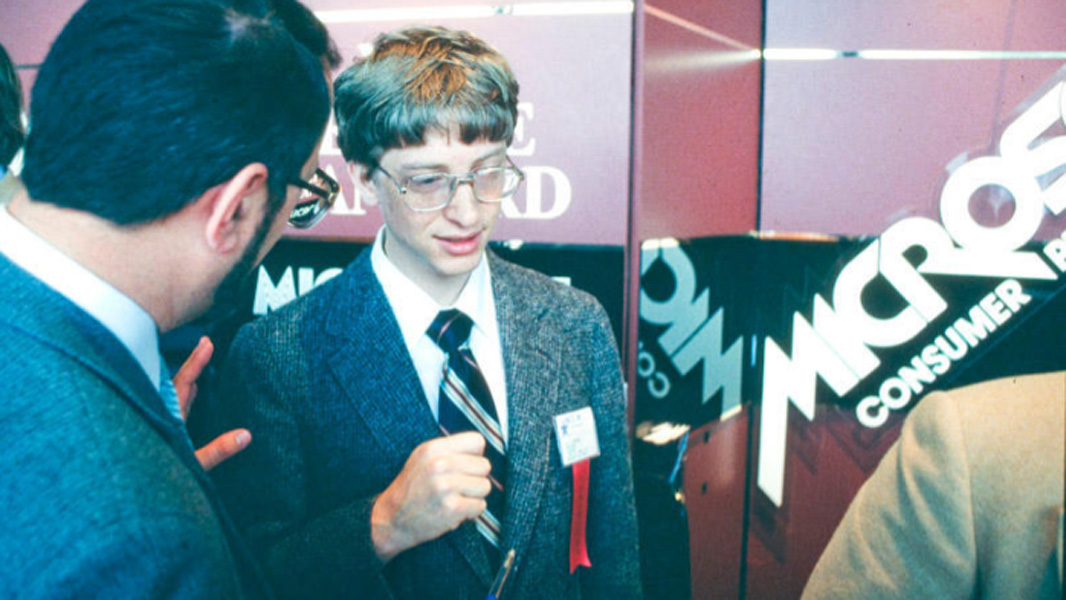
Most readers are probably familiar with the near-mythical story of Bill Gates’ improbable rise to riches, infamy, and industry dominance. Which goes something like this. IBM originally met with Microsoft co-founder Bill Gates to license BASIC and some of the company’s other computer programming languages for its first PC, codenamed Chess, and the team asked whether Microsoft also had an operating system they might use. He did not, but he recommended that they speak with Digital Research founder Gary Kildall to license his operating system, CP/M.
Here, the story varies depending on who’s telling it, but IBM wasn’t able to reach an agreement with Kildall and the team returned to Gates for advice. And sensing an even bigger opportunity, he told IBM that Microsoft could provide an OS. Of course, Microsoft didn’t have an OS, and so it purchased a CP/M clone called QDOS from a small Seattle-area company for next to nothing and parlayed it into what became Microsoft’s most successful business, first with MS-DOS/PC-DOS and then with Windows. Industry dominance achieved.
That story is a lot more nuanced than what I described, but it’s also not the story I want to tell. Instead, I want to explain exactly why Gates’ decision to license BASIC and other programming languages, and then an operating system, to IBM was so cagey. And the key word there is license: Microsoft’s market dominance and the future it and Gates amassed was due entirely to software licensing, as opposed to one-time sales. Indeed, Gates and Paul Allen co-founded Microsoft specifically to license their first product, a BASIC interpreter for the MITS Altair, an early personal computer.
The key to Microsoft’s licensing strategy was that it was non-exclusive. When IBM came to Microsoft for BASIC and other programming languages, it did so specifically because that software had proven so popular on earlier personal and home computers sold by Apple, Atari, Commodore, Tandy, and others, and Microsoft would receive a license fee for each computer sold. But BASIC was particularly important, and not just for the obvious reasons that it was easy to understand and popular. The earliest personal computers didn’t have operating systems as we now know them. Instead, Microsoft’s BASIC would be built into ROM and would be immediately available when these computers booted up. In many ways, BASIC was the operating system.
CP/M (and then MS-DOS in an even bigger way) would eventually solve that problem and help to make later computers more sophisticated and easier to use. But the most popular computers of 1982, when IBM was racing to create its PC, were 8-bit and booted into Microsoft BASIC, not CP/M.
Bill Gates is rightfully credited for Microsoft’s licensing strategy, and as more and more computer makers adopted Microsoft BASIC, the company became richer and richer. But less well-known is that there were very few exceptions to the Microsoft licensing strategy. Among them is a company that simply said no and convinced Gates to let it have BASIC for a one-time fee. That company was Commodore, and among the many reasons it won the home computer wars of the early 1980s, beating Apple, Atari, Tandy, Texas Instruments, and others at both annual revenues and units sold, is that it had its own cagey founder and leader in Jack Tramiel. And among the many ruthless things he did to put Commodore on top—topics I intend to address in future installments of this series—was to outmaneuver Bill Gates. It’s a story all the Gates and Microsoft biographies leave out, go figure.
Jack Tramiel knew next to nothing about personal computing or the products his company made, which is fascinating on its own level. But he was obsessed with not just winning in business but destroying his competitors. In particular, he was obsessed with Texas Instruments (TI), which in the late 1970s had almost bankrupted Commodore by undercutting it in the calculator business. Incensed by this, Tramiel studied TI’s strengths and discovered that it could out-price the competition because of vertical integration. That is, TI designed and manufactured the chips that went into its calculators, lowering its costs, whereas Commodore did not. It also sold those chips to competitors, aiding its revenues. And so Tramiel directed Commodore to acquire MOS Technologies, a chipset maker that designed and manufactured its own calculator chips.
As it turns out, MOS Technologies also created microprocessors, and its first major effort in this area, the 6502 microprocessor, would go on to be the most popular 8-bit microprocessor. As I noted in Tech Nostalgia: VCS (Premium) various variants of the 6502 powered all of Atari’s videogame systems and home computers (and Lynx), all of Commodore’s home computers, the Apple I, II, IIe, III, and IIc, the BBC Micro, and even the Nintendo Entertainment System (NES) over the ensuing decade.
But most of that was still in the future when Commodore set out to create its first personal computer, the PET, in 1976. And upon learning of this effort, Microsoft’s Rick Wyland called MOS Technologies founder and PET designed Chuck Peddle to see if Commodore was interested in licensing BASIC. Wyland, as it turns out, had converted the original Intel 8008 version of Microsoft BASIC to the 6502. But Bill Gates was not enthusiastic because he thought the 6502 was a “shitty processor.” And so he told Wyland to “get some money out of it and get out of it,” assuming the 6502 would fail.
“I’ve got a BASIC for the 6502 and we’re not finding any customers,” Peddle recalls Wyland telling him. Intrigued, Peddle headed to Microsoft’s office in Albuquerque—the firm moved to Washington State three years later—to discuss his needs, which amounted to I/O and the ability to draw characters on the screen. “If you can afford it, we’ll do it,” Gates told him. And with that agreement in hand, Peddle headed back to MOS to finish the PET and create a more formal set of specifications for the BASIC he wanted.
Despite privately wanting to dump 6502 BASIC, Gates was as cagey as ever with Commodore and he originally tried to license BASIC for $3 per unit sold. But he met his match in the deeply frugal Jack Tramiel, who demanded to purchase it outright for just $25,000. Gates agreed, no doubt because of his belief that the 6502 would amount to nothing. But he stipulated that Microsoft would own any modifications that Commodore made to the BASIC, and that Microsoft could sell it to other companies.
Tramiel agreed, but the joke was on Gates. And, as it turns out, on millions of Commodore’s future customers. In addition to selling two of the best-selling computers of the 1980s, each of which shipped with Microsoft’s BASIC in ROM for no per-unit licensing fees, Commodore never made any modifications to the BASIC, ensuring that Microsoft wouldn’t even get a small payback for that success. Of course, that also meant that future Commodore computers, especially the powerful C64, shipped with a by-then lackluster, out-of-date version of BASIC. It would be the best-selling 8-bit home computer.
Oddly, Gates was personally involved in creating the Commodore BASIC for a short while after initially ignoring it, teaming up with Peddle, Wyland, and others to help add the features Peddle had specified.
“We helped Chuck Peddle, who was at Commodore at the time, really think about the design of the [PET],” he later claimed, echoing a similar myth about his and Microsoft’s involvement in the design of the first Apple Macintosh. “Adding lots of fun characters to the character set, things like smiley faces and [playing card] suit symbols. This was the first machine we did that had this wild extended character set.”
“As far as I know, Jack Tramiel was the only one who ever got the upper hand on Bill Gates,” former Commodore engineer Bob Yannes told Commodore: A Company on the Edge author Brian Bagnall. “They wanted to charge him a per-unit fee and Jack [Tramiel] would never agree to a licensing fee. He would only buy stuff outright, because that way he knew what it would cost him and he didn’t have to worry about what it was going to cost him in the future. I guess Microsoft didn’t think Jack was likely to be very successful, so they agreed to it, and he bought Microsoft BASIC.”
“It was a one-time, royalty-free purchase,” Jack Tramiel’s son Leonard confirmed. “The ROMs went through different versions and there were changes in the operating system, but I don’t think there were any changes to BASIC itself. The BASIC part was identical [across future PET revisions and Commodore computers].”
“I think, in the back of their mind, Microsoft is thinking, ‘This is a primitive form of BASIC. Two years from now he’s going to need a new version anyhow, so who cares.’ Well, Jack didn’t care what kind of software his machines had. He was putting the same BASIC in every machine, even though it was obsolete.”
To be fair, Commodore wasn’t the only home computer maker of the era to buy Microsoft’s crude 8-bit BASIC. Apple and Tandy eventually did, too. But in both cases, Microsoft doubled the price: Apple paid twice as much as Commodore and then Tandy paid twice as much as Apple. What’s odd is that Tandy’s John Roach actually wanted to license BASIC. “No, I want a fixed price,” Gates answered.
Gates later claimed that the inclusion of Microsoft BASIC in the three most popular 8-bit computers of that first generation—the Commodore PET, the Tandy TRS-80, and the Apple II, in that order, the so-called “trinity”—was a triumph for his company. “These machines drove the market and eventually, a year after they were out, all of them had our BASIC built-in,” he said in a 1993 interview with the Smithsonian.
But as later Commodore computers went on to sell in the millions, kicking off the personal computer era, Gates surely saw the costly mistake he had made. And it is notable that he chose to license MS-DOS to IBM, getting a per-unit fee while retaining the right to sell the product to any other company he wanted. As we all know, the market for third-party PC clones exploded after Compaq reversed engineered the IBM PC BIOS, the only part of the product that wasn’t open. A lucrative new market arrived, and only Microsoft was paid every time a PC was sold, no matter which company sold it.
Years after his licensing mistake with Commodore, Gates ran into Jack Tramiel at a CES.
“You got that so cheaply,” Gates told Tramiel, referring to BASIC.
“No we didn’t,” Tramiel responded. “If we hadn’t bought it, you wouldn’t have been established as a company and as a standard.”
“Bill Gates learned from the Commodore BASIC deal, which is probably why he kept the rights to his operating system when he sold it to IBM,” former Commodore executive Kit Spencer later told Commodore: A Company on the Edge author Brian Bagnall. “On that deal, he took royalties on every computer sold, and he also sold it to all the other IBM-like personal computers manufacturers as well. He certainly learned well from Jack!”
He learned other lessons, too, Bagnall explains: because MS-DOS was not ROM-based, Microsoft kept upgrading it, releasing new versions, and amassing a fortune.
“It was a great deal for both companies,” Sam Tramiel, another Tramiel son, said later.
However you view the deal, it’s notable to me how little attention Microsoft’s interactions with Commodore warrant in the various Bill Gates and Microsoft biographies that have appeared over the years. In Gates: How Microsoft’s Mogul Reinvented an Industry–and Made Himself the Richest Man in America, for example, authors Stephen Manes and Paul Andrews note only that Commodore was an early Microsoft customer, for 6502 BASIC, while disparagingly referring to the 8-bit computers of that era as “el cheapo home computers.” Jack Tramiel isn’t mentioned even once.
But there is one final fun part of this story that is likewise not well-known.
At the 1978 Winter CES, Commodore engineer John Feagans was manning his company’s booth and noticed Bill Gates walk up to one of the demo PET computers. Intrigued, he watched as Gates looked around to make sure he hadn’t been seen and then started typing on the keyboard. He typed WAIT 6502, and then a number, upon which it printed the word MICROSOFT multiple times. Satisfied, Gates cleared the screen and walked away, not realizing that Feagans had watched the whole thing.
Gates had put an Easter Egg in Microsoft BASIC for the 6502.
“He put something in the PET because he was really suspicious of people like me stealing his BASIC on paper tape,” Feagans later said, alluding to an infamous early Gates episode in which he had complained about people stealing Microsoft’s software. But this bothered Feagans because he had scanned every line of the BASIC source code and never found any hidden messages.
“It wasn’t in ASCII where you could see it,” he explained. “Gates had fiddled with a couple of bits with the ASCII character set, so it didn’t show up when you just looked at the raw binary dump.”
Obsessed with finding this Easter Egg, Feagans finally resorted to running the code one line at a time and monitoring it. And he discovered that Gates had piggybacked on the code that BASIC used to create random numbers. Worse, it was the source of a major bug that seemed unrelated. So he removed the Gates code.
At the 1979 Winter CES, Gates once again walked up to a PET in the Commodore booth and typed WAIT 6502, 1 to check on his Easter Egg. Nothing happened.
“I remember Gates walked up to one of our machines at one of our shows and typed that and it didn’t do it anymore,” Commodore engineer Bill Seiler said, noting that he and Feagans had observed Gates from a distance. “He was kind of tweaked about it because he had put that in and spent some time hiding it.”
Commodore had outsmarted Bill Gates again.
—
I hope it’s obvious that I leaned heavily on Commodore: A Company on the Edge by Brian Bagnall for this article. If not, I did. More importantly, you should buy it. It’s a great book.

Gain unlimited access to Premium articles.
With technology shaping our everyday lives, how could we not dig deeper?
Thurrott Premium delivers an honest and thorough perspective about the technologies we use and rely on everyday. Discover deeper content as a Premium member.