Microsoft the Legal Precedent, Microsoft the … Victim? (Premium)
- Paul Thurrott
- Aug 06, 2024
-
0
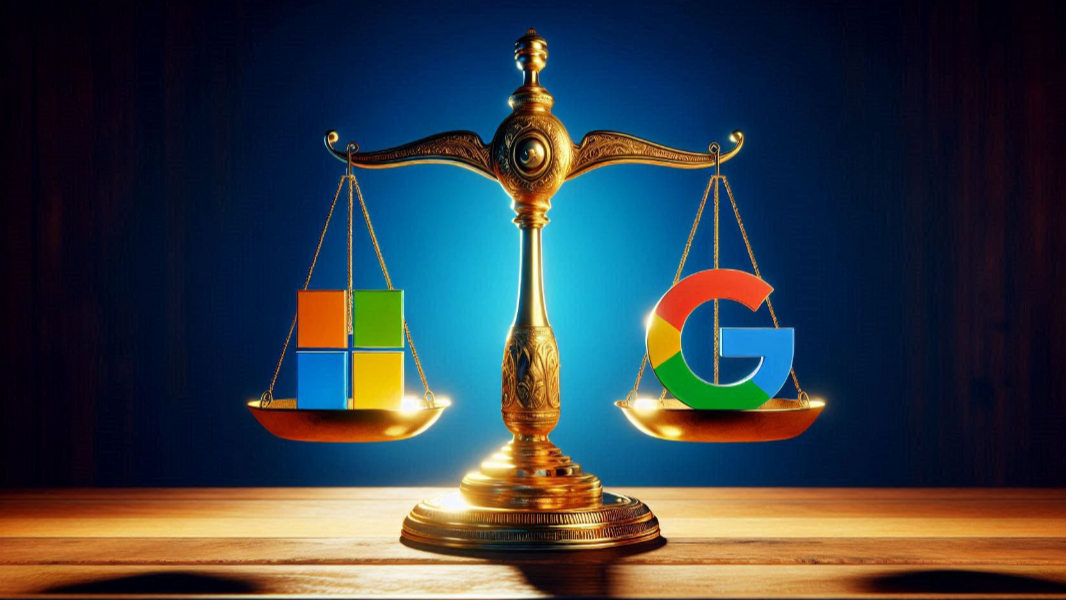
While the parallels between US v. Google and US v. Microsoft are obvious, it’s fascinating how often the software giant comes up in this week’s antitrust ruling against the online giant: The terms Microsoft and Bing appear in this 286-page document over almost 500 times, collectively. But even more fascinating is why: While many of the Microsoft references serve to compare Google’s anticompetitive business practices today with Microsoft’s in the late 1990s, many others are there to paint the software giant in an entirely different light, as a victim. And not just a victim, but perhaps the company that Google’s illegal behavior has victimized the most.
Do not shed any tears for this company.
With a market cap of over $3 trillion and coming off a historically strong fiscal year, despite its incredible spending over $100 billion during that time building out its AI infrastructure and acquiring Activision Blizzard, Microsoft’s going to be just fine, thank you very much. And if I’m reading this ruling correctly, it’s about to get even better. In an ironic twist, Microsoft will likely emerge as the biggest winner in the Google case.
What happened
First, a quick recap: Yesterday, Judge Amit Mehta delivered a brutal takedown of Google and its illegal online search monopoly in the form of a ruling that’s been widely praised by legal experts for its fairness and completeness. That Google has a monopoly in search is patently obvious: Google Search controlled roughly 90 percent of the online search market by 2020, and almost 95 percent on mobile. Its closest competitor, Microsoft Bing, controlled just 6 percent of that market, while Yahoo and DuckDuckGo are also-rans with barely 2 percent share.
Everyone knows that monopolies aren’t inherently illegal. But because Google engaged in “efforts to maintain this position through means other than competition on the merits,” just as Apple has in a similar antitrust case that’s unfolding in parallel, its monopoly is illegal. And Google, now legally a monopolist, will face punishments that will include feeds, behavioral changes, and, possibly, even the divestiture of the advertising business that lies at the heart of its business empire. Those punishments will be determined at a future hearing, and Google, of course, will appeal the ruling regardless. So it could be several months or even a few years before this is fully resolved.
This is all pretty obvious, but I want to again raise an important point about antitrust that many seem to misunderstand. I call this the antitrust paradox. Whether it’s Microsoft in the late 1990s, Apple or Google today, or any other monopolist, there are always two sides to the story that are (or can be) both true, seem contrary, but are, in fact, not mutually exclusive. That is, Microsoft made the argument that its bundling of Internet Explorer with Windows benefitted consumers, while the U.S. Department of Justice (DOJ) alleged that this bundling was illegal because Microsoft did it to harm competitors. Both were, or could be, true. But Microsoft was found guilty of illegal bundling, and the consumer benefits it cited, true or not, didn’t absolve it of guilt. The same is true of Google Search today, which is objectively the best Internet search service but also illegally protected by Google.
I mention this here because this Google case adds a new wrinkle: Google’s illegal protection of Search also contributed to this service being the best Internet search solution. That is, in addition to whatever R&D and innovations that Google poured into making Search the best it could, Google also engaged in “efforts to maintain this position through means other than competition on the merits,” as noted above. This created a virtuous cycle for the product where the additional traffic it drove through the service via steering–its illegal agreements with Apple, especially, but also Android device makers, Mozilla, and others–in turn gave it the volume of data it needed to keep improving Search. Google’s acquisition of a search monopoly was probably legal–it doesn’t really matter at this point–but its subsequent maintenance and expansion of that monopoly–it rose its share from 80 percent of the market in 2009 to 90 percent a decade later–was illegal.
Google obviously continued innovating to some degree during that time, too, adding new features and improving the service in whatever ways. But again, these things aren’t mutually exclusive: Because it did behave illegally, the monopoly is illegal. The good doesn’t outweigh the bad.
Microsoft, the precedent
What that out of the way, let’s take a look at the many references to Microsoft in Judge Mehta’s ruling against Google. Many of them–most of them, it seems–draw parallels between US v. Microsoft in the late 1990s and this case. This is interesting to me on many levels, but I’ve seen some revisionist history being spewed in recent years suggesting that Microsoft somehow “won” that case. But if that were true, it seems odd that it would come up as precedent in this ruling so often.
But Microsoft did not win its US antitrust case. Instead, Judge Thomas Penfield Jackson in November 1999 concluded that Microsoft owned a monopoly in personal computer operating systems and violated the Sherman Antitrust Act multiple times through product tying and illegal monopoly maintenance, harming competitors such as Apple, Lotus, Netscape, RealNetworks, Sun, and others. In June 2000, he ordered Microsoft to be broken up into two companies. And Microsoft, of course, appealed. Then, in an unexpected twist, the US Supreme Court declined to hear the appeal, sending it instead to the D.C. District Circuit Court, which overturned Jackson’s ruling after it discovered that Jackson had engaged in unethical behavior during the trial. This didn’t overturn the findings–Microsoft was still guilty–but it did lower Microsoft’s liability, taking the breakup order off the table.
The case was then remanded to the D.C. District Court and Judge Colleen Kollar-Kortelly. George W. Bush, a Republican less keen to punish giant corporations than his predecessor, was elected as US president. And 9/11 happened, triggering a broader rethinking of priorities at every level of the government. And one year later, in November 2002, the DOJ and Microsoft agreed on a settlement that required the software giant to make specific behavioral changes–it could no longer restrict or retaliate against PC makers that bundled competing web browsers and other software with their computers, for example–publicly document its middleware application programming interfaces so that third-parties could freely duplicate the functionality, allow consumers to uninstall the Microsoft originals.
That Microsoft was kneecapped by this and the even lengthier EU antitrust case that followed is indisputable: The next 10 years–which many Microsoft fans now call “the lost decade”–saw the rise of companies like Amazon, Apple, Facebook, and Google that would go on to forever alter personal computing, creating the more heterogeneous and diverse market we see today. The Microsoft of the 1990s would never have allowed that to happen.
The conclusions of law in Judge Mehta’s ruling against Google lean heavily on the legal precedents established or upheld by US v. Microsoft which, again, were never overturned, despite the eventual settlement. It compares the markets defined in each case–both product and geographic–and the monopolist’s power within those markets. It explains that in both cases, there was a “willful acquisition or maintenance of monopoly power” that included the “procompetitive justifications” I reference above as “antitrust paradox.” Judge Mehta then explicitly states that his conclusions of law are consistent with those in the original Microsoft case.
As with Microsoft, Google illegally restricts the distribution of rival solutions, in this case by entering into expensive revenue sharing schemes with Apple, Android device makers, Mozilla, and other browser makers, dramatically raising the costs, and thus the barrier to entry, for any would-be competitor. “Distribution arrangements designed to lock out potential customers” not only existed in both cases, but were “significant” and a “barrier to entry.” The higher the barriers, the more sustainable the market power over longer periods of time.
Indeed, the barrier to entry is now so high in search that even Microsoft, one of the richest and most powerful companies on earth, can’t justify the expenses required to make Bing competitive with Google Search. More on that below, but the handful of smaller companies that do offer rival search services are all piggybacking on one or more other services (usually Bing). And many are now betting on some future AI breakthrough to level the playing field (including Microsoft).
In owning a monopoly, Google, like Microsoft before it, was able to “profitably raise prices substantially above the competitive level.” This is another key tenet of antitrust, that a monopolist can behave as if there is no competition. “Microsoft’s setting ‘the price of Windows without considering rivals’ prices’ is ‘something a firm without a monopoly would have been unable to do’,” Mehta notes, quoting the original Microsoft ruling.
There is also this notion that the market, as defined, includes solutions that are “reasonably interchangeable by consumers for the same purpose.” In the Microsoft case, this was the PC market, while somewhat similar devices, like the short-lived “information appliances” of that era, were not part of the definition. With search engines, this is straightforward: Consumers can swap out Google Search for rivals everywhere that a search option is provided on devices, in browsers, and so on. In both cases, the “existence of monopoly power is clear.” As is the abuse.
Microsoft, the victim
As noted, many of the Microsoft references in the Google ruling collectively show how Google has illegally bullied Microsoft in the decades since U.S. v. Microsoft. This is fascinating to me.
“The second-place search engine, Microsoft’s Bing, sees roughly 6% of all search queries—84% fewer than Google,” Judge Mehta notes in his ruling. “In 2014, Google booked nearly $47 billion in advertising revenue. By 2021, that number had increased more than three-fold to over $146 billion. Bing, by comparison, generated only a fraction of that amount—less than $12 billion in 2022.” Microsoft’s revenues in 2022 were over $198 billion, so Bing contributed about 6 percent of the firm’s overall revenues, a poor return on its investments of nearly $100 billion over two decades. By comparison, in just the most recent quarter, Google’s revenues from advertising were almost $65 billion, 74 percent of its total revenues.
Apple is key to Google’s success thanks to the iPhone and Safari revenue share agreements, and thus to the ruling. The company is likewise key to understanding how Microsoft, a tech behemoth that spent much of this year as the most valuable company on the planet, was illegally victimized by Google. The ruling discusses the several unsuccessful attempts Microsoft has made to make Bing the default search engine on Apple’s Safari. I assume each of these occurred before the software giant’s AI renaissance.
In 2015, Microsoft argued that a partnership was in Apple’s “best long-term economic interests,” since it would lead to increased competition between Google and Microsoft. Microsoft even went so far as to state “it was ‘willing to provide Apple with the majority of profits in a search partnership along with greater levels of flexibility and control over the product experience including user experience and branding,’ with one example being improved private searching ‘consistent with the broader Apple value proposition around respecting user privacy’.” Microsoft was also willing to “subsidize” whatever revenues Apple lost during the transition, in effect paying Apple the difference between what its search ad revenues generated and what Apple would have gotten from Google.
Apple declined. Microsoft raised its bid, offering Apple a 90 percent revenue share rate, or a little under $20 billion over five years.
Apple declined again. And so Microsoft offered two radical alternatives: It could give Apple 100 percent of the revenues. Or it could sell Bing to Apple.
Apple declined again, noting that Microsoft was “horrible at monetizing advertising,” and “an inferior search engine.” The math was straightforward: By sticking with Google over the next five years, Apple calculated that it would earn about $70 billion, well over the $20 billion a Microsoft partnership would provide. “Google’s a sure thing,” Apple’s Eddy Cue testified. “They have the best search engine, they know how to advertise, and they’re monetizing really well.” An Apple analysis of the numbers showed that Microsoft would need to pay it 122 percent of Bing’s revenues over five years to come anywhere close to what it was guaranteed by Google.
On the surface, this doesn’t seem to raise any competitive issues. If you can get over the divide between Apple as it markets itself to the world and Apple the business, the company was simply acting in its best interests. But there’s more going on here. For one, Microsoft believes that Apple used its interest in a partnership to “bid up the price” of the revenue share that Google provided it, and Apple did get a higher revenue share from Google in the ensuing years. Microsoft CEO Satya Nadella even testified that if he pulled Bing from the market, Google wouldn’t even have to pay Apple, since there are no other viable competitors in search. (DuckDuckGo has tried to become Apple’s default as well, but this much tinier company–“a veneer on top of other search engines,” including Bing–was “not good enough” for Apple.)
Worse, the Judge determined that Google’s revenue share payments to Apple, which had exceeded $20 billion for just one year by 2022, were part of a concerted effort on Google’s part to unfairly prevent any rival from gaining a foothold. This is the “barrier to entry” noted above. But it also created a virtuous cycle in which Google Search results drove ever higher revenues from ads, and all the traffic improved the results, making Google Search the superior solution. A win-win, unless of course you’re Microsoft (or DuckDuckGo). It ensures that Google Search is the default on Android by paying hardware makers. (A Google executive noted by email in 2011 that Bing gaining a foothold on Android was a “nightmare scenario” and so it paid a revenue share in return for exclusivity.) And it ensures Google Search is the default on Apple by doing the same.
Remember, the point of this case isn’t that Google has a monopoly in search, it’s that the company engaged in “efforts to maintain this position through means other than competition on the merits.” Google’s share in search is so high, and Bing’s so low, that “Google has no true competitor.” Where Google created a virtuous cycle for Search, Microsoft was stuck in the opposite pattern, a non-virtuous cycle in which the quality delta between Bing and Google Search grew in lockstep with the services’ respective usage shares.
And Google’s grip on the market has only gotten stronger in the past decade. “Like Microsoft before it, Google has thwarted true competition by foreclosing its rivals from the most effective channels of search distribution,” the ruling explains. “The exclusive distribution agreements thus have significantly contributed to Google’s ability to maintain its highly durable monopoly.”
The ironic twist here, of course, is that the hunter became the hunted. Microsoft, which once ran roughshod over the personal computing market, is now a relatively minor player in the consumer part of the market. Consumers turn to Apple and Samsung (which uses Android) for devices. They turn to Apple (and Spotify and Netflix) for entertainment. They turn to Meta/Facebook for social media. They turn to Amazon for online shopping. And they turn to Google for Search, and for related products and services like Maps. Xbox, often touted as Microsoft’s only successful consumer offering, is having its worst year on record, at least from a PR/public perception perspective. Microsoft, once dominant and soulless, is now a victim, at least in this market, pathetic and weak.
That may change.
Looking to the future
While it’s too early to speculate which changes Google will be forced to make, that’s why we’re here. And while some of the more extreme punishments aren’t worth discussing, there are some obvious behavioral changes that will make sense, whether Google gets to keep its advertising business or not. And the most obvious of the obvious is that it will be forced to break its revenue share agreements with Apple and others. And that is an opening for Microsoft. And others. But especially Microsoft.
The happy twist here is that where Microsoft bundled its own products together and created a barrier to entry within its own ecosystem, Google’s barrier to entry is at least partially–maybe even primarily–on other companies’ platforms. Google might be expected to offer a “search engine ballot screen” or whatever in Android, for example. But it’s more likely that Android device makers–and Apple–will simply be able to choose which service(s) to offer. (Google’s in-house Pixel line is too small to matter here.) Many will probably choose Google, frankly. But Microsoft, which does not have a search monopoly, could perhaps now reach an agreement with Apple that would make financial sense. And for both of them.
The loss of Google’s revenue share will hurt Apple–$20+ billion is a lot of money, even for a company that just earned a net profit of $21.4 billion in the most recent quarter–and shareholders won’t be happy. But it can withstand that loss easily. The loss to other, smaller companies, however, could be devastating. 80 percent of Firefox maker Mozilla’s operating budget comes from its Google revenue share payments, for example. And one has to think that many Android device makers are working with tiny margins that would disappear overnight without this perk.
But this, too, can benefit Microsoft: It has the means to fill these gaps, at least some of them. And in doing so, it can create the kind of virtuous cycle that Google achieved, where more entry points leads to more usage leads to better search quality. None of this is a given, but it’s a possibility. It’s also a strategic necessity: Microsoft is betting the company on its AI push, investing–or spending–over $20 billion each quarter to build out its infrastructure. AI is powerful and exciting, but the missing pieces of this puzzle–impossible larger data sets and the ability to answer questions accurately, using facts–require a search engine. Currently, Google Search offers the highest quality, as noted. But if Microsoft could make inroads here, and create that virtuous cycle, it would benefit its AI efforts too. In fact, it might be what puts it over the top.
As Yoda observed, “Always in motion is the future.” Nothing is certain. But it’s interesting to speculate.

Gain unlimited access to Premium articles.
With technology shaping our everyday lives, how could we not dig deeper?
Thurrott Premium delivers an honest and thorough perspective about the technologies we use and rely on everyday. Discover deeper content as a Premium member.