Intel Reminds Everyone It Still Exists on Qualcomm’s Big Day
- Paul Thurrott
- May 21, 2024
-
19
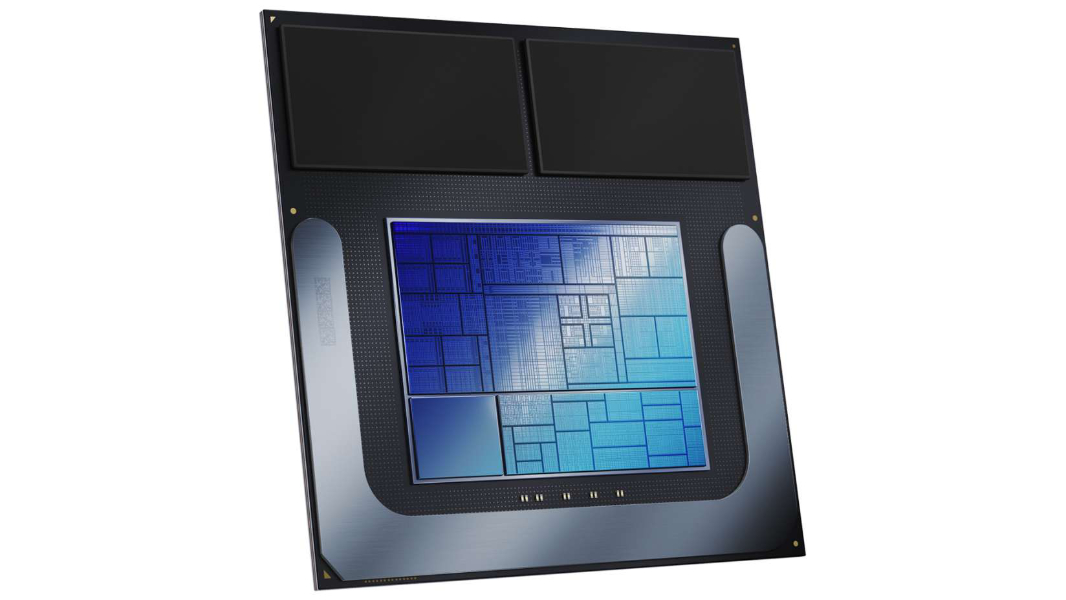
Shut out of today’s Microsoft AI event, Intel tried to undermine Qualcomm’s big day by promoting its coming microprocessor family for Copilot+ PCs, the second-generation Core Ultra chips. Code-named Lunar Lake, these chips will arrive in Q3 in time for the holidays.
“With breakthrough power efficiency, the trusted compatibility of [the] x86 architecture, and the industry’s deepest catalog of software enablement across the CPU, GPU, and NPU, we will deliver the most competitive joint client hardware and software offering in our history with Lunar Lake and Copilot+,” Intel executive vice president Michelle Johnston Holthaus said.
Microsoft paid lip service to Intel and AMD at Monday’s special event, just as it paid lip service to its PC maker partners. And none of these companies seemed all that happy about their demotions, with Microsoft focusing quite heavily on Qualcomm and its own in-house Surface PCs, both of which can best be described as also-rans in the PC industry.
But Qualcomm has seemingly done the impossible. Not only has it finally delivered a viable Arm chipset for Windows PCs after years of failing, its Snapdragon X chips are by all accounts equal to or superior to the Apple Silicon M3 processor that powers the industry darling MacBook Air. Unfortunately, in promoting that fact again and again during the one-hour event, Microsoft also implicitly condemned Intel for not creating similarly efficient PC chips with powerful NPUs for hardware accelerated on-device AI capabilities.
And that shall not stand.
“Starting Q3 2024 in time for the holiday season, Intel’s upcoming client processors (code-named Lunar Lake) will power more than 80 new laptop designs across more than 20 original equipment manufacturers, delivering AI performance at a global scale for Copilot+ PCs,” the Intel announcement notes. The inferences there are clear. On the day that Qualcomm saw its biggest-ever day one adoption of a new microprocessor family, with seven PC makers—Acer, ASUS, Dell, HP, Lenovo, Microsoft, and Samsung—announcing 16 PC models running on its chips, Intel reminded the world how much more industry support it has. Over twice the number of PC makers will utilize its Lunar Lake chips at launch, and they will deliver many more PC models and sell many millions more units.
Intel’s first generation Core Ultra “Meteor Lake” chips aren’t competitive with the Qualcomm Snapdragon X chips when it comes to their respective NPUs: Where the Qualcomm NPU delivers 45 TOPs of AI-accelerated performance, the NPU in the Core Ultra, ahem, tops out at 11 TOPs. PCs based on the first-gen Core Ultra are so-called “AI PCs,” but they don’t qualify as Copilot+ PCs because of this NPU shortcoming. And that means they won’t get any of the AI-powered Windows 11 features that Microsoft showed off today.
But the NPU in the second generation Intel Core processors will mostly close the gap by offering 40 TOPs of performance. So, PCs based on that coming chipset will thus qualify as Copilot+ PCs and will get the same AI features that Snapdragon X-based PCs will ship with in late June.
AMD didn’t play the spurned lover card today, but it, too, has a coming generation of PC chips that will meet the Copilot+ PC NPU requirements and will ship in new PC designs later in 2024 as well. As with Intel, its current generation chips fall far short of Qualcomm in NPU performance. For example, the NPU in the AMD Ryzen 7 8700F Processor provides 16 TOPs.
Meanwhile, the PC makers are caught in the middle. Each of the companies that supported Qualcomm with new PCs also partners with Intel, and many ship at least a handful of AMD-based products too. But they were afforded little attention at Monday’s Microsoft event, and only at the end of the presentation. And at the post-event showcase, Microsoft’s two new PCs were somehow given about three times as much space as all the other PC makers combined, in sharp contrast with the relative success of each. It was impossible not to perceive this as a snub.
In the short term, Intel has as little to fear from Qualcomm as the PC makers has to fear from Surface. But Monday’s event was an unsettling reminder to all parties involved that things are changing. And the old alliances that dominated this industry for decades could come crashing down if Intel doesn’t right its ship. Lashing out at Microsoft and Qualcomm as it did Monday at least shows us that Intel has received that message.