Pixel Imperfect, 2021 Edition (Premium)
- Paul Thurrott
- Dec 09, 2021
-
57
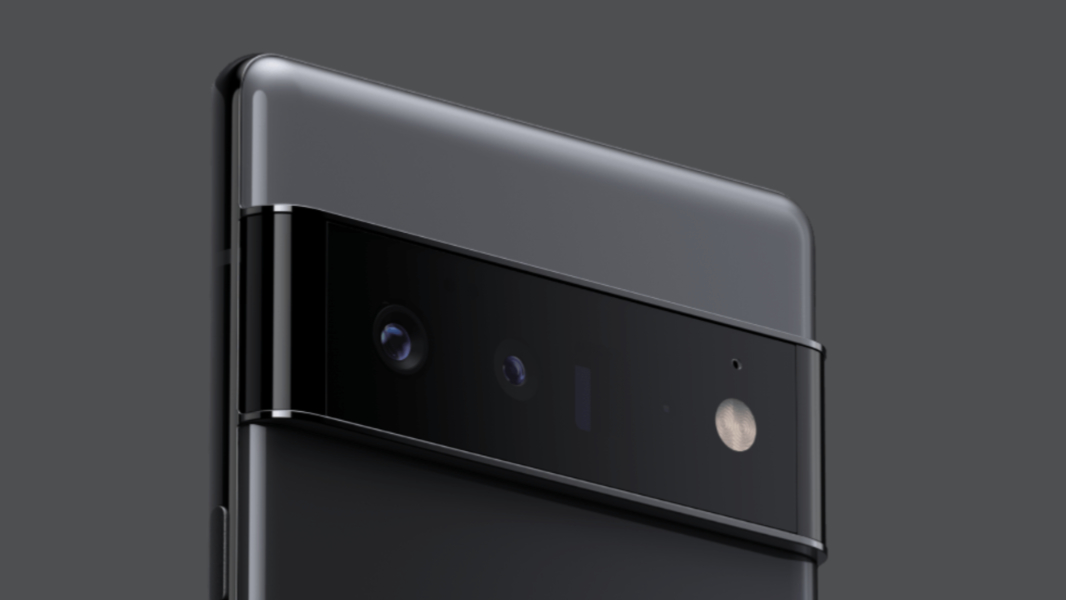
Like many, I was hoping that the Pixel 6 would finally give Android a decisive and obvious answer to the iPhone. But like many, I was disappointed. Most obviously by its slow and unreliable fingerprint reader, its big and heavy form factor, its slow charging, and its unnecessarily curved display edges. But the bigger issue, really, is a never-ending series of reliability issues that make using this handset more and more frustrating over time.
A story to make the point.
If you read My Favorite Audiobooks of 2021 (Premium), you know that I’m currently listening to an audiobook called Set the Night on Fire: Living, Dying, and Playing Guitar with the Doors that’s written by Doors guitarist Robby Krieger. And as you might imagine, it’s full of stories of Jim Morrison, the enigmatic lead singer of that band who is perhaps most well-known for his chaotic and unpredictable behavior.
Krieger loved Morrison and loved working with him, but one the stories he tells involves Morrison finally convincing him to let him drive Krieger’s new VW van to a gig. On the way there, Morrison suddenly yanked the wheel to the left for no reason, sending the van hurtling into oncoming traffic and everyone and everything in it—including all the band’s gear—flying all over the place. Just as suddenly, he yanked the wheel to the right again, putting the van, which had nearly toppled over, back on track. They arrived at the show, safe but frazzled.
And that was Morrison in a nutshell, he explained. Chaotic and unpredictable, yes, but the side effect of that never-ending random behavior was that everyone else in the band was constantly on edge, enjoying it when things were fine but constantly worried about the next inevitable incident.
That’s exactly what using the Pixel 6 Pro is like.
And, no, I’m not exaggerating. As I wrote in my review of the Pixel 6 Pro, one of the issues—which I have started experiencing again, by the way—involves apps not launching. Yes, it’s usually just annoying, as when I had to pay with a credit card at Dunkin’ the other day because the app wouldn’t start. But sometimes it’s dangerous, as it can be the app is something like Google Maps, which has happened as well. That this is still happening well over a month after I got the phone is troubling.
Equally troubling, I exited the gym one day last week and wanted to call my wife. I got into the car, which I started, buckled up, and put my earbuds back in their case. Then I picked up the Pixel 6 Pro and tapped the screen to wake it up so I could sign in with my finger. Nothing. That happens all the time, so I pressed the power button. Nothing. That happens sometimes as well, so I tried some combination of screen taps and swipes and button pushes. Again, nothing.
What the … I tried shutting down the device by holding in the power button for 30 seconds or so nothing. Then I tried holding in the power button and volume up for 30 seconds. Again, nothing … no, wait, that did it: when I pressed and held the power button again, the Google logo appeared innocently in the center of the display like nothing had ever happened, and it booted up fine.
There’s more—I previously wrote about other issues I’ve had with this handset in Google Pixel 6 Pro: Problems in Paradise?—but whatever. I can only take so much.
A smartphone, like any other device, is a form of compromise. And I can overlook some issues if its other benefits outweigh the problems. With the Pixel 6 Pro, that balance has always been delicate at best; just read the conclusion of my review. But as the reliability issues have continued since, the scale has tilted further. And not in a good direction.
I have options.
I could try and live with the Pixel 6 Pro, I know. Two days ago, Google announced a major set of fixes for the Pixel 6 Pro series that could address at least some of my issues, and this comes on top of a November update that did partially improve the performance of the in-display fingerprint reader. But given my years of problems with Pixels, I can’t help but think that Google will never fully address the problems. And I know software can never fix the Pixel 6 Pro’s bulk, curved display, and too-slow “fast” charging. I’m wary.
I also have other phones here, including the Google Pixel 5a and the OnePlus 9 Pro. Each counters some of the Pixel 6 Pro’s problems with attributes I prefer. The Pixel 5a, for example, is just the right size, in my subjective view, and considerably lighter than the 6 Pro, and it has the flat display I prefer. And the OnePlus 9 Pro is likewise smaller and lighter, and though it does have a curved display, it’s not as onerous as that on the Pixel 6 Pro. The OnePlus also has the fastest charging I’ve ever experienced with any smartphone, assuming you use its bundled charger.
But these phones have issues, too. Neither can match the Pixel 6 Pro’s overall photographic prowess, though both come close with the main and ultra-wide lenses. But the Pixel 5a lacks a telephoto lens, and while the OnePlus has one, it’s so bad that it’s like it doesn’t. The Pixel 5a’s performance is, at best, leisurely, and that can get annoying. And since the OnePlus merger with Oppo, the handset’s once-vaunted Android rendition has gone south dramatically, casting serious doubts about the future.
I could also get another phone, of course. But Samsung’s flagships are quite expensive, and I’m not a fan of that firm’s software overloading or duplicative services, and so it’s unlikely I’ll go in that direction again. And that leaves only one other possibility.
Apple.
I certainly have my issues with Apple, but then I have my issues with Google too, so that’s kind of a moot point. The question is whether the latest iPhone, which comes with all kinds of issues of its own—I’m quite clear-eyed about that—can balance the equation in ways that the Pixel 6 Pro right now cannot. I’m not sure.
But as a matter of full disclosure, I’ve rage-ordered an iPhone 13 Pro three times, and that each of those occurred after my Pixel 6 Pro arrived. (You may recall how happy I was not to have to even worry about buying a new iPhone after the launch event in September, so positive I was that the Pixel 6 Pro would meet my needs. How naïve.) And each order occurred after the Pixel 6 Pro had failed in some way.
But thanks to supply issues and demand, the iPhone 13 Pro has never been available for immediate sale. You can order one, but then you need to wait weeks for it to arrive. And with two of the three orders I made, that gave me time to calm down and reconsider. It happened quickly with my first order, which I made on November 14 and then canceled on November 16. But I waited longer with the second order, which I made on November 16 and then eventually canceled on November 27.
But on Friday, December 3, I ordered another Graphite iPhone 13 Pro, again with a Sequoia Green leather case. And this time I’m going to let it happen.
Granted, that doesn’t mean I’m going to keep it: my experience with this handset will dictate that. It also doesn’t mean that I’ll “switch” back to the iPhone, since I tend to move between different devices throughout any given year. But we’ll see. I’m open to any possibility at this point.
Part of what is guiding this internal conflict is my strong belief in using the right tool for the job, a topic I first addressed way back in 2013. The summary is simple enough: “One device that does everything is one device that does everything poorly.” I wrote this initially because a co-worker was trying to use an early iPad as a pseudo-laptop, many years before that was formally supported by Apple and made even a lick of sense. But it’s still true today, at least for me: I still use a smartphone, a tablet, and a laptop, and I’ve never found an acceptable version of any of those devices that could replace another. I’ve sure tried.
That each of these devices comes from a different platform maker is interesting but perhaps coincidental. I prefer Android for phones, for example, but I’ve gone back and forth between Android and iPhone over the years. There’s no Android substitute for the iPad that makes any sense at all. And every time I use a Mac, I can’t wait to get back to Windows.
But I’m focusing on the phone bit here. The last time I used an iPhone full-time, so to speak, was 2015, and I only remember that because I brought my iPhone 6 Plus to Lyon that year, which was our first home swap since I moved from Penton to Thurrott.com. But I’ve owned almost every iPhone ever made over the years—or, I should say, in more recent years, I’ve owned at least one iPhone of almost every generation. The only major exception was the iPhone 4 (thanks to Antennagate and the arrival of Windows phone), though in more recent years, I did buy some iPhones to review, like the iPhone X, and then returned them.
Given this history, my daily iPad use, and the welcome improvements that Apple had made in both iOS 14.x and iOS 15, transitioning to an iPhone shouldn’t be too difficult. Again, assuming that the cons don’t outweigh the pros. I expect that the overall photography experience will be comparable to that of the Pixel, and I know the video quality will be better. All of the apps and services I use on Android are obviously available on iPhone, and many still look and work better on iOS, inexplicably. I can avoid lock-in easily enough since I don’t really use any Apple services and won’t. My Mint and Project Fi accounts will work fine, via eSIM or a nano-SIM, so I can use both together when I travel internationally, as I do on Android. And that there will even be some advantages, for example, with regards to app tracking.
Android, of course, is still more configurable than iOS, especially with regards to the home screen, though there are some workarounds involving blank widgets I’ll be looking into. And the Pixel has some features, like an always-on display and super-accurate Google Assistant-based voice type, that the iPhone does not.
But I want something that works. And Google has driven me to at least try the iPhone again, not Apple. That’s how frustrating the Pixel 6 Pro is for me right now.

Gain unlimited access to Premium articles.
With technology shaping our everyday lives, how could we not dig deeper?
Thurrott Premium delivers an honest and thorough perspective about the technologies we use and rely on everyday. Discover deeper content as a Premium member.