WordPerfect Co-Founder Bruce Bastian Has Passed Away
- Paul Thurrott
- Jul 03, 2024
-
24
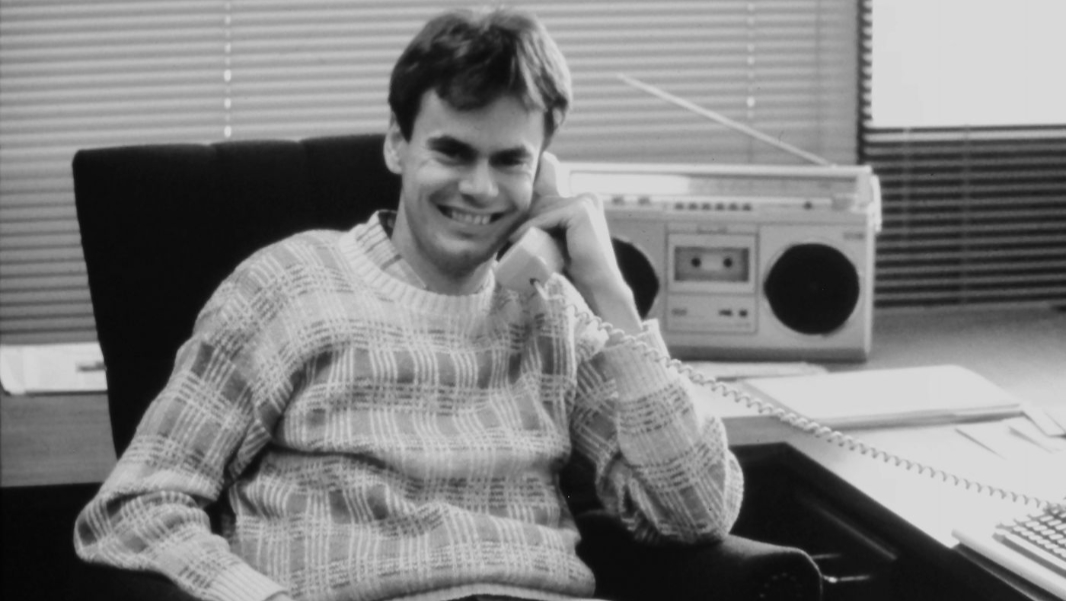
WordPerfect co-founder Bruce Bastian passed away recently from complications associated with pulmonary fibrosis. He was 76 years old, and while the software he led the creation of succumbed to Microsoft’s predatory business practices in the 1990s, its innovative legacy lives on and can be seen in all the writing tools we still use today, 40 years later.
Bastian and Alan Ashton (no relation to Ashton Tate) created the first version of the WordPerfect word processor for a Data General minicomputer while students at Brigham Young University in 1979. But they retained the rights to the software, and the two co-founded Satellite Software International (SSI) later that year to sell it commercially. They then ported it to the IBM PC in late 1982, using x86 assembly language until version 5.0, when they finally switched to C. Bastian did most of the software development work.
The pair renamed SSI to WordPerfect Corporation in 1985 to capitalize on the success of the brand, and by 1986, WordPerfect had become the most popular word processing software in the world. This was thanks to its performance—thanks to its assembly code base, WordPerfect was much faster than any other MS-DOS word processor—and to its massive library of printer drivers, which shipped on additional floppy discs in the box with the software. WordPerfect was curiously popular in the legal field, even after its dominance had passed.

WordPerfect was so popular that the makers of rival word processors, including Microsoft Word, were forced to include WordPerfect compatibility modes in their apps that mimicked its unique keyboard shortcuts and minimalist user interface. But with the rise of Microsoft Windows in the 1990s, WordPerfect lost steam. Microsoft purposefully withheld the Windows APIs from WordPerfect to slow its migration to the platform. And many of WordPerfect’s advantages, including its support for so many printers, were no longer viable as Windows provided that compatibility to all apps.
Faced with an uncertain future, Bastian and Ashton first partnered with Novell and Borland to take on Microsoft Office; Novell’s CEO, Ray Noorda, was obsessed with defeating rival Bill Gates, and he assisted the U.S. Federal Trade Commission (FTC) in its original antitrust investigation against the then-growing software giant. But the two finally sold WordPerfect to Novell in 1994 for $1.4 billion. Novell’s attempts to thwart Microsoft Office failed, and the firm sold WordPerfect to Corel, now named Alludo, in 1996. Alludo still owns—and, believe it or not, sells—WordPerfect today. (It also owns Parallels, PaintShop Pro, Roxio, WinZip, and other popular tech brands.)
As for Bastian and Ashton, the two went in different directions after the sale to Novell, with Bastian using his wealth for philanthropic purposes and Ashton starting a venture investment firm. In his later life, Bastian was well-known as an LGBTQ and human rights activist.
If you’d like to know more about the history of WordPerfect, I can recommend the book Almost Perfect: How a Bunch of Regular Guys Built WordPerfect Corporation by W.E. Peter Peterson. I purchased it on Kindle back in 2011, and it’s only $2.99, but there’s also a free version on the web, uploaded by its author. Bastian also recorded a nice oral history of his life that focuses largely on WordPerfect for Outwords in 2018.