Sonos Preps First Video Product
- Paul Thurrott
- Feb 05, 2025
-
7
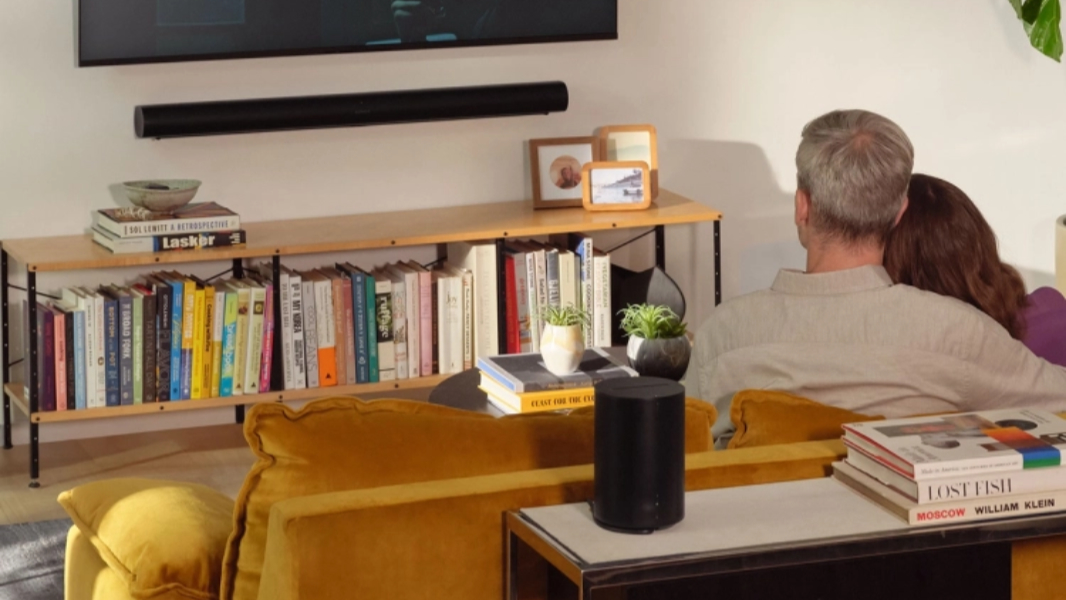
Before the annus horribilis that was its 2024, Sonos was gearing up for the biggest product expansion in its history. And key among the new products it expected to ship last year was its first-ever video product, a streaming set-top box to compete with Apple TV, Amazon Fire TV, and Roku.
Life had other plans for Sonos: Thanks to Sonosgate–its decision to rush a new app version to market so it could ship its first headphones–Sonos was forced to dramatically scale back its new hardware plans so it could focus on fixing that app. By the time the year ended, the company had shipped just two more new hardware products–revisions to its Arc soundbar and Sub subwoofer–in addition to the headphones. In January, it finally and belatedly fired the CEO who architected all the mistakes.
With that behind it, Sonos appears to be gearing up to expand its hardware offerings as originally planned. You may recall the late 2023 report that it would start a “multi-year product cycle” that would include a surprisingly long and aggressive list of new hardware products, software, and services. Key among them was a living room set-top box, or streamer, codenamed Pinewood.
In late 2023, Pinewood was described as a $150 to $200 Android-based device with apps that would act as a central hub for other Sonos equipment in a home. It would offer Dolby Vision HDR video and Dolby Atmos spatial sound capabilities, and voice control. And there would be an accompanying Sonos-branded video service.
In September 2024, we learned that Sonos had partnered with a company called The Trade Desk to create Pinewood. This report confirmed the use of Android–in open source AOSP form–and that the product had been delayed to 2025. But not much else.
Today, however, we’re learning more. The Verge reports that Sonos will release Pinewood “in the coming months” and that it will cost a “staggering” $200 to $400. The hardware is allegedly non-descript, a black rectangle the size and shape of a deck of trading cards (not playing cards?). It allegedly has a “beautiful” on-screen user interface, will integrate content from Netflix, Max, and Disney Plus in a unified experience, and will indeed using Sonos Voice Control in addition to a remote control.
Pinewood will also work as an HDMI switch, the report notes, and it has “several” HDMI ports with pass-through capabilities so customers can attach video game consoles, Blu-ray players, and other devices as needed. Pinewood will allow Sonos to “take greater control of the I/O stack” for lag-free wireless TV audio to Sonos soundbars and speakers. And it will enable more elaborate Dolby Atmos speaker configurations than is currently possible with Sonos.
From a connectivity perspective, Pinewood will support Wi-Fi 7, a first for the company, and gigabit Ethernet. The publication claims that this is somehow “Sonos’ most important product introduction of 2025,” which can only be explained by it possibly being the only Sonos hardware introduction of 2025 (or, as The Verge puts it, “anytime soon”).
I hope Sonos doesn’t have a lot riding on this. It has irreparably harmed its reputation with many previously loyal customers, including this guy. And as is the case with headphones, the world isn’t exactly crying out for yet another set-top box from yet another company. The rumored new price tag is also a problem, even for the well-heeled customers Sonos relies on.
Hopefully, Pinewood will require a new app. Now that would be revolutionary.