Microsoft Finally Kills OneNote for Windows 10
- Paul Thurrott
- Mar 22, 2025
-
7

It was once the future of OneNote, but it quickly became the past, and now it’s being led out to pasture, albeit belatedly.
“OneNote for Windows 10 will reach end of support on October 14, 2025,” a note to the Microsoft 365 Message Center explains. “Organizations should migrate to OneNote on Windows (OneNote M365) to ensure continued access to new features, security updates, and improved performance.”
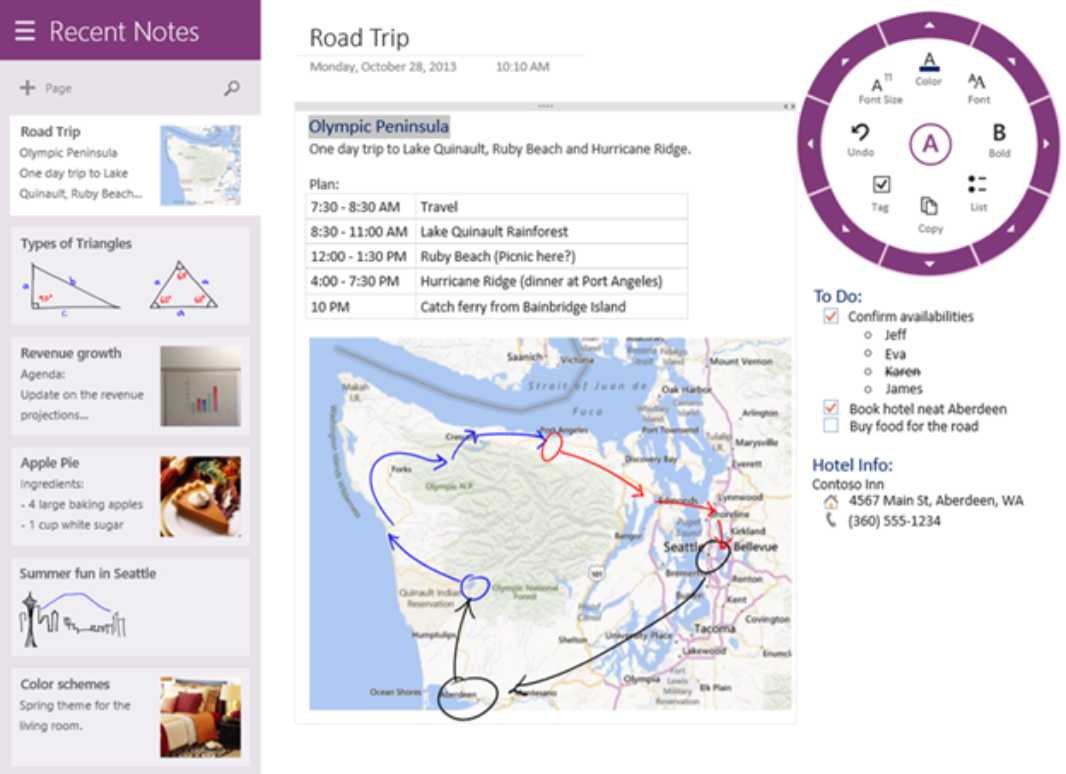
OneNote for Windows 10 began life as OneNote MX (“Metro eXperience”), a Metro-style app that quietly betrayed the Office team’s limited support for Windows 8. At the time, OneNote MX was a minimalist app that featured a single radical UI innovation, a so-called radial menu that offered context-sensitive commands as needed. It was quickly renamed to OneNote, despite there being a OneNote 2013 in the then-current Office suite. And it was updated to support the Share charm and other features for Windows 8.1. It was the rare example of a great “modern” app–Microsoft had to drop the Metro brand for legal reasons–and by the time Microsoft was shifting to Windows 10, it had inspired the Office team to bring its full suite to this modern environment, which would now work across PCs, tablets, and phones.
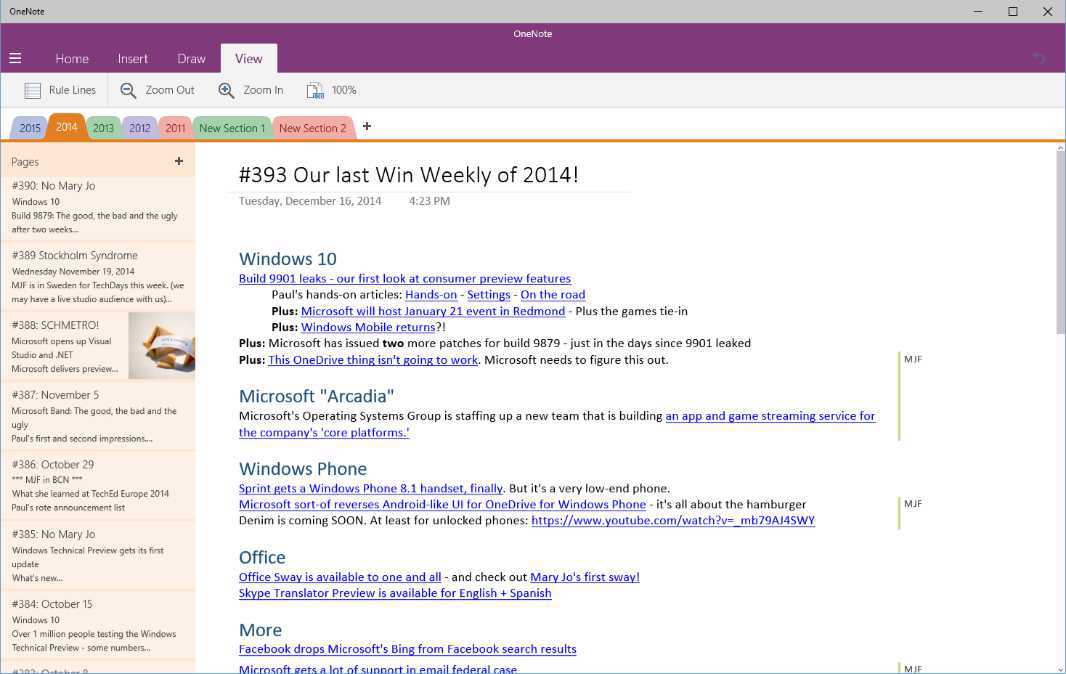
For Windows 10, this mobile OneNote was given a simplified ribbon interface similar to that in the other Office mobile apps. And like its predecessor, it was included with the base OS. By this point, OneNote was described as a “universal” app, but it was still one of two OneNote app versions on Windows: Office 2016 shipped with yet another desktop version of the note-taking app, too.
And then it happened. In 2018, Microsoft announced that it OneNote 2016 would be the final version of the desktop app. Office 2019 would snip with what was now called OneNote for Windows 10, instead, and it would be the only version of the app updated with new features moving forward.
Until, of course, that it wouldn’t. In 2019, Microsoft reversed course, announcing that it would “revamp” the desktop version of OneNote 2016 with a visual refresh, and it said that it would add new features to both versions of the app. And then in 2021, it announced the inevitable: It would stop updating OneNote for Windows 10 and would instead move forward with the desktop version of the app, again, instead. It claimed it was “unifying” the two clients. In 2022, it put OneNote for Windows 10 in the Microsoft Store. And in 2023, it deprecated OneNote for Windows 10 from Windows 11. Windows 11 version 23H2 was the first to not include this app by default.
So this can’t be a surprise to anyone. But the rationale for ending support for OneNote 10 for Windows 10 is that the app doesn’t support Microsoft Information Protection (MIP) sensitivity labeling, which Microsoft says “is essential for securing sensitive data. Users relying on outdated versions will lose access to labeled content.”
But there’s more to it, as it turns out. Not the least of which is this year’s end of support for Windows 10 as well.
“OneNote on Windows (OneNote M365) is the future of OneNote, with continuous investment in AI-powered features like Copilot to enhance productivity,” the Microsoft 365 Message Center continues. “The legacy version no longer receives updates or bug fixes, leading to potential performance issues and reduced functionality. Starting [in] June 2025, users of OneNote for Windows 10 will experience slower sync performance, impacting real-time collaboration and multi-device access. [And] beginning [in] July 2025, users of OneNote for Windows 10 will see in-app banners prompting them to switch to OneNote (M365), which could impact their workflows.”
So there you go. We had a good run.