Build 2025: This Year is All About Agentic AI
- Paul Thurrott
- May 19, 2025
-
5
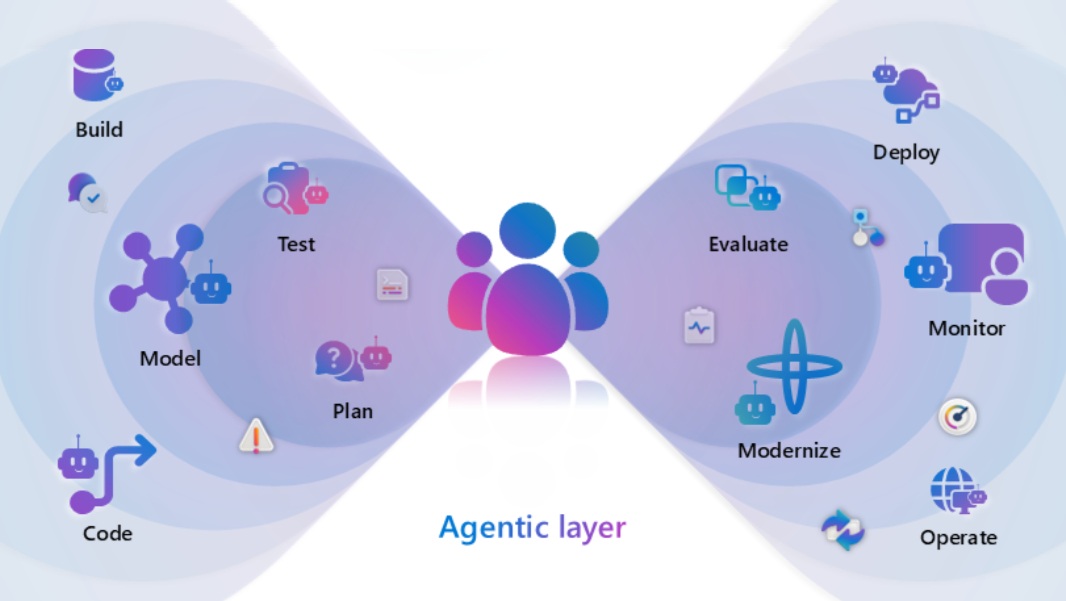
Microsoft Build 2025 opens today in Seattle, and the messaging is familiar: We’re (still) in the era of agentic AI. But this year, agents are learning to interoperate with each other to take on ever-more complex tasks.
“Thanks to groundbreaking advancements in reasoning and memory, AI models are now more capable and efficient, and we’re seeing how AI systems can help us all solve problems in new ways,” Microsoft chief communications officer Frank X. Shaw says. “Developers are at the center of it all. For 50 years, Microsoft has been empowering developers with tools and platforms to turn their ideas into reality, accelerating innovation at every stage. From AI-driven automation to seamless cloud integration and more, it’s exciting to see how developers are fueling the next generation of digital transformation.”
Microsoft is debuting numerous AI initiatives for developers at the conference this year, and I’ve written separately about improvements it’s bringing to native Windows app development, Windows 11 AI capabilities, and GitHub Copilot. Those articles are conspicuously focused on the desktop, which is my focus. But as a cloud computing superpower that’s transitioning into a similarly powerful force in AI, Microsoft’s developer push is far bigger than what I’ve discussed elsewhere.
On that note, here are some of the key AI announcements for developers from Build 2025.
Azure AI Foundry provides developers with the infrastructure for building enterprise-class generative AI apps by providing them with AI tools, grounded machine language (ML) models, and app development life cycle management capabilities. Today, Microsoft revealed that the xAI Grok 3 and Grok 3 mini models are available in Azure Ai Foundry alongside the other 1900+ models it hosts.
Azure AI Foundry Agent Service is now generally available, and it’s arriving with new capabilities: agent orchestration so you can use multiple agents to handle complex tasks, Model Context Protocol (MCP) support, Agent-to-Agent (A2A) support, an SDK for Semantic Kernel and AutoGen, and new Azure AI Foundry Observability features so you can track metrics like performance, cost, and safety more easily. You can learn more here.
Microsoft Entra Agent ID is now available in preview, allowing developers to create agents in Copilot Studio or Azure AI Foundry, assign them unique IDs in the Entra directory, and securely manage them with governance tools, automated evaluations, and reporting. You can learn more here.
Microsoft 365 Copilot Tuning helps customers use their internal data, workflows, and processes to train models and create agents using low-code techniques. Related to this, Multi-agent orchestration in Copilot Studio lets you connect multiple agents so they can work together to take on more complex tasks. And the Microsoft 365 Copilot Wave 2 spring release is now generally available and begins rolling out immediately. You can learn more here.
NLWeb. This new open project is positioned as the HTML of the agentic web: It lets websites present a conversational interface using the AI model of their choice with their own data so users can interact with it in a rich, semantic way. Websites can also optionally make their content discoverable and accessible to AI agents. You can learn more here.
Azure AI Search now offers agentic retrieval in public preview with a new Voice Live API for real-time speech input and output.
SQL Server 2025 is now available in public preview, providing extensive built-in support for AI capabilities, developer productivity, and seamless integration with Microsoft Azure and Fabric. AI is directly integrated into the database engine, Microsoft says, enabling intelligent search, vector search, semantic search and filtering, and natural conversational experiences. T-SQL now offers model management and definition capabilities with REST API support, embedded generation and text chunking, and integration with AI frameworks like LangChain, Semantic Kernel, and Entity Framework Core. It’s described as the most significant release of SQL Server in the last decade. You can learn more here.