Google I/O 2026 Kicks Off With AI Model, Coding, and Agent Updates
- Paul Thurrott
- May 19, 2026
-
3
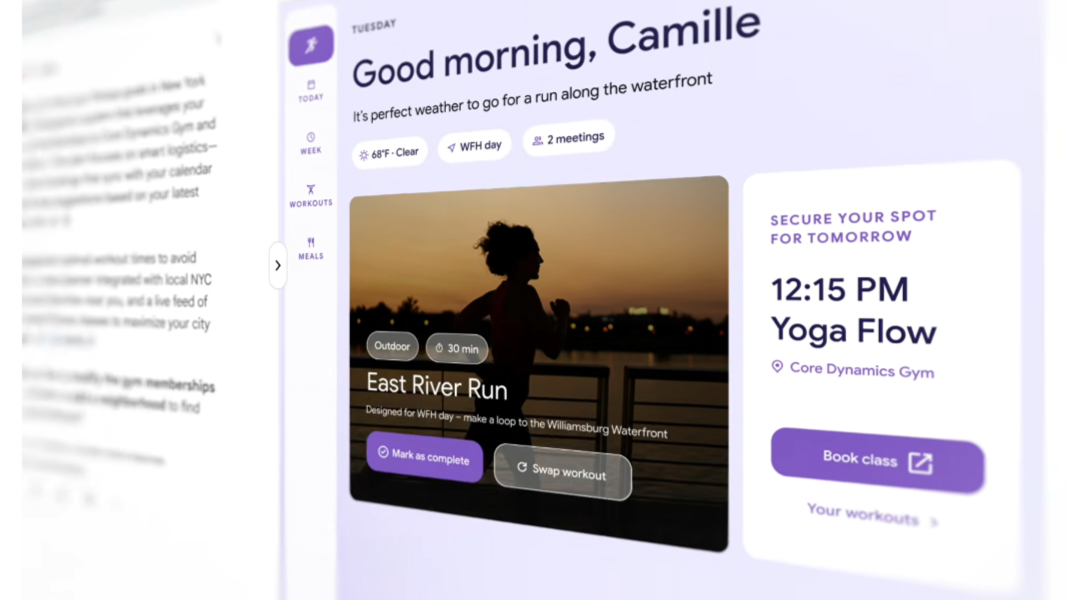
Google opened its annual Google I/O developer conference with an AI show of force highlighting new advances and its impressive reach.
“Today we have 13 products with over a billion users each and five of those have more than 3 billion users,” Google and Alphabet CEO Sundar Pichai said during his I/O keynote presentation. “Our Gemini models are a big reason more people are using our products, and why they’re using our products more.”
Google’s announcements are staggering. So let’s start with some more numbers.
Google says that it was processing 9.7 trillion tokens each month across all its surfaces two years ago and that this number rose to 480 trillion tokens one year ago and to over 3.2 quadrillion per month now, a 7x improvement in just the past year. Over 8.5 million developers are building apps and services with Google’s models now. Its model APIs are generating about 19 billion tokens every minute. And over 375 Google Cloud customers have each processed over one trillion tokens over the past month.
Those 13 products with over one billion users include Gmail, Google Search, Android, Chrome, Google Drive, Maps, Google Play, Calendar, Photos, Authenticator, Lens, Messages, and YouTube. Of those, five–Gmail, Google Search, Android, Chrome, and YouTube–have over 3 billion users each.
Looking just at Search, AI Overviews now accounts for over 2.5 billion monthly active users, and AI Mode has surpassed over 1 billion monthly active users. The Gemini app had over 400 million users one year ago, but this year it’s at 900+ million, more than doubling its usage in one year. Nano Banana has generated over 50 billion images in the past year too.
Google also reiterated that it plans to spend $180 billion to $190 billion this year on Capex/AI infrastructure, a 6x jump over the $31 billion it spent in 2022. A big part of that is deploying its new datacenter TPUs, which now include the 8th generation TPU 8t and 8i. TPU 8t is optimized for large-scale training, while 8i is for inference.
Tied to this, Google announced Gemini Omni, which it describes as a world model capable of generating content in any output modality from any input. The first outputs will be video-based, with image and text to follow. The first Omni model, called Omni Flash, is available now in the Gemini app, Google Flow, and on YouTube Shorts, and developers will get APIs in the coming weeks.
There’s also the first Gemini 3.5 model, Gemini 3.5 Flash, which outperforms Gemini 3.1 Pro across almost all benchmarks while being dramatically faster and less expensive to operate; Google says that if the companies processing about 1 trillion tokens a day shifted 80 percent of their workloads from other frontier models to 3.5 Flash, they would save over $1 billion dollars annually.
Google recently introduced an Ask Maps feature for Maps, and today it unveiled Ask YouTube, which will roll out broadly in the U.S. this summer.
“Ask YouTube entirely reimagines the experience, making information much more digestible and easy to navigate,” Pichai said. “You’ll see videos that best match your interest, and most importantly, it jumps right to the part of the video most relevant to you.”
Google also announced Docs Live, which brings more Gemini and voice-powered functionality to its productivity apps. Today, you can use this to create new documents, but Google plans to add direct voice-based editing this summer.
On the developer front, Google unveiled Antigravity 2.0, a major update to its agentic coding IDE that now supports the creation and management of multiple autonomous agents. There’s a new desktop app–the original version was web-based only. There’s also a Gemini Spark personal AI agent that works with Antigravity on the backend, runs on dedicated virtual machines in Google Cloud, integrates seamlessly with tools, including third-party tools using MCP, and will appear in Gemini first followed by Gmail and chat. Android will have a new UI space called Android Halo, coming later this year, that will provide live updates on Spark agents. And Spark will come to Chrome later this summer.
Google Search will gain agentic coding capabilities powered by Gemini 3.5 Flash and Antigravity that will build custom app-like experiences with dynamic layouts and interactive visuals in response to your queries. This is coming globally this summer and will be free.
There’s so much more.
The Gemini app is getting a Daily Brief that digests and synthesizes information from your inbox, calendar and tasks. Google Flow is gaining agents that can plan and reason through complex tasks on your behalf. Google Pics is a new AI-based image creation and editing tool built with Nano Banana that will roll out to Google AI Pro and Ultra subscribers in Workspace this summer. And Google previewed new smart eyewear that will work with Android XR and ship later this year from various third parties like Warby Parker.
“As we look across the full stack of innovation, from the infrastructure behind TPU 8i to the frontier capabilities of Gemini 3.5 and Antigravity, it’s clear we’re firmly in our agentic Gemini era,” Pichai concluded. “I’m excited to see how it will unlock new ways to accelerate our mission and transform our products to be radically more helpful, for everyone everywhere.”