Google Home Speaker First Impressions
- Paul Thurrott
- Jun 25, 2026
-
12
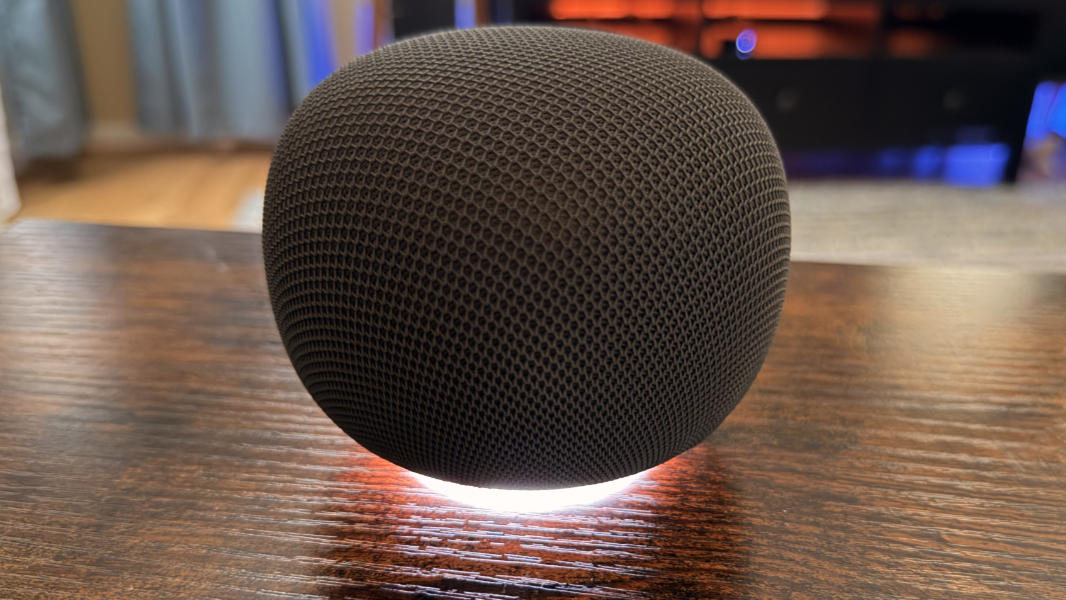
The Google Home Speaker replaces the Google Nest Mini and Nest Audio, both of which are horribly out-of-date and haven’t been upgraded in several years. I assume the goal was to create a “Goldilocks”-type speaker, in that the Google Home Speaker is bigger than the Nest Mini but smaller than the Nest Audio.
But there’s some awkwardness here, too. Google has a habit of letting products sit untouched for years, and I would understand anyone not trusting the company here. Plus, the Google Home Speaker is being marketed specifically for Gemini, Google’s AI, and it can be seen as part of a massive marketing push of which many are, likewise, distrustful.
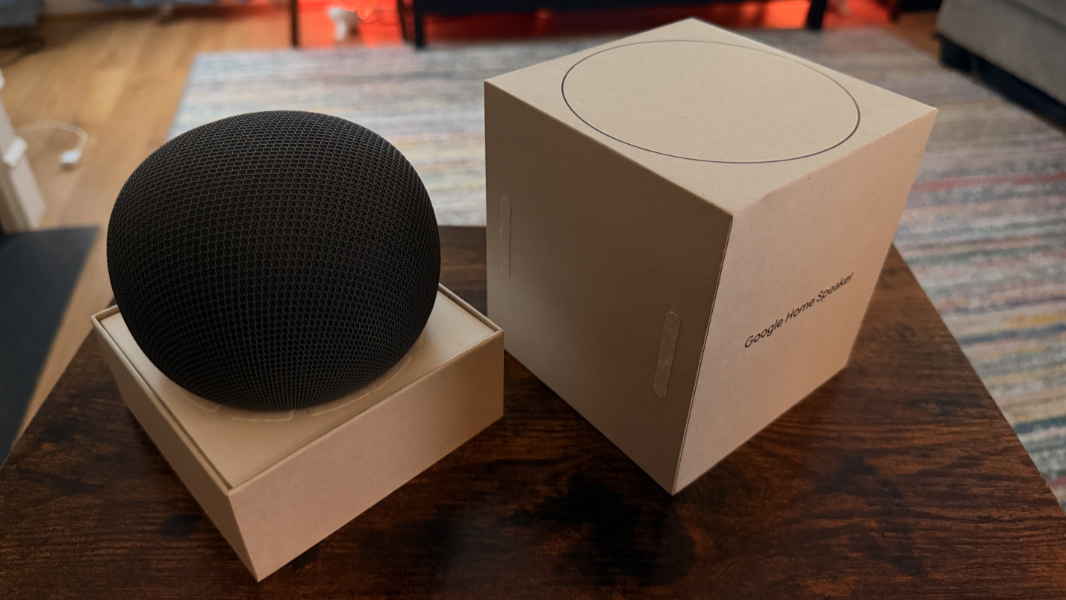
And like any Apple or Amazon speaker, this isn’t for audiophiles. You could stereo pair this speaker with another, but that’s the end of that. There’s no bigger home theater setup possible, no Minis still in the market to serve as rear speakers or whatever. There’s literally nothing else. You can have one or more of these speakers, you can create a stereo pair with any two of them, and have a whole house setup with decent but not spectacular sound.
So it is what it is, a Google-branded, Gemini-powered alternative to Apple’s HomePod/HomePod Mini and Amazon’s Echo Dot Max/Echo Dot that doesn’t really line up perfectly again any of those products. I assume most Google Home Speakers will be used in a single speaker setup, and that this is mostly about people using natural language–speaking–to interact with online services and AI, play music and other audio, and basically do what they’ve been doing for years on previous speakers with previous-generation digital assistants.
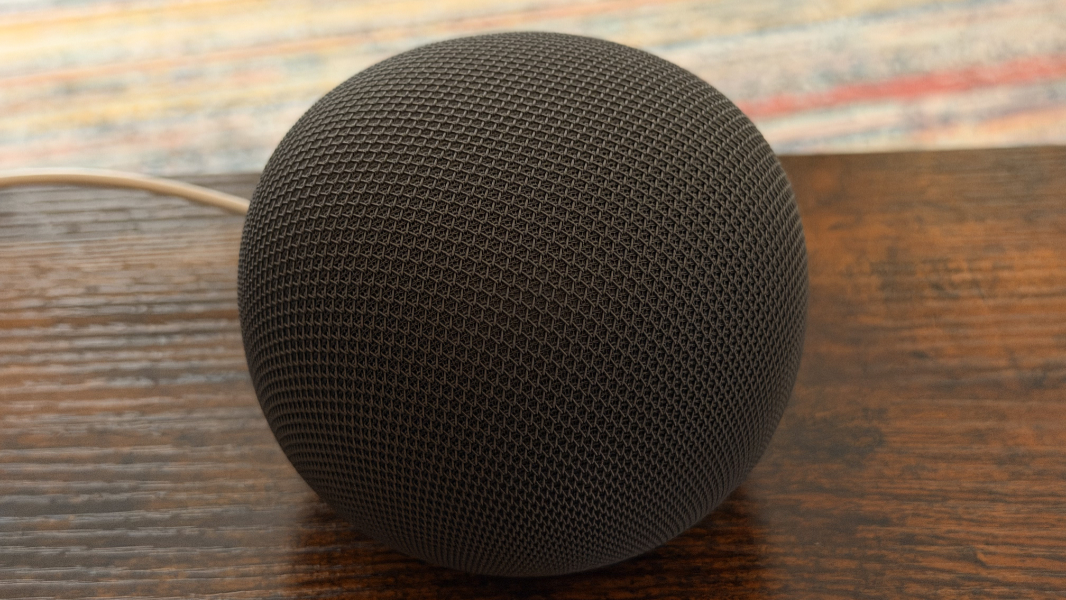
It does, at least, come in a range of curious but interesting colors: Jade (green), Berry (hot red), Porcelain (off-white), and Hazel (dark gray). I briefly considered the Jade version because that’s just about my favorite color, but I also want this thing to make sense in our home, so I went with the more conservative Hazel instead.

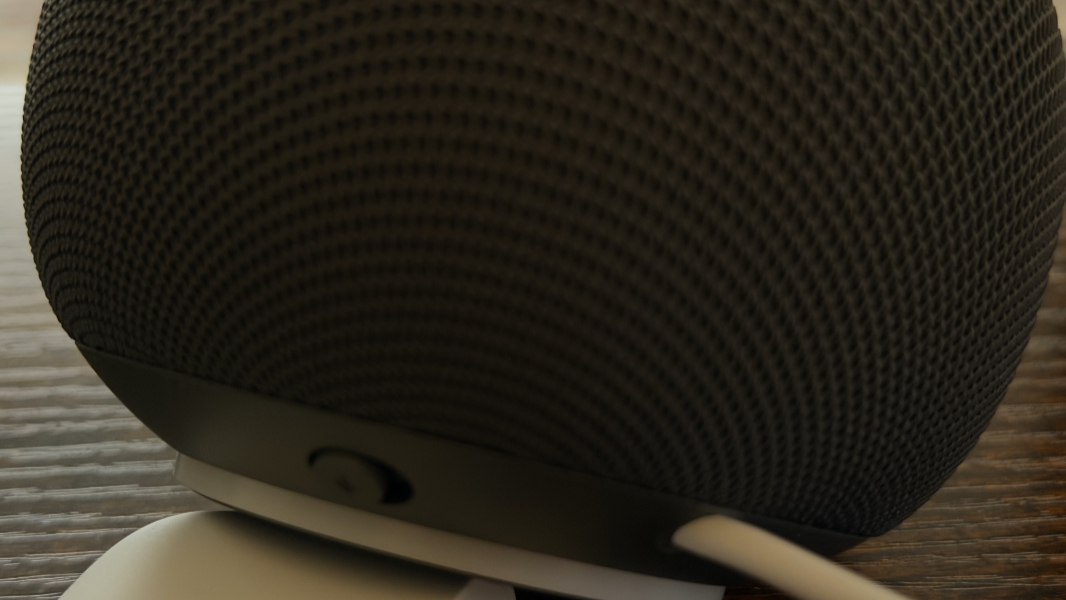
It’s a nice-looking speaker, with a mesh outer cover similar to that on HomePods, a hard-wired (“captive”) USB-C cable I am not a fan of, capacitive touch controls, three far-field microphones, and, on the outside bottom, a hardware microphone mute switch that I am a fan of. And Google does at least include a 30-watt power adapter in the box.
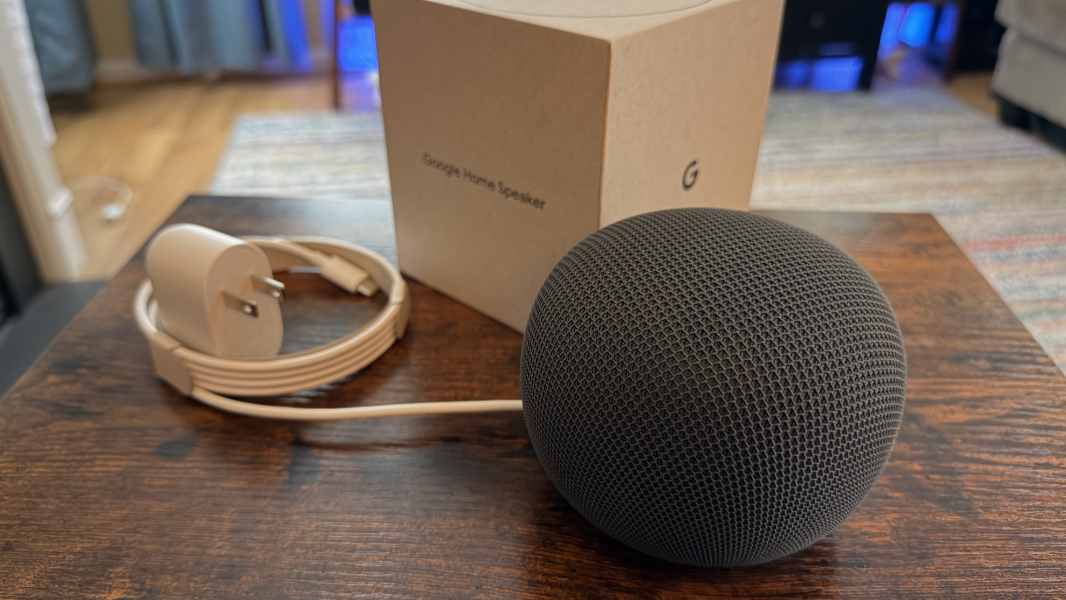
The Google Home Speaker can serve as a Matter hub, which is nice, and it obviously integrates with Google Home and Google Gemini. Inside the ovoid speaker lurks a quad-core 2.0 GHz Arm Cortex-A55 processor with NPU, 1 GB of LPDDR4 RAM, and 4 GB of eMMC storage.
From my perspective, only two things matter here and both will require a bit of time and experience.
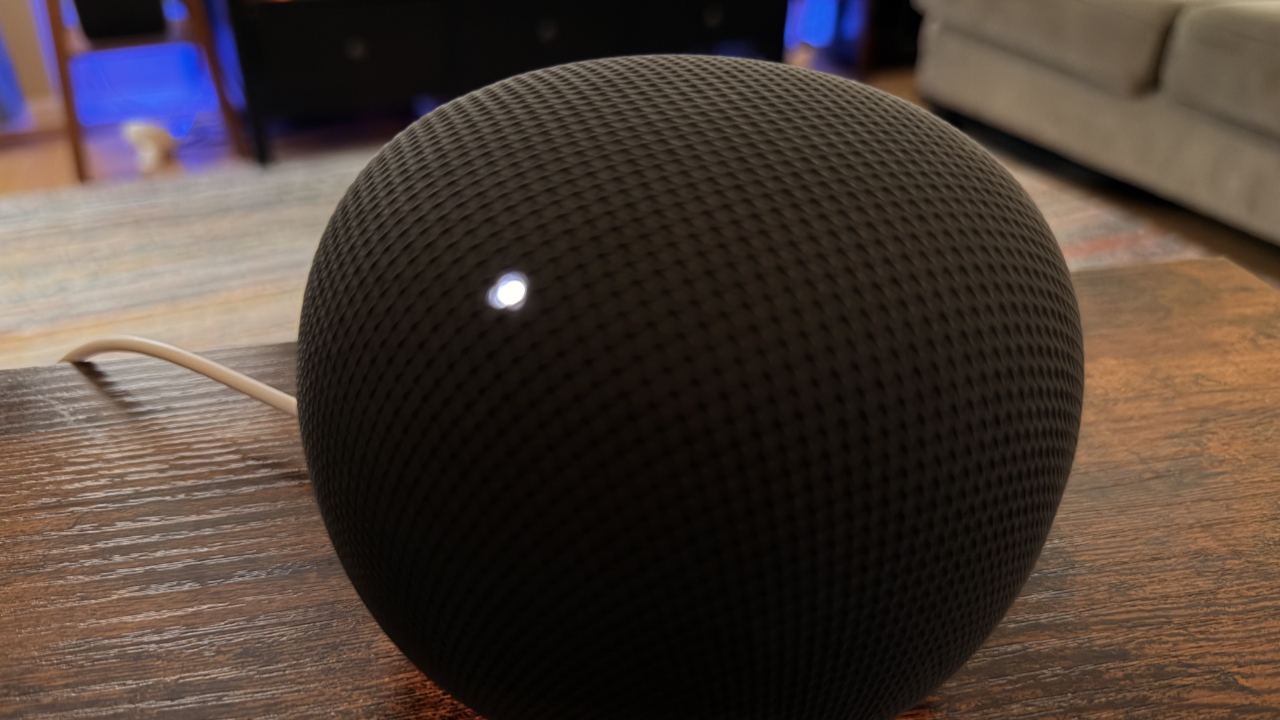
The first is sound quality: This speaker offers omni-directional (360-degree) sound, meaning that the positioning isn’t as important as it is with traditional forward-facing speakers. In early use, I’m not sure that I really hear that per se. Given the speaker’s size, the sound is good overall, with strong bass, and you can adjust it with basic Treble and Bass sliders.
And then there’s Gemini. Aside from asking it to tell a joke, provide a weather forecast or news summary, get some recipe or cooking advice, and so, Gemini works conversationally and should be able to solve all kinds of problems, help you learn new skills, manage your smart home devices in more advanced ways, and do other things that Google Assistant couldn’t even dream of. Here, I’ve just touched on the basics, as I just got the thing.
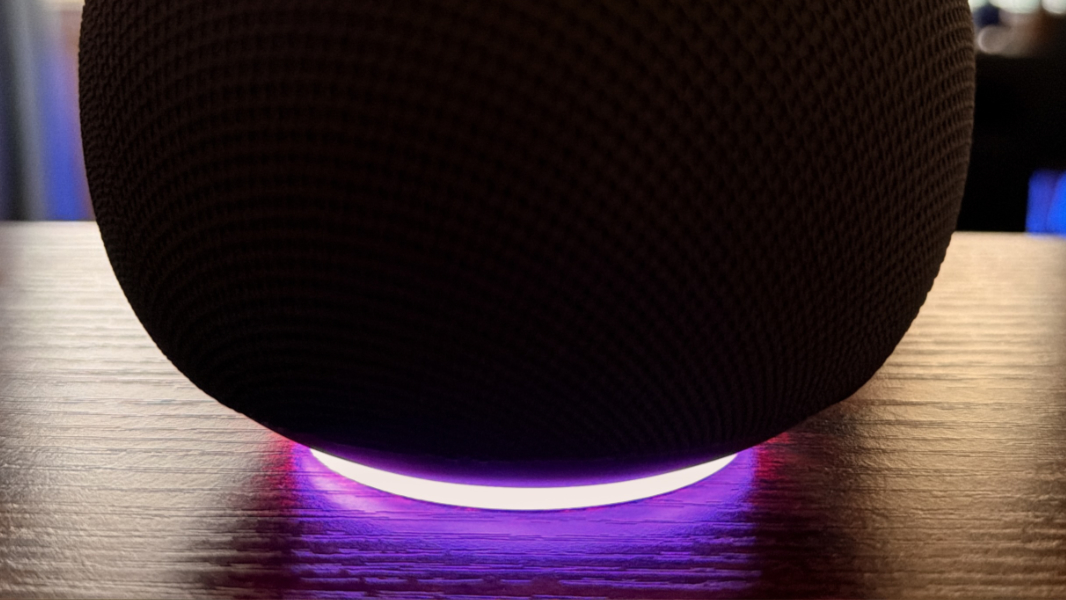
But there’s a fun light ring that comes on whenever Gemini is listening to you. A choice of many voices, which are at least of high quality. And solid Google Home and Google TV Streamer integration.
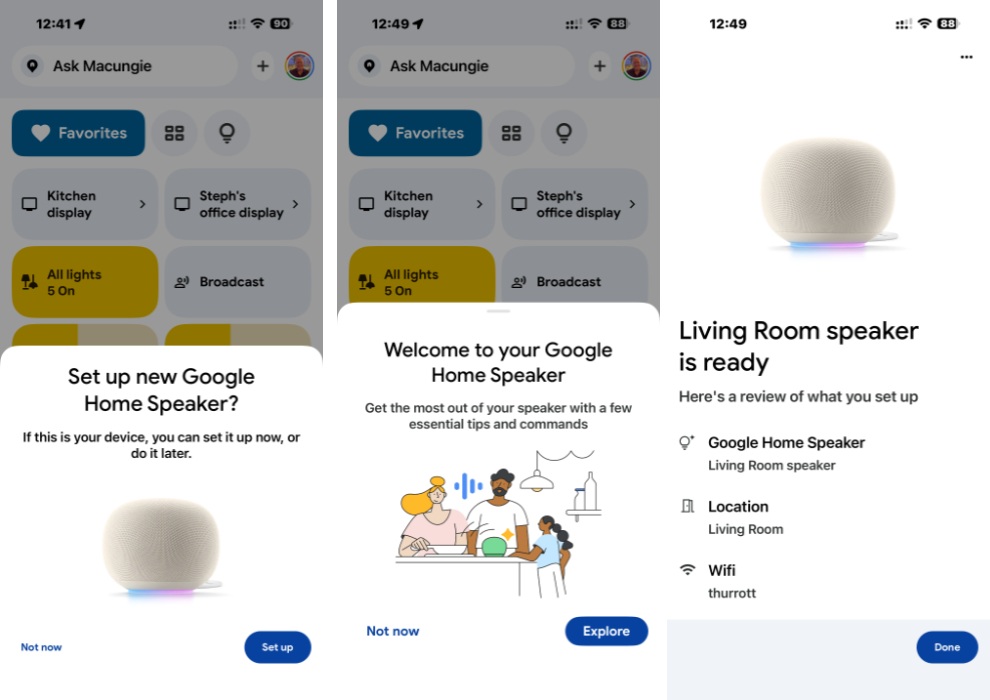
Getting the Google Home Speaker up and running was simple enough, but it required me to step through what felt like 200 screens of configuration information. When it first powers up, the Google Home app sees it immediately, and you can get started. At least it didn’t need a day one software update. Can I get an Halleluiah?
The Google Home Speaker costs $99.99 in the U.S., which seems about right, and you do get 6 months of Google Home Premium, which Google values at $60. That’s pretty nice–you get 60 days of event-based video history, 10 days of 24/7 video and doorbell history, more detailed alerts, daily summaries, and more–but a Google AI Pro subscription, which includes Google Home Premium, would have been even better. Especially since the goal here has to be locking customers into an ongoing subscription.
I will test it further, especially the Gemini integration.