Google Launches ‘Veo’ AI Video Generator
- Laurent Giret
- Dec 04, 2024
-
0

Google has just announced the launch of Veo, its new AI Video Generator, in private preview. The image-to-video model is available for Google Cloud customers via Vertex AI, the company’s unified AI development platform. Next week, Imagen 3, Google’s latest highest-quality text-to-image model, will also join Veo on Vertex AI.
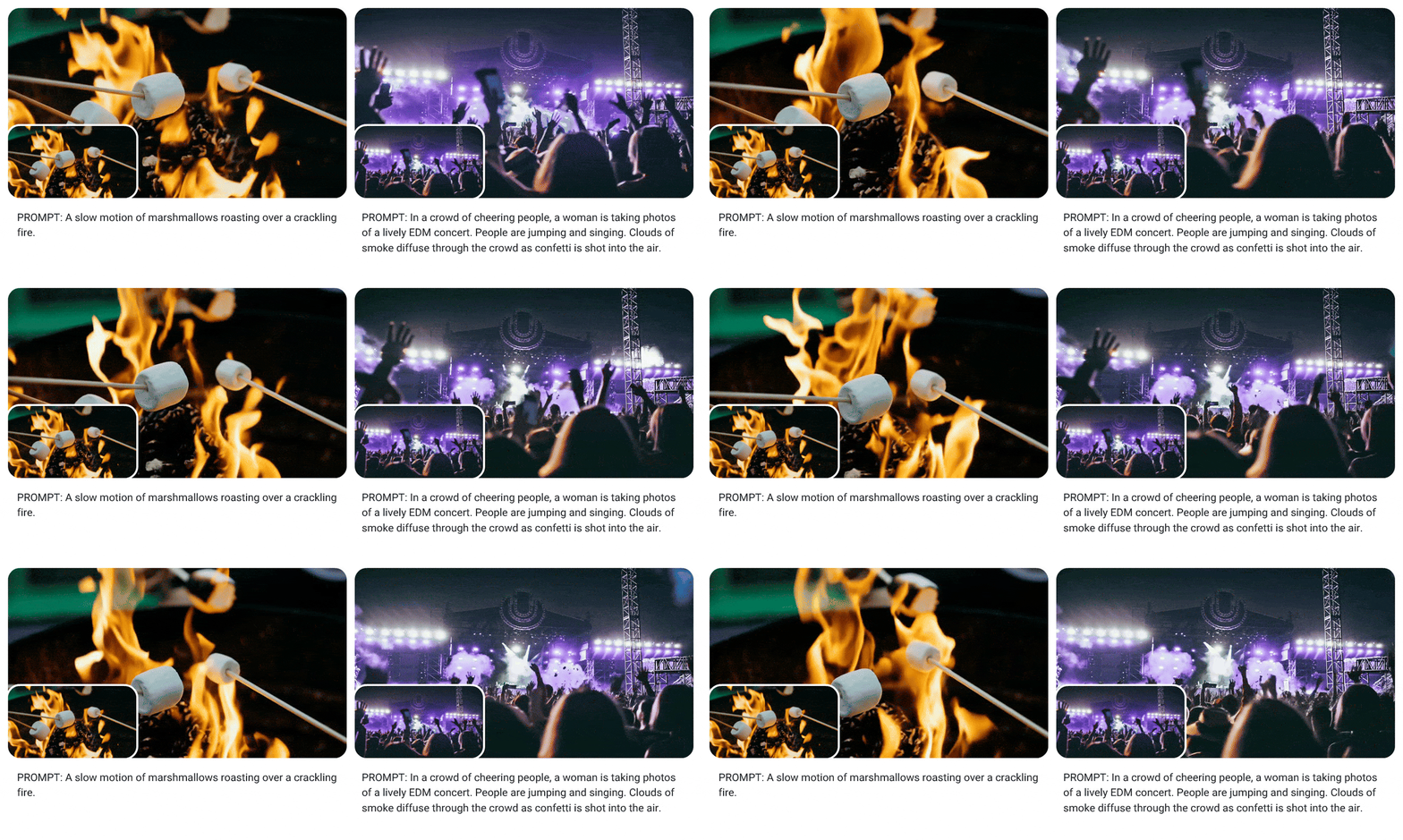
“Developed by Google DeepMind, Veo generates high-quality, high-definition videos based on text or image prompts in a wide range of cinematic and visual styles with exceptional speed, Google said today. “With an advanced understanding of natural language and visual semantics, it generates video that closely aligns to the prompt.”
Google Veo can create videos using existing or AI-generated images created with the company’s Imagen 3 model. Veo can create videos lasting more than 60 seconds, and Google implemented invisible digital watermarking and safety filters to prevent the creation of potentially harmful content. The company also said it doesn’t use customer data to train its image-to-video model.
With Veo and Imagen 3, Google wants to give content creators new tools to streamline content production. Veo will compete with Meta’s Movie Gen AI-powered video generator, and OpenAI is also working on its own text-to-video model named Sora. The company has just teased 12 days of product announcements starting tomorrow, and The Verge is reporting today that one of them will be the launch of Sora.
While AI-powered video generators are already very promising, brands tempted to use them for marketing purposes may want to be careful. Last month, Coca-Cola received a lot of criticism for creating an uninspired AI-generated holiday ad that tried to pay homage to a previous ad from 1995. The company later issued a statement to explain that it would “always remain dedicated to creating the highest level of work at the intersection of human creativity and technology.”