Review: The Reverse Centaur’s Guide to Life After AI by Cory Doctorow
- Paul Thurrott
- Jul 02, 2026
-
14
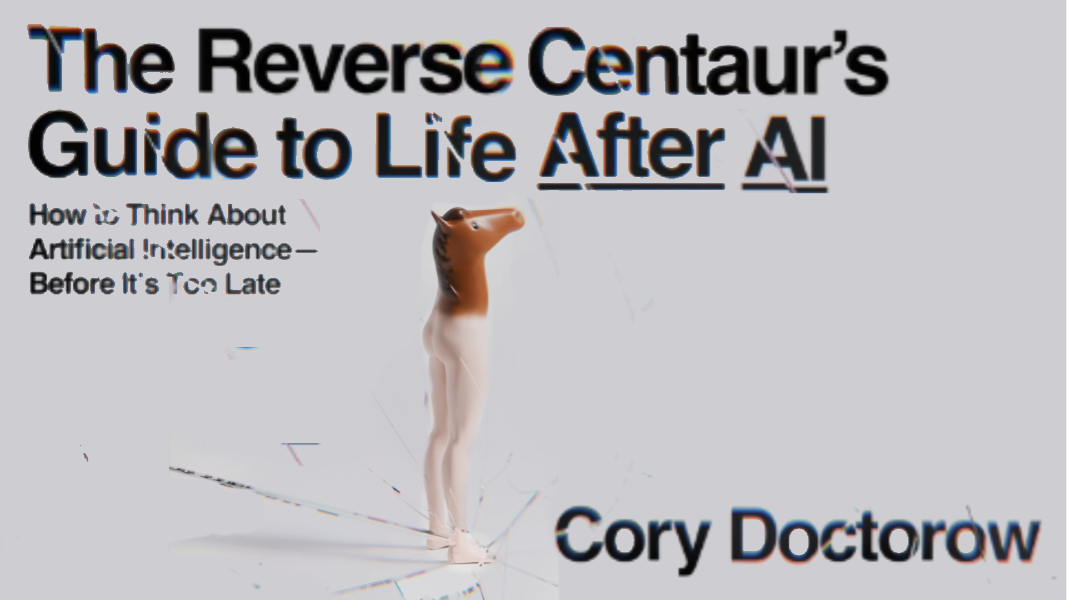
Neologism–the creation of a new word or term–is as difficult as any other branding or naming exercise. Sometimes it lands, as with enshittification, in which case the term is so popular and accepted that it’s added to dictionaries and becomes a word. Other times, not so much.
Cory Doctorow entered the neologists’ hall of fame when he coined the term enshittification, the subject of his previous non-fiction book. But like even the best baseball players, his batting average–in this case, coming up with new names or terms–is more miss than hit. And the term at the center of his new book, reverse centaur, is very much a whiff.
That’s too bad because The Reverse Centaur’s Guide to Life After AI: How to Think About Artificial Intelligence Before It’s Too Late is well-researched, well-written, and timely, given the AI mania that’s somehow still dominating the headlines and threatening our retirement accounts. The only problem is the term reverse centaur. It can’t be explained quickly, like enshittification, and it’s not as obvious once you do understand it. And that somewhat diminishes the impact here because Doctorow, once again, is correct in his take on AI, the companies forcing it on us, and how we might best as people take advantage of it.
So I must explain the term. As Doctorow writes in the book, and is now repeating in what will feel like an endless series of interviews, all of which I will watch faithfully despite most being essentially identical, this all comes out of automation theory. Which, yes, is exactly as boring as it sounds.
In Greek mythology, a centaur is a creature with the upper body of a human and the lower body and legs of a horse. In automation theory, a centaur is a person assisted my a machine. So when you ride a bike, you’re a centaur. When you wear a hearing aid, use a calculator, or mute an advertisement on TV using the remote, you’re a centaur. It’s your choice to use a tool and when you do use it, you’re in control.
In stands to reason then that a reverse centaur is the inverse of that situation: Now, a tool–a machine–is using a human as its assistant. You, the human, are assisting the machine. The classic example of this, and I enjoy that Doctorow uses this example, is the I Love Lucy episode in which Lucy and Ethel are working on an assembly line at a chocolate factory, and the belt goes faster and faster leading to comedic results. But the fantasy that Big Tech and AI companies are selling us is a future in which more and more jobs can be replaced by AI using a type of automation that is in most cases literally impossible.
This is my example: A programmer, like a writer, will use the tools available to them to improve their work. A programmer may use a debugger like a writer uses spelling and grammar checking. But the vision for this job in the future is that all software code will be written by AI, so programmers will essentially become project managers, describing what code should do to the AI and then–and this is the biggest fantasy of all–providing that “human in the loop” eyes-on moment before that code goes into production.
Automation is not the enemy, as Doctorow acknowledges. And he provides a solid framework for understanding the difference between a person using AI and a person being used by AI–or even used up by AI, which feels inevitable–on a case-by-case basis. “The solution to the paradox,” he writes, “is to stop thinking about what a gadget does and pay attention to who the gadget does it to and who the gadget does it for.” This is an idea I bring up a lot in this age of enshittification, though my shorthand is the term intent. That is, there is a difference between the reason some company says it’s doing something (which is marketing) and the real reason it is doing that thing (which is intent).
This is all very interesting. And while I still struggle with the term he’s using to frame this discussion–wouldn’t pilot and autopilot make a bit more sense and be more immediately obvious?–this book succeeds in the one area in which Enshittification: Why Everything Suddenly Got Worse and What to Do About It fails: It doesn’t just describe a problem, it also describes what we can and should do about that problem. And that will be interesting to just about anyone. Those who love AI. Those who hate or fear AI. And even those weirdos who are still bothered by the term enshittification like they’re a Puritan or an Iranian mullah.
You should read the book to learn the full story, but I am fascinated that Doctorow finally discusses the ways in which he uses AI, and that he is not an AI hater or fearer any more than he is an AI inevitablist. Like me, he sees AI as being like any other technology, with the dangerous asterisk that it has so thoroughly snowed Wall Street under that all the overspending we see now–the same $100 billion trade back and forth by seven companies and reported as revenue by each, Doctorow says–could collapse our economy and lead to a new era of austerity.
AI will lead to job loss, Doctorow notes, just like all technology. The misunderstanding there is which jobs. As with the classic comedy Office Space, in which the consultants inevitably turn on the management that hired them to save money in the first place, the jobs that AI is and will replace are jobs that make little sense, and provide little economic value and almost no self-worth. But what Big Tech and the AI companies are selling is something else entirely. They envision a future in which important, high-paying jobs like radiologist and software developer are automated into extinction, jobs where people make a real difference.
This is a fantasy, and a dangerous one because bosses–a throwaway term for business owners and leaders with decision-making authority–are falling for it. Companies are laying off workers and blaming–crediting?–AI either because they really believe that’s the reason or to whitewash their true intentions. And because this message–downsizing thanks to AI automations–resonates with Wall Street. The rich get richer and the poor get left behind as always.
We are still in the middle of this mess and Doctorow hedges his bet from time-t-time: Unlike with enshittification, not all AI is bad, after all. And there is a light at the end of this tunnel. Though we are absolutely in a bubble, Doctorow claims, this too shall pass and the detritus it leaves in its wake will include useful tools and technologies, as with the tech bubble of the early 2000s.
If anything, there are almost too many good ideas in this book, with more on the way: Doctorow is currently writing a book called The Post-American Internet that might be considered the concluding title in a trilogy that also includes Enshittification and The Reverse Centaur’s Guide to Life After AI. I wish I were that smart and organized. But I can at least recommend that you read this thought-provoking book. It’s a great guide to navigating AI, this thing that’s become so big that it’s impacting the whole world and not just our relatively small slice of it.
The Reverse Centaur’s Guide to Life After AI: How to Think About Artificial Intelligence Before It’s Too Late by Cory Doctorow is available now on Amazon.com in Kindle, paperback, and hardcover formats, and his publisher has links to other formats and stores.