A Big Week for Apple Fans
- Paul Thurrott
- Oct 27, 2024
-
17
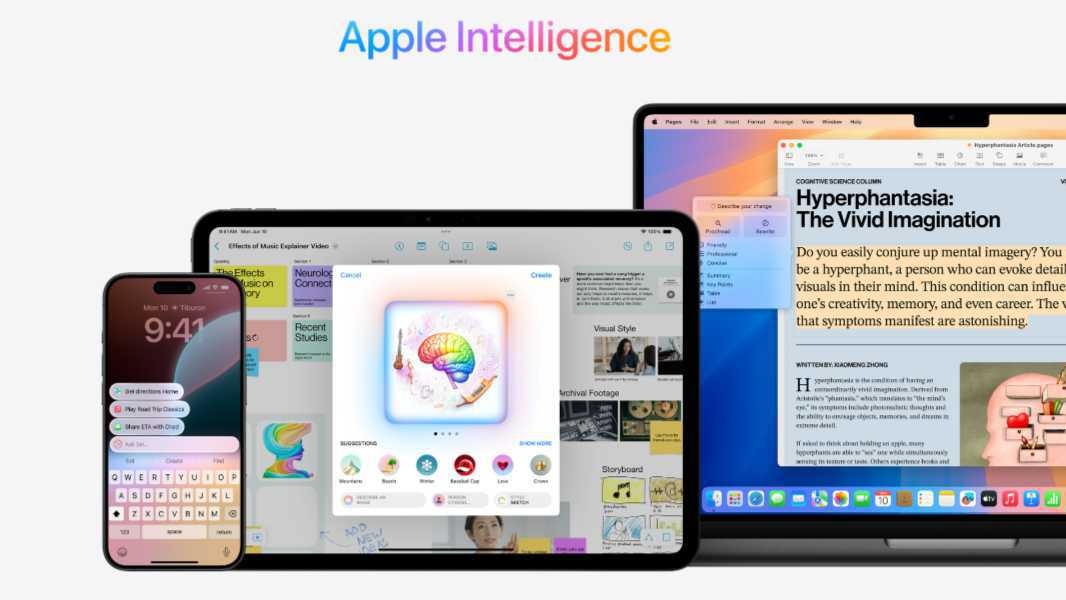
Apple launched its latest iPhone and Apple Watch models back in September, but this coming week promises to be almost as big. The consumer electronics giant will deliver the first wave of AI-based Apple Intelligence advances in iOS 18.1, iPadOS 18.1, and macOS 15.1 as soon as Monday. And then it is planning a new round of Apple Silicon M4-based hardware upgrades, with new Mac mini, iMac, and MacBook Pro revisions.
Given how important the iPhone is to Apple and its customers, it’s perhaps not surprising that iOS 18.1 is in many ways the biggest news of this coming week. Apple first began promoting Apple Intelligence at its WWDC event back in June, but its new iPhone 16s shipped with an Apple Intelligence-less iOS 18.0 last month. This week’s release of iOS 18.1 is the first of at least four point updates that will deliver new AI features into mid-2025.
It’s a modest start, for sure. iOS 18.1 includes new AI-based writing tools, enhancements to Notifications, Siri, and individual updates in several key apps. The writing tools are available everywhere you can write, and they provide rewriting, proofreading, and summarization capabilities. Siri has a new look and feel with a full-screen glow animation on activation, new typing input, richer language understanding, context awareness between conversations, and other changes. And Notifications are being updated with a summary feature that provides a glanceable overview of what you’ve missed.
Additionally, Mail and Messages will both get a Smart Reply feature with suggested responses, Mail gains a Priority messages feature so that the most important messages are displayed at the top, and Notes gets Transcription summaries for audio and call recordings. And the Photos app will let you search by description, while providing a new Clean Up tool to remove objects from photos (like Magic Eraser in Google Photos), and Memory movie creation capabilities.
That’s it for AI this time. But the Camera and Phone apps are getting useful updates, most notably call recording, and there are some surprisingly notable AirPods updates with new Hearing Test, Hearing Aid, and Hearing Protection features. And Control Center is getting a necessary configuration reset button.
After that, we can expect iOS 18.2–and iPadOS 18.2 and macOS Sequoia–in December. This will be “a more significant advance,” Gurman says, with more writing tools, Genmoji, Image Playground (generative AI image creation), Visual Intelligence, ChatGPT integration, and more. And then there are at least two more point released in the first half of 2025. All the features Apple showed off at WWDC–including all the Siri features–should be in place by iOS 18.4 in March.
On the hardware front, Apple senior vice president Greg Joswiak teased this coming week’s hardware releases, tweeting on Thursday that customers should “Mac your calendars! We have an exciting week of announcements ahead, starting on Monday morning.” And today, apex Apple leaker provided more detail, though his description of the upgrade from M3 to M4 being a “seismic shift” similar to the transition from Intel x86 to Arm is a bit suspect.
This week, Gurman says we can expect a new 24-inch iMac with an entry level M4, a Mac mini with base M4 and M4 Pro options, and a new line of MacBook Pros with higher-end M4 chips. Each will include an NPU rated at 38 TOPs–still shy of Microsoft’s Copilot+ PC requirements, by the way–and each will deliver “noticeable but not stunning” CPU upgrades compared to their M3-based predecessors. Gurman believes Apple might release one Mac upgrade each day on Monday, Tuesday, and Wednesday.
A planned Mac Studio upgrade to M4 has been delayed to March to June 2025 for unclear reasons, and Apple will ship new MacBook Air models with base M4 chips between January and March. A Mac Pro upgrade with M4 is targeted for the second half of 2025. And new base iPad, iPad Air, and iPhone SE revisions are all due around the same time in the Spring.
Gurman also talked up the rumored Apple smart display, which will now allegedly include a cheaper, smaller model with a display on a moving arm similar to the classic iMac G4 design, but smaller. He describes the display as square, and about as big as two iPhone displays, and says the base could include a HomePod-like speaker. It will run a new OS, based on that used by HomePod, and iPad-like apps. The larger smart display that was previously rumored should cost close to $1000 and designed for higher-end videoconferencing, media playback and smart home control. But it won’t ship until 2026 now.
For me, the biggest Apple event of the week is its quarterly earnings report. That’s due on Thursday and will include our first look at how well the new iPhones are selling.