Review: Apple in China by Patrick McGee
- Paul Thurrott
- Jul 28, 2025
-
41
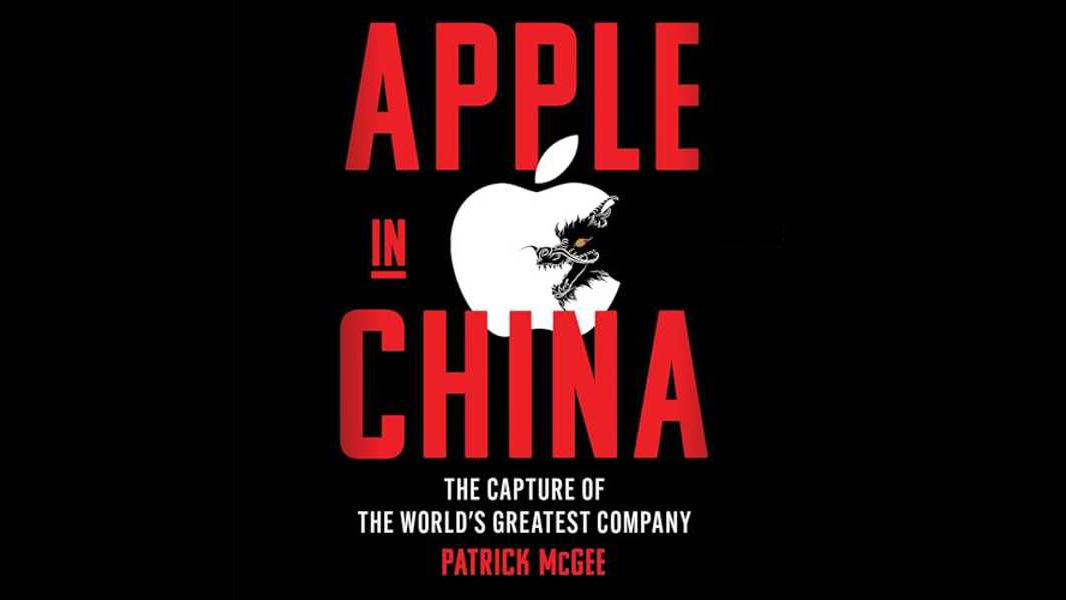
Apple in China: The Capture of the World’s Greatest Company by Patrick McGee is the best and most important book about the personal computing industry in at least a decade. It’s well-researched and well-written, and it unfolds like a whodunit murder mystery in which Apple CEO Tim Cook is revealed over time to be subservient to the Chinese government while undermining his company and country in a manic bid to maximize profits at all costs.
I know. That sounds sensationalist.
It’s not. If anything, I’m underplaying the damage that Cook and Apple have done to the U.S. and the world. In short, they gave China everything it needs to weaponize their technology against the United States. And we’re already seeing the impact of this betrayal in the rise of Chinese smartphone and electronics giants like Huawei, OPPO, Vivo, and Xiaomi, all of which exist in this space, and now exceed the technical capabilities of Apple and other U.S. electronics companies, thanks to Apple.
Early days
When it comes to Apple and China, it’s likely that everyone reading this has at least some understanding of the history, and Apple in China starts with a recap of its early days.
We know that Apple CEO Steve Jobs hired Tim Cook away from Compaq in 1998 to cut costs and streamline the struggling company’s manufacturing and distribution channels. And that Cook was responsible for Apple’s shift to China, a move that dramatically improved the company’s finances.
There were rough spots for Apple in China over the previous two decades, including human rights issues at factories there. But those issues seem to have faded away in recent years.
When Steve Jobs passed away in 2011, Tim Cook became CEO, and Apple’s reliance on China grew with its own power and dominance. Apple became the biggest company in the world, and it was the first publicly held corporation to achieve market capitalizations of $1 trillion, $2 trillion, and $3 trillion.
That high-level overview of Cook and his years at Apple is all true. But there is so much more to this story. And Apple in China for the first time fills in all those gory details as well.
Convincing Jobs
Steve Jobs was a prickly personality with extreme opinions. But he matured in some ways over the course of his initial run at Apple, his disastrous turn at NeXT, and his miraculous resurgence when he returned to Apple.
One thing didn’t change, however, at least at first. Jobs had had a dream over his entire adult life that the company he led–Apple, then NeXT, and then Apple again–should build the products it designed in-house. But Cook, a detail-oriented logistics expert, knew this was financial folly. And so he worked to outsource Apple’s product manufacturing.
He started small, closing a few underperforming Apple factories around the world, and pushing the reluctant Jobs to outsource manufacturing to more efficient and cost-effective third parties in China. The cost savings were obvious and immediate, and that gave him the leverage he needed to expand this shift and finally convince Jobs to give up his unrealistic dream.
“By 2005, Jobs grasped that there was no going back,” McGee writes. “In one opportunity after another, Apple operations were lured into [China].” Executives who correctly pointed out that Apple was “gonna get exposed” were silenced. The profits were just too strong to deny.
Why China
China is unique. There is no place on earth more efficient or cost-effective than China, now or ever. This country is a perfect storm of “low wages, low welfare, and low human rights” (which isn’t all that uncommon in third-world countries), a unique dictatorial governmental structure, and state-sponsored companies that are willing to give up profits so they can learn about the advanced technologies and manufacturing techniques from the West, steal them for themselves, and then use them for Chinese companies.
This all happened quickly and Apple played a major role in the transformation.
In the early 2000s, the four largest contract manufacturers were in the United States, and the fifth was in Canada. In the early 2010s, four of the five biggest were in Asia, with the largest of them, Foxconn, earning more in revenues each year than the next four combined. Foxconn is based in Taiwan, but it has factories in China, too, as it has to to manufacture iPhones and other Apple products today.
Moving Apple’s operations in baby steps to China had a domino effect across the supply chain that escalated over time. Once manufacturing moved to China, all the component suppliers followed, setting up shop either within the manufacturing facilities or nearby. This was true of dorms for the underpaid workers at those companies as well, and enormous self-contained manufacturing towns sprung up all over China so the people living and working there never had to leave. This happened almost overnight. And then escalated as Apple’s successes mounted.
“It flipped so, so quickly,” former Apple exec Tony Fadell told McGee. “Because China was subsidizing so, so much. Giving people free land, free everything … They made it so attractive to the outside world. You’d be dumb not to move to China. And once one person moved, they all had to move, because of the cheap labor.”
It’s likely that Apple’s financial issues in the late 1990s and the uncertainty Steve Jobs faced when he returned played a role in this capitulation. Apple had been near bankruptcy and had then made a minor comeback with the iMac. But the iPod was a cultural phenomenon that could have never been produced at the scale needed without China.
“This was a dominance and cultural relevance [Apple] had never experienced before,” McGee explains. “The $2.9 billion of revenue generated by the music player [in 2005] exceeded the revenue achieved by the remainder of Apple’s product lines.”
So the die was set, with Apple’s China addiction growing exponentially as it geared up for the iPhone and future gadgets that would make it the biggest company on earth.
What Apple gave China
Apple’s relentless drive to dominate led to it requiring China’s factories to “handcraft luxury phones in mass-market quantities.” It worked “intimately” with its China-based suppliers and “influenced the entire manufacturing process.”
“It’s one thing for Volkswagen or GM to make 10 million cars a year,” McGee notes. “What Apple was doing was akin to making 10 million Ferraris a year.”
Except that it wasn’t Apple making those devices. Instead, it was a byzantine network of manufacturers, suppliers, and underpaid workers toiling away for 80 hours each week that made those devices. The scope of these operations was so vast that Apple had to create redundancies in manufacturing and supply, all in China, helping it play competitors against each other to further scale and lower costs.
“Apple constantly sent engineers from Cupertino to train its rivals,” McGee notes. In fact, Apple engineers were going back and forth between Cupertino and China so much that they were able to persuade United Airlines to create new direct flights from San Francisco to various manufacturing centers in China. And it now buys over 50 business class seats every single day on those flights.
Apple’s influence on China and its companies was so important that manufacturers would “forego profits so that Apple engineers would come and teach them how to be efficient.” In doing so, they would give away manufacturing knowledge, “in particular how to efficiently scale while maintaining the highest quality standards.” Then they would use these news skills to win other clients, at first from outside China.
Apple gave everything away to China, leading to the rise of giant Chinese tech firms like Huawei, Oppo, Vivo, and Xiaomi, which would go on to equal and then surpass Apple’s technical advances and manufacturing prowess. In this, Apple essentially birthed the companies that would go on to defeat it in China and then the world. Just as it created the China that will go on to defeat the United States economically.
It wasn’t alone in this betrayal. Companies like Tesla and Uber also handed the keys to their respective kingdoms to China in similar ways. But none are as big, or as culpable, as Apple. Worse, Apple and these other companies didn’t just set up China for dominance, they ensured that Western countries, especially the United States, could never catch up again. Virtually all electronics manufacturing moved to China, as did all the component suppliers needed to make those devices. The remainder moved to other low-cost locales like Vietnam and India, but none can build iPhones or other devices independently of China. Like the fictional future of Isaac Asimov’s Foundation novels, the U.S. quickly lost the ability to make or understand the technology products it needed.
This reality provides a sharp contrast to the situation most Americans imagine. In our worldview, sure, low-paid Chinese citizens are making iPhones in sweatshops and then shipping them worldwide to affluent customers, with Apple taking in nothing but profits. But this view assumes that nothing changes in China, that those low-paid workers are China, that we as Americans somehow lord over that country economically.
But that’s not the case. Apple’s investments in China spawned a golden age of the nouveau rich in that country, as evidenced by all the well-heeled Chinese tourists that started crowding the world’s most desirable destinations starting in the early 2000s. What Apple really did was betray the future–its future and the future of our country–in return for short-term profits. It’s the same rationale that causes Apple to arbitrarily overcharge developers in its App Store. This is, in my view, the real Tim Cook doctrine. His true legacy.
Embarrassingly, no one at Apple even understood what they were doing.
“When we were setting up production in China in the early 2000s, we weren’t thinking about geopolitics at all,” a former Apple exec told McGee.
“Precisely,” McGee responds in the book.
By this point, Apple finally realized that it had enabled “a technology transfer on an extraordinary scale.” But it was too late.
There is one more thing
Apple capitulated to China in other ways, too. After a perceived slight that Cook and Apple didn’t fully understand, the Chinese government heavily regulated Apple and instructed Chinese businesses to buy Chinese. The result was a 26 percent decline in Apple revenues in 2016. Even for Apple, that was a material downfall and something that had to be addressed immediately.
And so Cook and a small team of top executives traveled to China to pledge to invest $275 billion in China over the next five years. That figure was greater than all American and Canadian private investments in China combined, and it was over double the cost, adjusted for inflation, of the Marshall Plan that saved the economies of 16 European countries in the wake of World War II.
It wasn’t enough for the Chinese government. Beijing needed to humiliate and humble Tim Cook and Apple for its perceived transgressions. And so it forced Cook to appear on TV there, (literaly) bowing before his Chinese overlords and swearing his allegiance.
China also forced Apple to make a $1 billion investment in state-sponsored Didi, an Uber clone, to show it was “committed to the CCP [the Chinese government].” And it forced Cook to make a public appearance in China with the CEO of Didi, after which she was named one of Time magazine’s 100 most influential people in the world.
It also forced Apple to set up joint ventures in China, a “facade” that was required by the government but did little in terms of real-world work. Apple pulled apps from the Chinese version of its App Store when directed to do so by the government. And it even created data centers in China to hold Chinese data that is physically controlled and operated by the Chinese.
Follow the money
Microsoft’s AI-related cap-ex expenses is a hot button topic now, with the software giant spending over $20 billion every quarter just to build out its infrastructure while laying off thousands. But Cook and Apple make that spending look like pocket change.
By 2015, Apple was investing over $55 billion each year investing in China, and that $275 billion commitment was simply it promising to do what it was already doing: $55 billion times five is $275 billion.
That’s a lot of money. But Apple gave so much more to China. During this time, Apple also created over 5 million jobs in that country, all while handing them the keys to the kingdom in the form of know-how they could, and did, use elsewhere. In short, Cook almost single-handedly turned China, a struggling country trying to drag itself into the 20th century, into an economic superpower without equal.
Apple has now trained over 28 million workers in China. That figure is larger than the entire labor force of California, McGee says, which would be the fifth-largest economy in the world if it were a country. He describes the effect of this investment as a “geopolitical event, like the fall of the Berlin Wall.”
In short, Apple created–and paid for–the China we know today.
The other edge of the sword
Tim Cook’s subservience in China opens up darker possibilities for the company, possibilities that only became clear to the company by the embarrassments of 2016.
Apple’s partners can manufacture the iPhone and other devices outside of China, but not completely, because the entire component chain exists only in that country. When Apple’s manufacturing partners make an iPhone elsewhere, they need to fly in components from China or ship the unfinished device to China to complete the process. That’s expensive.
But China could also halt this manufacturing at any time. It could prevent those manufacturers from operating in China, hobbling them permanently. It could prevent the hundreds of component suppliers, many only in China, from partnering with the manufacturers who make devices in other countries. And in a worst-case scenario for Apple, it could simply put a stop to the entire process at any time, and for any or no reason.
Apple could not recover from such an action: It would take years to manufacture iPhones and other devices completely outside of China to the level of quality Apple requires. It may, in fact, be impossible, and even if Apple pulled that off, the resulting devices would be much more expensive.
Put simply, Tim Cook gave China the ability to kill Apple, almost instantly, whenever it felt like doing so.
McGee’s conclusion is clear.
“Apple is in real danger,” he writes. China has become so “world-leading in manufacturing that Apple’s efforts to escape it are likely to prove fanciful. Americans may soon look up and see that China has become self-sufficient in advanced electronics, robotics, and chip fabrication. A former Apple senior director says, ‘There’s no way [Apple] could diversify from China in a meaningful way within the next five years. It’s impossible’.”
There’s so much more
Apple in China isn’t just about consumer electronics and geopolitics. It’s full of incredible stories that span three decades. McGee interviewed over 200 former and current Apple executives and engineers, viewed internal emails between top executives and internal memos, and the book delivered is an astonishing wake-up call. But it’s one that few seem to heed. Why this book hasn’t garnered more attention is unclear. But then, so too is how Apple can ever extricate itself from China.
That Apple has kept this dark secret for so long is rather incredible. But it is perhaps telling that the “worst 45 seconds of Tim Cook’s career” came and went without much attention, too. In December 2022, he was confronted by a reporter in Washington, D.C., asking, “Do you think it’s problematic to do business with the Communist Chinese Party when they suppress human rights?” Cook is caught on camera, ignoring the reporter, eyes down, as he “changed directions to avoid her.”
Cook had previously pointed out that “the most powerful form of consent is to say nothing,” McGee writes. And is is both ironic and hypocritical that Cook was silent in the face of such a simple question. Thanks to Tim Cook, Apple is subservient to China, and it would be hobbled or even destroyed if that country’s leadership wished it so.
Apple in China: The Capture of the World’s Greatest Company is available in Kindle, hardcover, and Audible versions at Amazon.com. I cannot recommend it strongly enough.