Apple Announces iPhone 17, iPhone Air, and iPhone 17 Pro and Pro Max
- Laurent Giret
- Sep 09, 2025
-
11
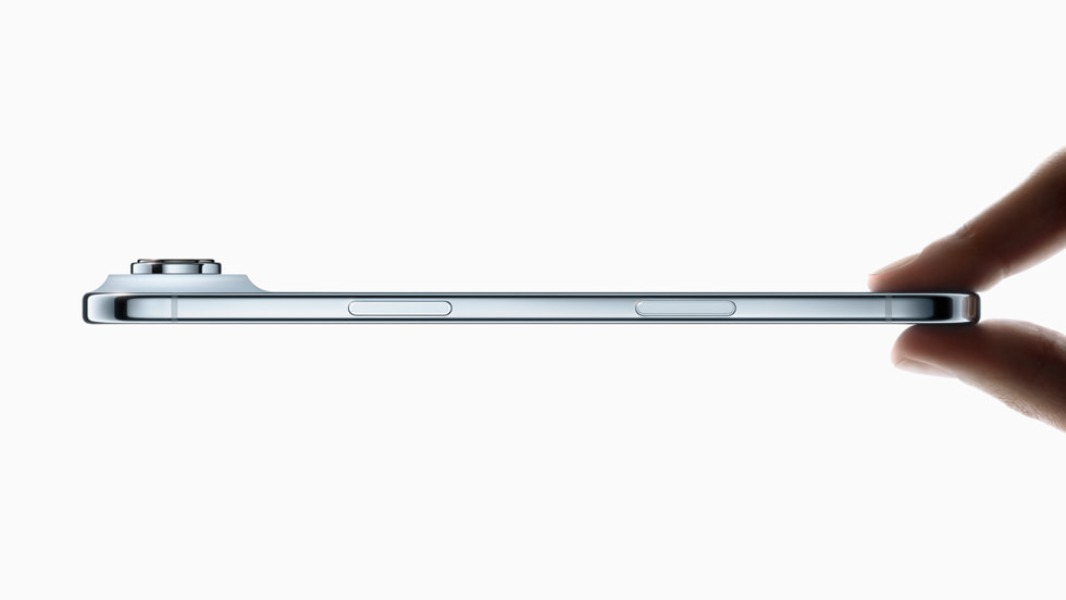
Apple put the wraps off the iPhone 17 series today, and as expected, there’s a new iPhone Air model alongside the iPhone 17 and iPhone 17 Pro and Pro Max. This new iPhone Air is replacing the “Plus” model on the lineup, and it’s the thinnest iPhone Apple ever made.
This thinner design does come with some compromises, however, and power users will likely stick with the more feature-packed Pro and Pro Max models. However, according to Bloomberg’s Mark Gurman, the new iPhone Air marks the beginning of a three-year cycle that will see Apple release its first foldable iPhone in 2026, which could be followed by a redesigned iPhone with curved glass edges to celebrate the 20th anniversary of the product in 2027
iPhone 17
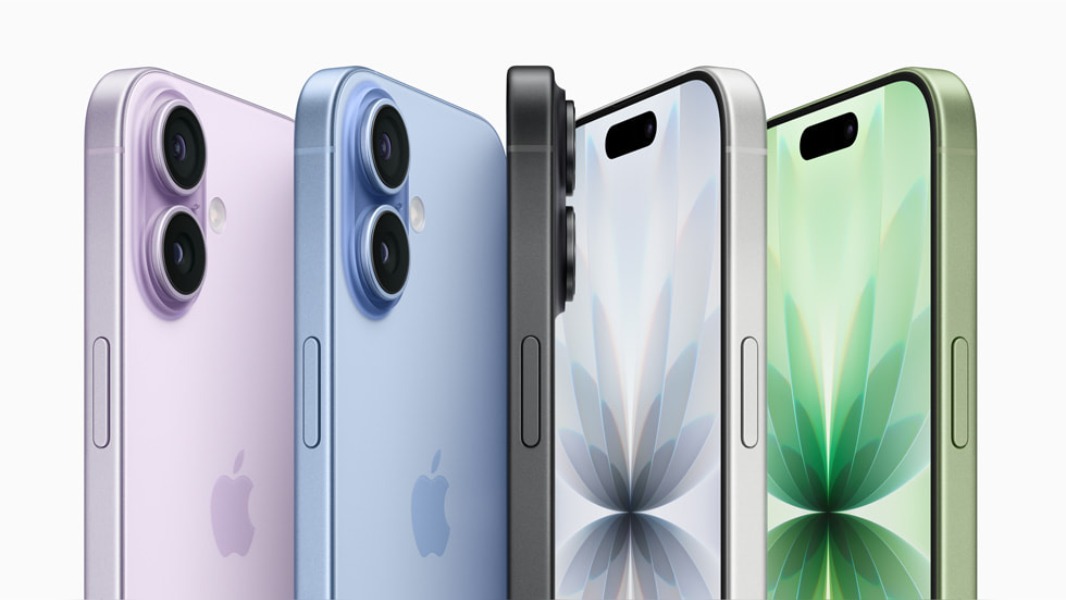
The iPhone 17 doesn’t look much different from last year’s iPhone 16, except for a slightly larger 6.3-inch display – just like the iPhone 17 Pro – that finally adds support for Apple’s ProMotion technology. Until now, the regular iPhone and iPhone Plus models came with 60Hz displays, while the Pro models with ProMotion could dynamically adjust the screen’s refresh rate between 1Hz and 120Hz.
The iPhone 17 display is now protected with Apple’s new Ceramic Shield 2, with 3x better scratch resistance than the previous generation. The display also delivers 3000 nits of peak brightness and 2x better outdoor contrast.
The iPhone 17 comes with Apple’s latest A19 chip, which has 6 CPU cores and 5 GPU cores. Apple built accelerators into each GPU core to improve performance when running generative AI models on the device. The more power-efficient A19 also offers up to 30 hours of video playback — eight more hours than the previous generation.
On the camera front, the iPhone 17 comes with a 48MP Fusion Main camera with an optical-quality 2x Telephoto, and a new 48MP Fusion Ultra Wide camera. On the front, the new 18MP Center Stage camera uses AI to automatically expand the field of view, and it can also rotate from portrait to landscape to include everyone in the frame.
While this year’s iPhone 16E was the first iPhone to use Apple’s in-house C1 cellular modem, the iPhone 17 still uses a Qualcomm modem. However, a new in-house N1 chip now handles Wi-Fi 7, Bluetooth 6, and Thread connectivity. “In addition to the latest generation of wireless technologies, N1 improves the overall performance and reliability of features like Personal Hotspot and AirDrop,” Apple said today.
All iPhone 17 models now come with 256GB of storage instead of 128GB. The iPhone 17 starts at $799, and pre-orders will open on Friday with shipments starting on September 19. Be aware that an eSIM-only version will be available in Bahrain, Canada, Guam, Japan, Kuwait, Mexico, Oman, Qatar, Saudi Arabia, the UAE, the U.S., and the U.S. Virgin Islands.
iPhone Air
It’s quite strange to see Apple announce an “iPhone Air” years after the MacBook Air and the iPad Air, but here we are. The iPhone Air is Apple’s thinnest iPhone ever, with a body that’s just 5.6 millimeters thick. This is also a first, but the iPhone Air will be available in the new light blue color that Apple introduced earlier this year on the M4-powered MacBook Air.
As expected, the iPhone Air is replacing what would have been the iPhone 17 Plus on the lineup. The iPhone Air comes with a more powerful A19 Pro chip, and it also has a bigger 6.5-inch screen that supports Apple’s ProMotion technology. It’s also protected by Apple’s Ceramic Shield 2 technology.
The iPhone Air uses a titanium frame, and it features a quite proeminent plateau on the back to fit the cameras, speaker, and Apple Silicon. To save space, Apple removed the SIM tray on the iPhone Air, which only supports eSIMs. The iPhone Air also uses a faster in-house C1X cellular modem, as well as Apple’s new N1 chip for WiFi and Bluetooth connectivity.
“C1X is up to 2x faster than C1, and for the same cellular technologies, it is even faster than the modem in iPhone 16 Pro, while using 30 percent less energy overall. This makes C1X the most power-efficient modem in an iPhone,” Apple said today about its new cellular modem.
Just like the iPhone 16E, the iPhone Air features a single 48MP Fusion Camera on the back. On the front, however, Apple included the same Center Stage camera present on the iPhone 17.
While Apple promises all-day battery life on the iPhone Air, the company designed a new MagSafe Battery that attaches to the back of the device, providing up to 40 hours of video playback. Apple also created 2 custom cases for the iPhone Air: the iPhone Air Case with MagSafe and the iPhone Air Bumper.
The iPhone Air starts at $999 for the base model with 256GB of storage, and it’s available in space black, cloud white, light gold, and sky blue. Pre-orders begin Friday, September 12, with availability beginning on September 19.
iPhone 17 Pro and Pro Max
The new iPhone 17 Pro and Pro Max still come with 6.3-inch and 6.9-inch displays protected by Ceramic Shield 2. This year, however, Apple opted for an aluminum frame to replace the titanium frame introduced with the iPhone 15 Pro series. If aluminum offers better heat dissipation than titanium, Apple also created a new thermal system with a custom vapor chamber.
The main design change this year is the new rear camera system that spans almost the entire length of the top area of the device. The triple camera system now includes three 48MP Fusion cameras with much better zooming capabilities. There’s a new 8x optical zoom at 200mm, and digital zoom now increases up to 40x for photos. The iPhone 17 Pro and Pro Max can also record video using the front Center Stage camera and rear cameras simultaneously with Dual Capture.
For professionals working with video, the iPhone 17 Pro and Pro Max add support for ProRes RAW, Log 2, and genlock, a technology used to precisely sync video across multiple cameras and inputs. Apple also said today that it recorded its entire keynote using iPhone 17 Pro cameras.
Both the iPhone 17 Pro and Pro Max use Apple’s more powerful A19 Pro chip, which delivers up to 40 percent better sustained performance than the previous generation. Combined with the new N1 chip for wireless connectivity and bigger batteries, Apple now promises up to 39 hours on its Pro iPhones on eSIM-only models, which have an even bigger battery.
The iPhone 17 Pro will start at $1099 for the base model with 256GB of storage, while the iPhone 17 Pro Max will start at $1199. Both models will be available in cosmic orange, deep blue, and silver, and pre-orders will start this Friday with shipment beginning on September 19.