Here is Apple’s Foldable iPhone Duo Starting at $1,999
- Laurent Giret
- Sep 09, 2026
-
34
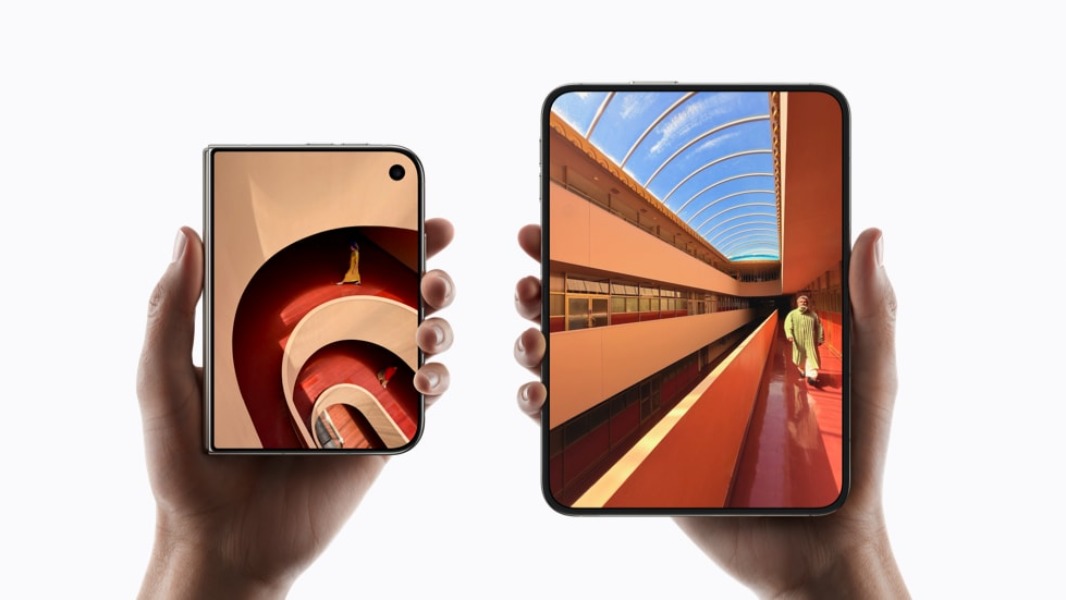
Apple concluded its much-anticipated iPhone event today with the reveal of the iPhone Duo, the company’s first foldable iPhone that will launch in select markets on October 23. The iPhone Duo will start at $1,999 for the model with 256GB of storage, and it will ship with iOS 27.1 out of the box.
If Samsung probably deserves credit for popularizing foldable phones with its Galaxy Z series, Apple emphasized today how its tight integration of hardware and software will provide a superior experience compared to other foldable phones on the market. This will be seen through seamless transitions when users switch from the 5.4-inch outer display to the 7.6-inch inner display, as well as the vast number of apps optimized for dual-screen use and the larger inner display.
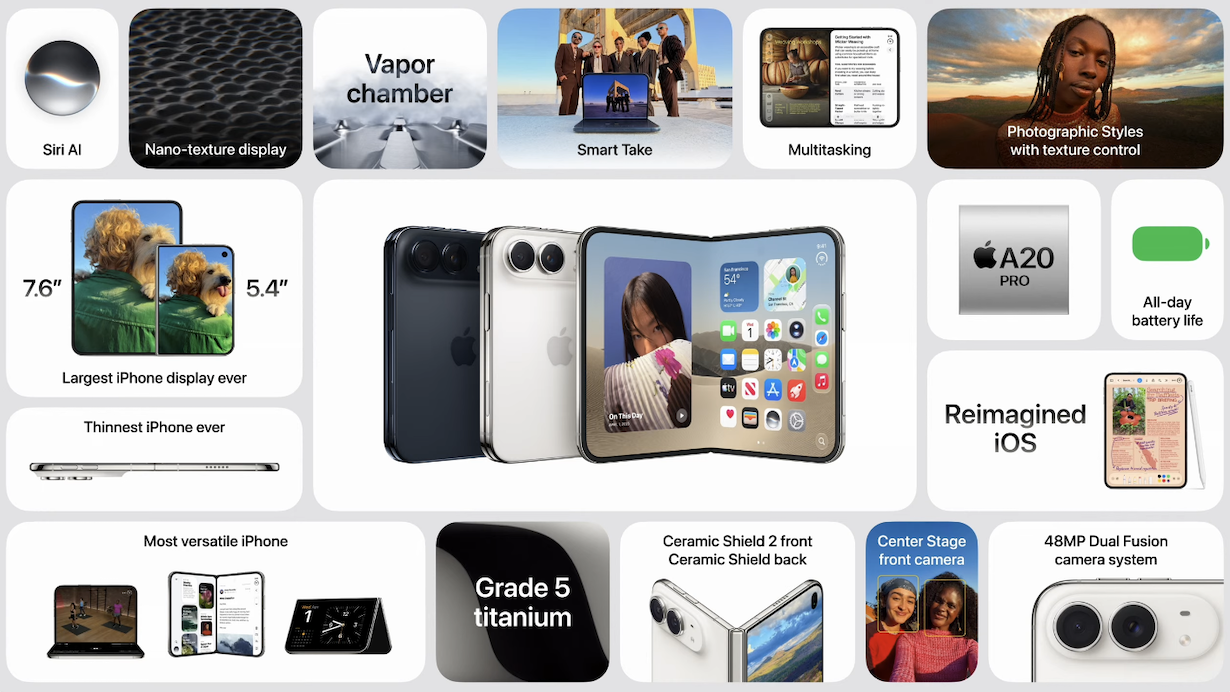
Apple is introducing a lot of new technologies never seen on any iPhone, including a nano-texture finish to reduce glare and reflections on the displays, a FaceTime camera hidden under the inner display, and a Touch ID sensor integrated into the Side button. Later this year, the iPhone Duo will also add support for the Apple Pencil with USB-C.
The iPhone Duo is Apple’s thinnest iPhone ever when it’s opened, as it’s just 0.21 inches (5.2mm) thick. With its titanium foldable frame, it weighs 8.96 ounces (254 grams), and it’s protected by Ceramic Shield 2 on the front and less-resistant Ceramic Shield on the back. The result is the largest display (7.4-inch) ever seen on an iPhone with a design that still fits in a pocket.
Apple said that the hinge on the iPhone is made from more than 100 components with carbon fiber support plates. As for the inner display, it features The inner display on iPhone Duo features a multilayer lamination design that keeps it flat and provides durability.
The iPhone Duo comes with a “Dual Fusion” camera system with a 48MP Fusion Main sensor that also enables a 12MP optical-quality 2x Telephoto, plus a 48MP Fusion Ultra Wide sensor. The front camera on the external display is a 12MP Center Stage camera, but the under-display FaceTime camera is less advanced. While it supports Center Stage for video calls, it only supports 1080p video recording.
Under the hood, the iPhone Duo uses Apple’s new A20 Pro chip, which includes a 6‑core CPU with 2 super cores and 4 efficiency cores, 7 GPU cores with neural accelerators, and a dual 16-core neural engine. Thanks to a more power-efficient 2nm manufacturing process, Apple’s second-generation C2 cellular modem (the iPhone Duo is eSIM-only), and a dual battery design, Apple promises up to 24 hours of typical use and up to 44 hours of local video playback when using the outer display. The iPhone Duo can also recharge its battery to up to 50% in 20 minutes with a 60W or higher charger.
Let’s move on to the software experience: iOS 27 on the iPhone Duo should still feel familiar, but essential controls, including the Dynamic Island, have been moved to the right side of the screen to simplify one-handed use. When opened, the inner display shows two Home Screen pages at once, with a new Today View on the left.
The iPhone Duo can be used in any orientation, and apps can take advantage of the large inner display to offer an iPad-like experience. Split View also allows users to have two apps open side by side or two windows of the same app, like Safari. Two apps can also be saved as a pair in the app switching interface.
The foldable design of the iPhone Duo allows the device to stand on its own, and Apple took advantage of that to offer a new StandBy mode that will appear even when the phone isn’t charging. This also makes it easy to turn the iPhone Duo into a customizable bedside clock.
“iPhone Duo is the most transformational change to iPhone since the original. With an entirely new design and intuitive experiences, it shows what’s possible when hardware and software are engineered together and redefines what it means to use a foldable phone,” said John Ternus, the new CEO of Apple.
The iPhone Duo is available in star white and night sky finishes, and pre-orders will open on October 16. The device will launch in more than 70 countries and regions on October 23, with 28 additional countries to follow on October 30.