Microsoft Releases Windows App SDK 1.6
- Paul Thurrott
- Sep 05, 2024
-
2
Microsoft has issued a major new release of the Windows App SDK, its native app development platform for Windows 11.
“We are proud to announce that version 1.6 of the Windows App SDK is now available,” Microsoft’s Duncan MacMichael writes in the announcement post. “WinAppSDK 1.6 offers a raft of new features, performance boosts and structural changes that enable you to make your native Windows apps better than ever before.”
Microsoft released the first version of the Windows App SDK, previously code-named Project Reunion, in November 2021, signaling the end of the Universal Windows App (UWP) era. It lets developers create native desktop apps, instead of mobile apps, and is decoupled from Windows versioning, solving a key issue with its predecessor. Apps created with the Windows App SDK can be written in C# or C++, and its APIs are accessible via other frameworks, including the Windows SDK and the Windows Presentation Foundation (WPF).
Here’s what’s new in Windows App SDK 1.6.
Native support for Ahead-Of-Time (AOT) compilation. Apps built using the Windows App SDK 1.6 can utilize AOT to start up more quickly and require fewer resources at runtime. You can learn more about this capability on the Microsoft Learn website.
Decoupled WebView2 versioning. Where previous versions of the WebView2 SDK were tied to specific Microsoft Edge versions, it’s now decoupled, much like the Windows App SDK is decoupled from specific Windows versions. What this means, practically, is that the WebView2 SDK is now delivered via a NuGet package, allowing you to use the latest version, instead of the one that came with the Windows App SDK.
Improved MSIX package management APIs. The Windows App SDK package management APIs with package removal, provisioning and detection of pending registration and locally available updates, easy feature availability detection, and other new capabilities. You can learn more about package management on GitHub.
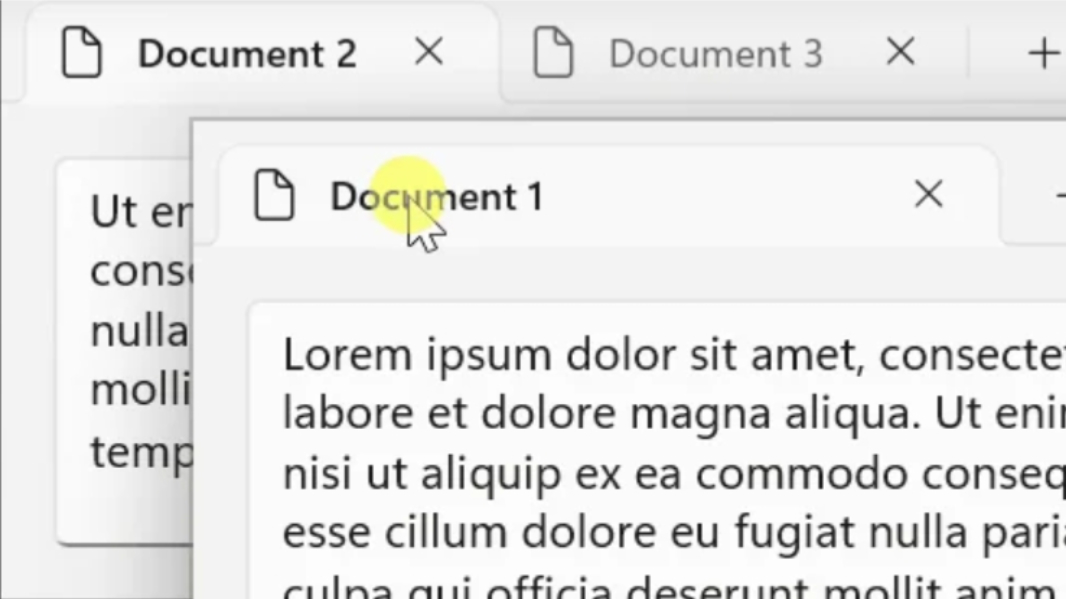
TabView improvements. The TabView control now supports an improved tear-out experience via a new CanTearOutTabs mode that automatically creates a new window when the user drags a tab out of the control.
Other control improvements. The PipsPager control (as seen in the Windows 11 Quick settings pane; it’s used to scroll between the available Quick setting buttons) now supports auto-wrapping between the last page and the first page. RatingControl now supports more customization. And the ItemsWrapGrid class–which is used by Panel controls like Grid–is now unsealed, meaning it’s now easier to customize it with new constructors, methods, or method overloads.
New APIs. Windows App SDK 1.6 adds a few new APIs, like ColorHelper.ToDisplayName (previously available in UWP) and Microsoft.Windows.Globalization.ApplicationLanguages, a new class in MRTCore that includes a new PrimaryLanguageOverride feature for fine-tuning your app’s display language.
You can learn more about the Windows App SDK on Microsoft Learn, though the documentation there hasn’t been updated yet for 1.6.