Swift 6.3 Brings First SDK for Android
- Paul Thurrott
- Mar 25, 2026
-
1
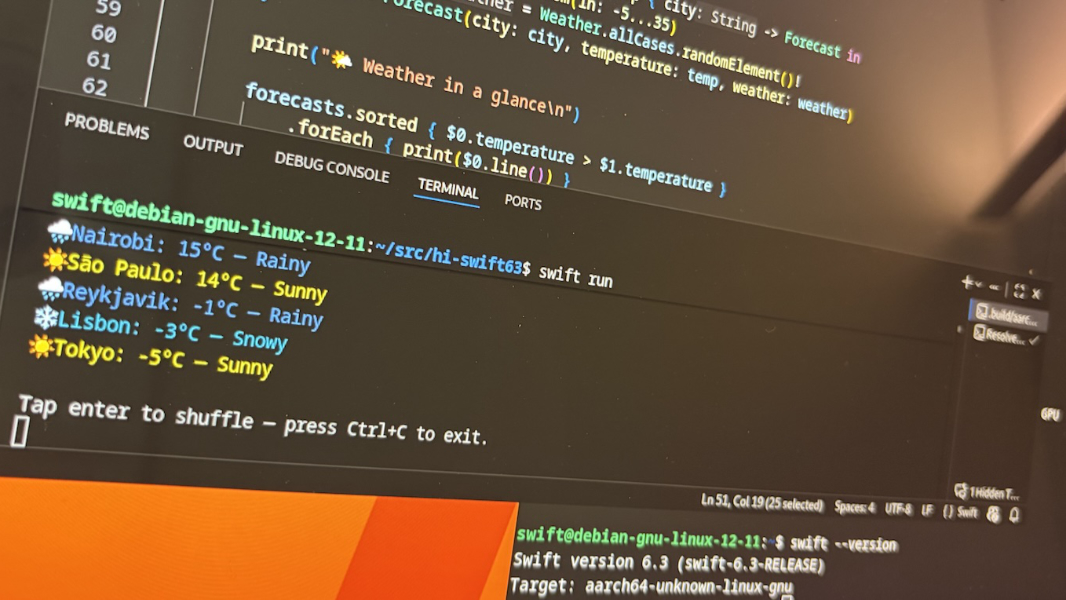
Swift.org announced the release of Swift 6.3, the latest version of the open source programming language that was created first for Apple as a replacement for Objective-C. The big news in this release is the first Swift SDK for Android in stable, a major milestone that expands the language to the biggest personal computing platform on earth.
“Swift is designed to be the language you reach for at every layer of the software stack,” Swift.org and Apple engineering manager Holly Borla writes. “Whether you’re building embedded firmware, internet-scale services, or full-featured mobile apps, Swift delivers strong safety guarantees, performance control when you need it, and expressive language features and APIs.”
Swift 6.3 includes the following major new features.
Improved interoperability with the C language. Swift 6.3 includes the @c attribute, which lets developers expose Swift functions and enums to C code in a single project. When you use the @c attribute, Swift adds a corresponding declaration in the generated C header that you can use in C/C++ source code files. Tied to this, Swift 6.3 also includes module selectors so you can specify the imported library in which a method exists (useful for multiple libraries with identically named methods) and new compiler optimization controls.
Improvements to cross-platform build tooling. Swift 6.3 includes a preview of the Swift Build build system that’s integrated into the Swift Package Manager, improvements to Swift Testing, and three new experimental capabilities for DocC for Markdown, static HTML content, and code block annotations.
Improvements for using Swift in embedded environments. Swift 6.3 includes improvements to Embedded Swift.
Swift SDK for Android. This, to me, is the big one: Swift 6.3 includes the first official release of the Swift SDK for Android. This SDK allows developers to start developing native Android programs in Swift, update existing Swift packages to support Android, and use Swift Java and Swift Java JNI Core to integrate Swift code in existing Android applications written in Kotlin/Java. “This is a significant milestone that opens new opportunities for cross-platform development in Swift,” Borla says. It sure is.
You can learn more and install Swift 6.3 on the Swift website.