Phil Spencer Sees Xbox Series S a “Real Advantage” for Microsoft’s Gaming Handheld Plans
- Laurent Giret
- Jan 28, 2025
-
6
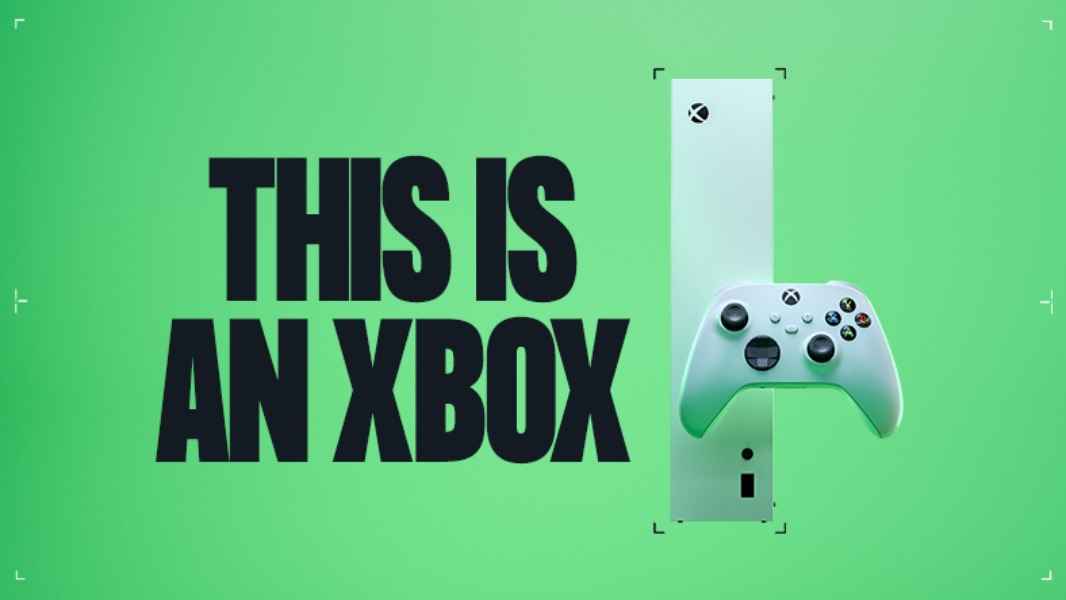
Microsoft’s Xbox Series S, which is the most affordable current-gen console on the market, didn’t help the company to sell more hardware during this new console generation. Xbox Series X|S sales are actually lagging behind Xbox One sales at the same point in their lifetime, and the Series S has often been blamed for “holding games back” due to its weaker specs.
It’s true that Microsoft’s parity clause for the Xbox Series S, which only allows developers to release games for the Series X if they have the same features on the Series S, has been blamed for the delayed release of Baldur’s Gate 3 on Xbox. Ultimately, Microsoft allowed developer Larian Studios to cut the game’s split-screen mode on the Series S to get the Xbox version of the game out in December 2023… three months after it was released on Sony’s PlayStation 5.
More recently, Game Science, the developer of Black Myth: Wukong, one of the biggest games of 2024, also publicly blamed the Series S’ 10 GB of RAM (compared to 16GB on the Xbox Series X and PlayStation 5) as the main reason for the game’s absence on Xbox consoles. In an interview with Destin Legarie published yesterday, Phil Spencer, the current CEO of Microsoft Gaming couldn’t avoid some burning Xbox Series S questions.
When asked if Microsoft could be willing to change its stance regarding the Xbox Series S party clause, Spencer responded that it wouldn’t make sense to do so. The exec added that forcing developers to optimize their games for the Series S may actually help to bring these games to gaming handhelds. Microsoft is currently partnering with several PC manufacturers creating Windows-based gaming handhelds, but the company may well have different plans when it comes to its own Xbox handheld devices.
“With the rise of handheld PCs and even the introduction so far of the Switch 2, as developers, we’re building on more device specs. From lower-powered, because there are battery-powered devices, all the way through things that plug into the wall,” Spencer said. “I actually think we have a real advantage because we’ve been targeting S for quite a while, that our games have been built and they’re portable across many different specs. So when we look at something like a Steam Deck or a ROG Ally or something, we’ve got this S version of the game that’s more tailored to the device specs of a lot of devices that frankly are getting introduced right now, and I think that helps us.”
Spencer also emphasized that the scalability of game engines today now makes it easier for developers to optimize their games for low-powered devices such as gaming handhelds. “Most of your games that are going to be out there are going to be supporting these different devices, and the S spec of what it is actually maps pretty well to the devices that we’re seeing introduced right now. So I think it actually is an important design point for teams going forward, that kind of power/performance mix that you see in the Series S,” Spencer explained.
In hindsight, Spencer does seem to suggest that if Microsoft does release an Xbox handheld, the company may want to get the vast library of games that are already optimized for the Xbox Series S compatible with the new device. If that’s indeed Microsoft’s plan, the question is now what kind of silicon the company may use for this portable Xbox device.
The Xbox Series S’ APU requires a large cooling fan and isn’t designed for handheld devices, and that chip is also several years old now. Microsoft will have to use a more power-efficient chip, and it would make sense to stick with AMD to ensure the best compatibility with Xbox games developed for the x86 architecture.
However, maybe Microsoft may want to opt for an ARM chip, as Nintendo did with the Nintendo Switch and the upcoming Switch 2. However, doing so would likely require some kind of emulation layer to make x86-based Xbox games compatible with an ARM-powered device.
We’ve already seen that happen with Microsoft’s Prism emulator on Windows 11 version 24H2 that makes Qualcomm-powered “Copilot+” PCs capable of playing some x86-based PC games. While I’m just speculating here, maybe the Xbox team could capitalize on that work if it chooses to go the ARM route for its gaming handheld plans.