Microsoft Announces Driver Quality Initiative for Windows
- Paul Thurrott
- May 14, 2026
-
1
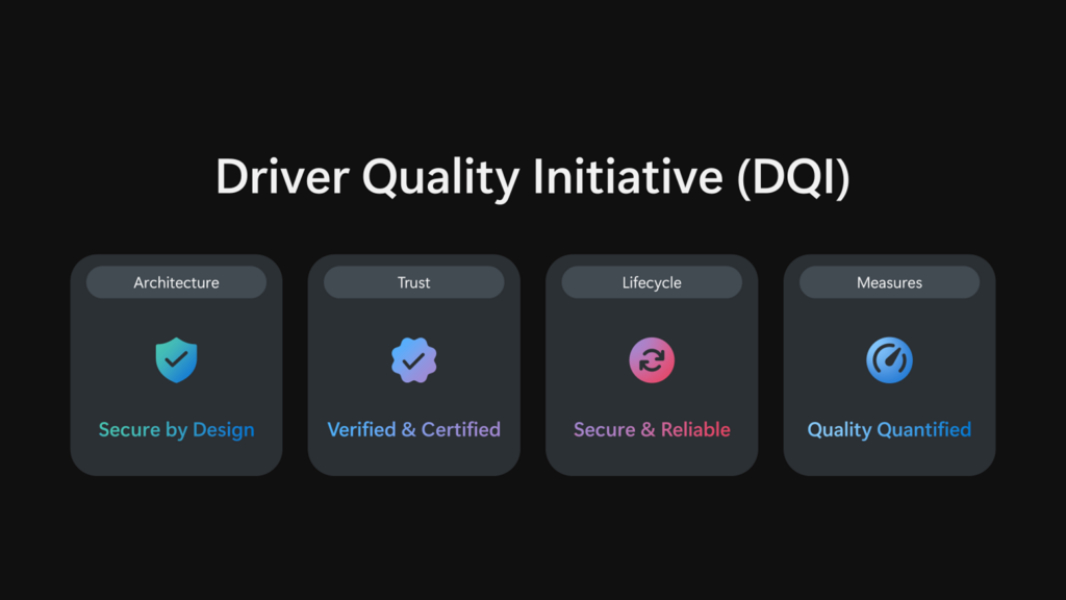
Microsoft just held its first WinHEC since 2018–yes, this surprised me, too–and it has a big announcement: The Driver Quality Initiative (DQI), which it says will fundamentally raise the bar on driver quality, reliability, and security across Windows.
“Drivers sit at the heart of every Windows experience,” Microsoft corporate vice presidents Robin Seiler and Ian LeGrow write. “They connect the OS to the silicon, components, and peripherals that make Windows one of the most versatile platforms in the industry. Today, thousands of partners contribute to tens of thousands of active driver families across the Windows install base. When drivers are high quality, customers experience reliable, secure, performant devices. When drivers fail, customers experience it as a device problem, regardless of where the root cause sits.”
DQI builds on Microsoft’s experiences with the Windows Resiliency Initiative (WRI), which is itself part of its broader Secure Future Initiative (SFI) efforts. It focuses on hardware drivers, specifically, of course, and because this is Microsoft, it must have pillars, in this case four of them: Architecture, Trust, Lifecycle, and Quality measures.
According to the software giant, Microsoft is “investing heavily” in hardening kernel mode drivers and enabling the third-party kernel mode driver transition to either user mode driver or Microsoft authored class drivers. It is “raising the bar” for trusted partners and the trusted drivers they create. It is improving driver lifecycle management through “better Windows Update catalog hygiene.” And it is expanding how driver quality is measured to include stability, functionality, performance, and power and thermal impact.
Microsoft says that its partners welcome the open methodology behind driver quality metrics, the phased rollout of lifecycle states and the commitment to incentive-based distribution as the right model for moving forward together. And that it will continue to invest in fundamentals like reliability, security, performance, compatibility, and quality.
“The work we do together over the coming year will define the Windows experience for more than a billion users,” they add. “We couldn’t be more energized about what we’re going to build.”