Paul’s Pixel 10 Diaries: Battery Life, Performance, and Heat
- Paul Thurrott
- Sep 04, 2025
-
2
We flew to Berlin, Germany overnight on Monday and will be here through the weekend. This was good timing for my Pixel 10 series testing, and I brought the Pixel 10 Pro XL, my current focus, and base Pixel 10 along for the ride. One of the things I was most curious to see was how (or if) the Tensor G5 processor that powers these phones raised the bar at all on battery life, performance, and heat.
As you may know, Google switched to its Tensor processors with the Pixel 6 series, and each subsequent generation of devices has shipped with a new version of that chip. What I’ve observed, and what others have reported, is that these processors are generally fine in day-to-day use, though they fall short in some areas as well. Nebulously, they don’t perform as well on benchmarks as the best processors from Apple, Qualcomm, and Samsung. But in real-world terms, there are what I consider to be bigger issues: Tensor chips tend to run hot, and the battery life I’ve observed on Pixel always falls well short of that provided by the equivalent iPhones.
Google has defended the Tensor by pointing out that it’s not designed to win benchmarks. Instead, Google’s silicon team works with Google Research to optimize each Tensor generation for a growing list of AI workloads that it feels will help differentiate Pixel from other phones. As I reminded myself recently, this was always the goal, even before Tensor: Pixel is all about “the intersection of hardware and software, with AI at the center.”
While there is some evidence that Samsung’s latest chips actually outperform Tensor when it comes to AI as well, I’ve always liked the idea of Tensor, and Google has always stuck to the script when anyone complained otherwise. For the G5, Google has switched the manufacturing of these chips from Samsung to TSMC, allowing it to take advantage of its 3 nm manufacturing processes. And that means that the Tensor G5 should be more efficient than previous designs and thus run cooler.
Google claims that the Tensor G5 also delivers its biggest-ever upgrade yet, with a 34 percent faster CPU and 60 percent faster TPU (NPU). But this should be taken in context: Those numbers are in comparison to previous generation Tensor chips that always underperformed the competition. And based on various reports and independent benchmarks, that continues to be the case. If you want the fastest possible smartphone, the Pixel isn’t it, as has always been the case in the Tensor era.
But Tensor G5 does enable some specific Pixel 10 series functionality. It’s powerful enough to run a new Gemini Nano on-device AI model that unlocks new features like Magic Cue, Voice Translate, Call Notes with actions, and Personal Journal. And it improves existing AI-based features like Scam Detection and Gboard, the latter of which supports voice editing exclusively on Pixel 10 series.
The most impressive gains, perhaps, come via an all-new Image Signal Processor (ISP) in the Tensor G5 that enables new computational photography features. The marquee feature here is 100x “zoom” via the new Pro Res Zoom feature. But the Tensor G5 also improves numerous Camera and photography features, including Real Tone, motion deblur and 10-bit video, Add Me, Auto Best Take, and more.

I’ve only had the Pixel 10 Pro XL (and Pixel 10 and Pixel 10 Pro) for a week, but between my extensive usage over the previous week, the drive to the airport, the flight to Berlin, and then a day out in the world on Tuesday, taking numerous photos and using Maps and Uber, I can say that the needle hasn’t moved too much. It has moved. But not as much as I had hoped.
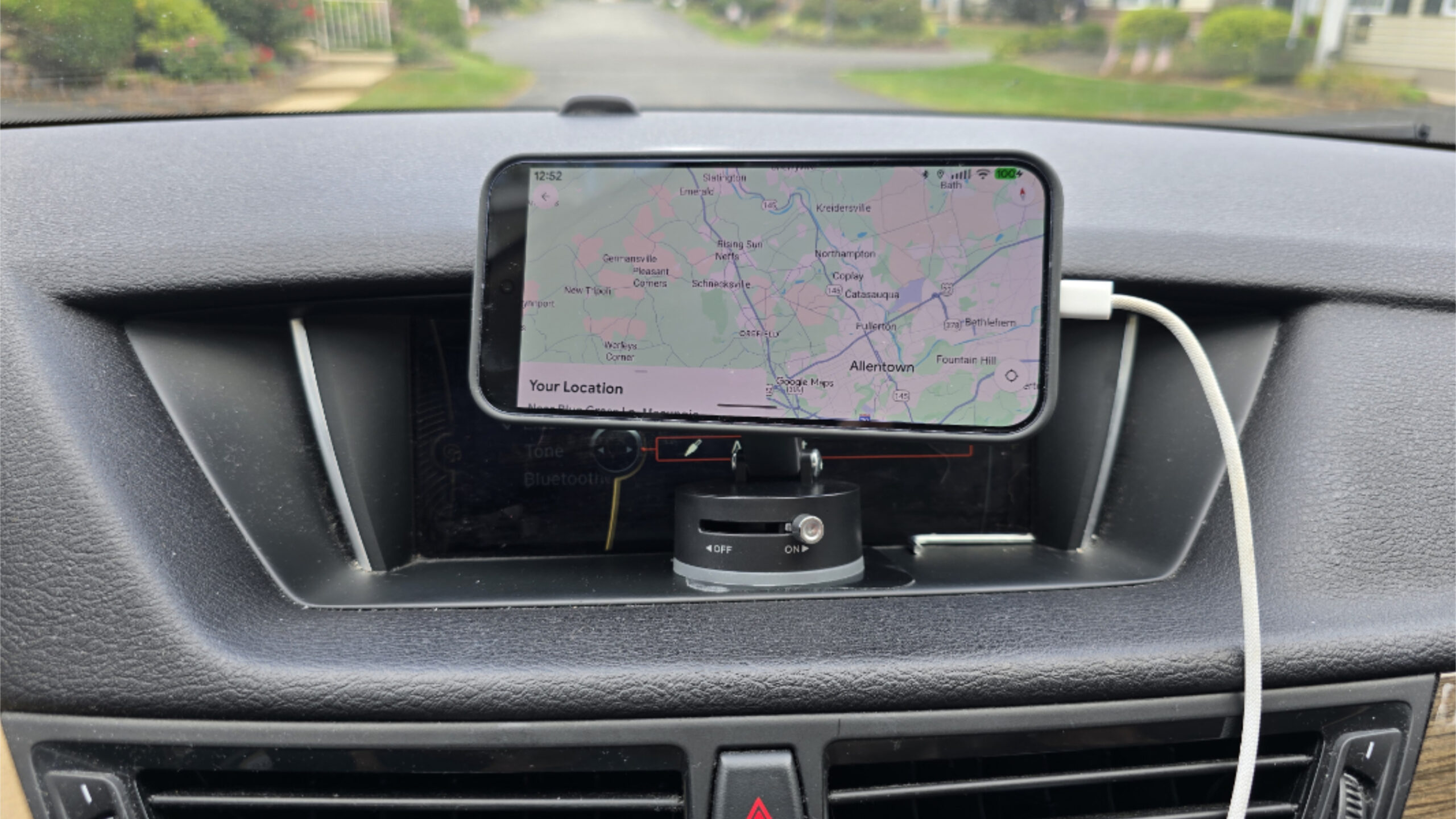
I used the Pixel 10 Pro XL to navigate to Newark Liberty Airport on Monday, a nearly 1.5 hour drive during which the phone was plugged into power and mounted on the dash using a MagSafe-compatible mount. I’ll be writing about the MagSafe/Qi compatibility soon, but my previous Pixels always got hot during these types of drives and, in two cases, auto-switched to dark mode and warned me that they were overheating. So I was curious to see whether the Pixel 10 Pro XL would similarly fail.

It did not, though it was in the sun on a hot day. I kept checking the back of the device during the drive compulsively, and it did get noticeably warm, but not truly hot, and there were no warnings or other issues.
At the airport and during the flight, I used the Pixel to listen to music via the Pixel Buds Pro 2 I recently purchased and my Beats Studio Pro headphones.

I did this off power and on, and sometimes with an Anker MagSafe battery that connects magnetically to the back of a phone. Here, I could see that the Pixel didn’t achieve the same semi-magical battery sipping performance of any iPhone, but it wasn’t problematic. (There’s something amazing about iPhones where you can play music for hours and it barely impacts the battery at all.)
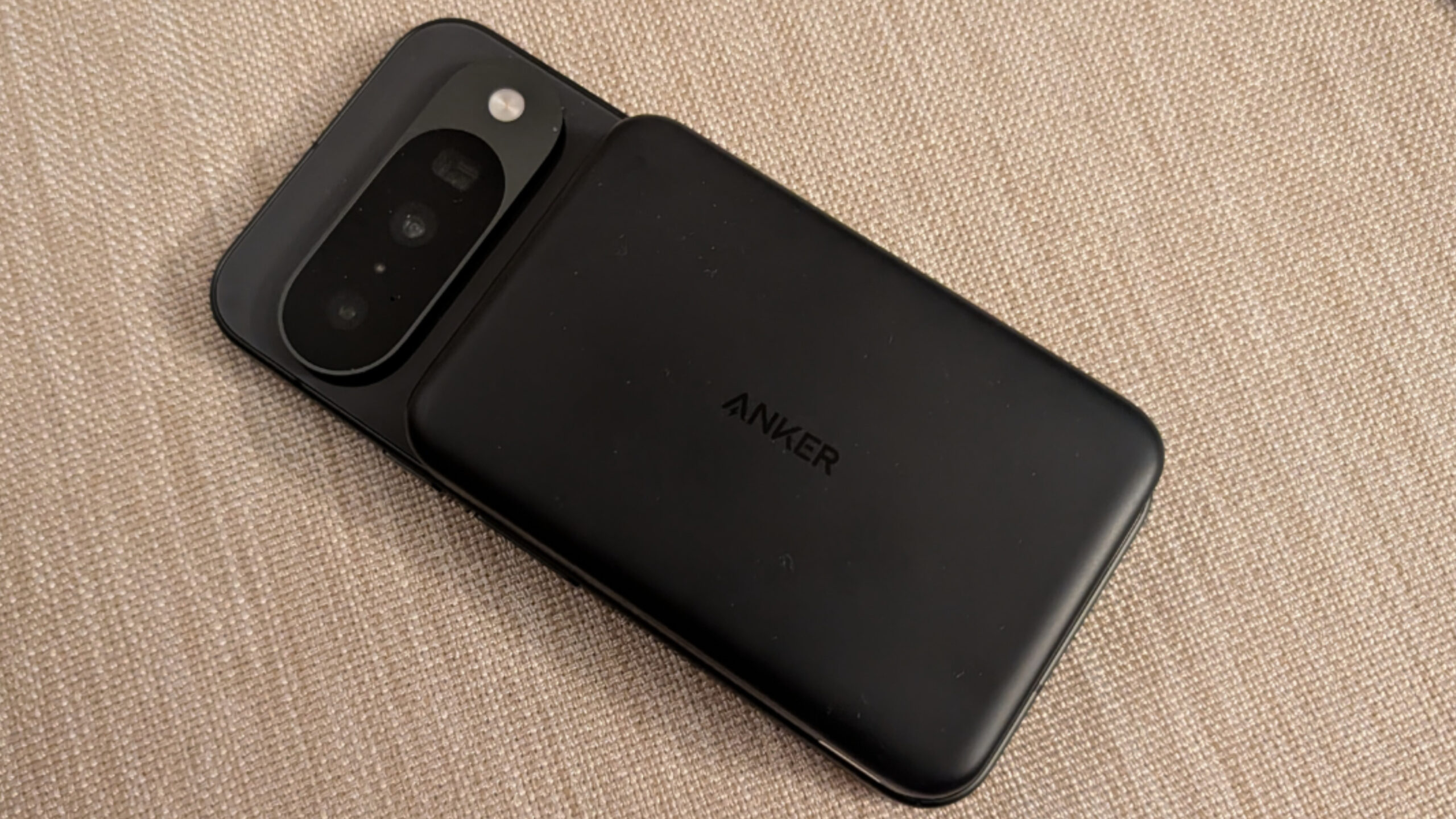
So far, so good. But my mid-day, hours-long walk around Berlin betrayed a problem that’s all too familiar to anyone with a Tensor-era Pixel: The battery life fell dramatically and to the point where I regretted not bringing that Anker battery. I left the hotel with 100 percent battery, of course, and my wife and I were gone for almost exactly three hours, during which I took over 150 photos, called two Ubers, and used Google Maps extensively. And by the time this was done, the Pixel’s battery life had fallen to 32 percent. Yikes.
Looking at the Battery usage information in Settings later, I could see that I had registered 2 hours and 27 minutes of screen time and that the Google Photos and Synology Photos apps were the most-used (16 percent and 14 percent, respectively). In both cases, this was likely tied to automatic photo backups, which I had stupidly configured to work over cellular. (After that, the next three apps that used the battery up most were Google Meet, which I had used to record First Ring Daily, Camera, and Instagram).

I could likewise see that Mobile network (30 percent), Screen (24 percent), CPU (19 percent), Wi-Fi (13 percent), and Camera (7 percent) were the system processes that hammered the battery the most.
So, this is a common issue for me. I’m in an international destination, out in the world, taking photos. My Google Fi cellular account is connecting to unfamiliar local networks and trying to find the best signal and/or performance, and depending on where I am, that means it could be switching between the networks on the fly as I move around. And these things together are absolute hell on the battery.

Knowing this, I chose to move over to the iPhone when we went to Mexico back in July: The iPhone’s battery life is dramatically better than anything I’d seen with any Android phone, and the Samsung Galaxy S25+ I had been using, while excellent overall, offers poor battery life that might even be worse than was the case with my Pixel 9 Pro XL. But I wanted to test the Pixel 10 Pro XL and not be tempted to just keep it charged with a portable battery. And I will likely not do that again given what I saw yesterday. This is the type of performance–or lack thereof—I have always seen with Tensor-based Pixels.
Is this a major issue?
On the one hand, you could argue that this type of day is unusual. And that’s especially true for me, as I spent most days at home, just working, and battery life doesn’t matter or factor into my thinking. And if I do go out in the world and take a lot of pictures, as I do on trips like this, I can just bring a portable battery. And the new MagSafe/Qi 2 compatibility really makes that better, too.
But as I had with each subsequent Tensor generation, I was really hoping for a meaningful improvement here. And others, who may commute to work or be out in the world more than I am usually, will expect better as well. So it’s fair to say that the Tensor G5 hasn’t really moved the needle on battery life. In the good news department, it appears to be better with heat—I need more experience to be sure—and I’m sure it really is x percent better in general performance. (Where x is whatever number you get on whatever benchmark.)
Given history, I suspect that most or all of the Pixel 10 series-specific AI features will turn up on at least some previous Pixels. And how that falls out will tell the tale: If there are still some features unique to Pixel 10 series, I’ll be surprised, but that will mean that the Tensor G5 really did deliver unique functionality that isn’t possible on previous generation chips. And that will be a major milestone, albeit one I would not bet my own money on.
More soon.