Intel Says Panther Lake is in Production on 18A Process Node
- Paul Thurrott
- Oct 09, 2025
-
4

Intel announced today that its Core Ultra Series 3 (“Panther Lake”) processor family for laptops is on track for high-volume production by the end of 2025. The chips will be manufactured at Intel’s new fab in Arizona, which the firm says is now operational.
“We are entering an exciting new era of computing, made possible by great leaps forward in semiconductor technology that will shape the future for decades to come,” Intel CEO Lip-Bu Tan said. “Our next-gen compute platforms, combined with our leading-edge process technology, manufacturing and advanced packaging capabilities, are catalysts for innovation across our business as we build a new Intel. The United States has always been home to Intel’s most advanced R&D, product design and manufacturing, and we are proud to build on this legacy as we expand our domestic operations and bring new innovations to the market.”
The Core Ultra Series 3 chips are the first to be built on Intel’s 18A manufacturing node, which the company describes as the most advanced semiconductor process ever developed and manufactured in the United States. I describe that as a low bar and will point out over half of the components in Panther Lake are manufactured by TSMC in Taiwan, and not in the U.S. by Intel. The key to that caveat is the chip’s componentized design.
As with Lunar Lake, the Panther Lake chips utilize Intel’s chiplet design, which divides the system on a chip (SoC) into tiles that can be assembled in different ways to make different chip models. Panther Lake features a compute tile, a GPU tile, and a platform controller tile, each mounted on top of a base tile in a 3D design. The compute tile is manufactured on the Intel 18A process, and all but the most sophisticated GPUs are made using an older Intel node. But the rest of the parts are manufactured by TSMC, and then Intel assembles the final chips.
Intel 18A is what Intel calls a “2 nm class node,” so it’s not clear if this is technically 2 nm. But it delivers 15 percent better performance per watt and 30 percent more chip density than Intel’s previous generation node.
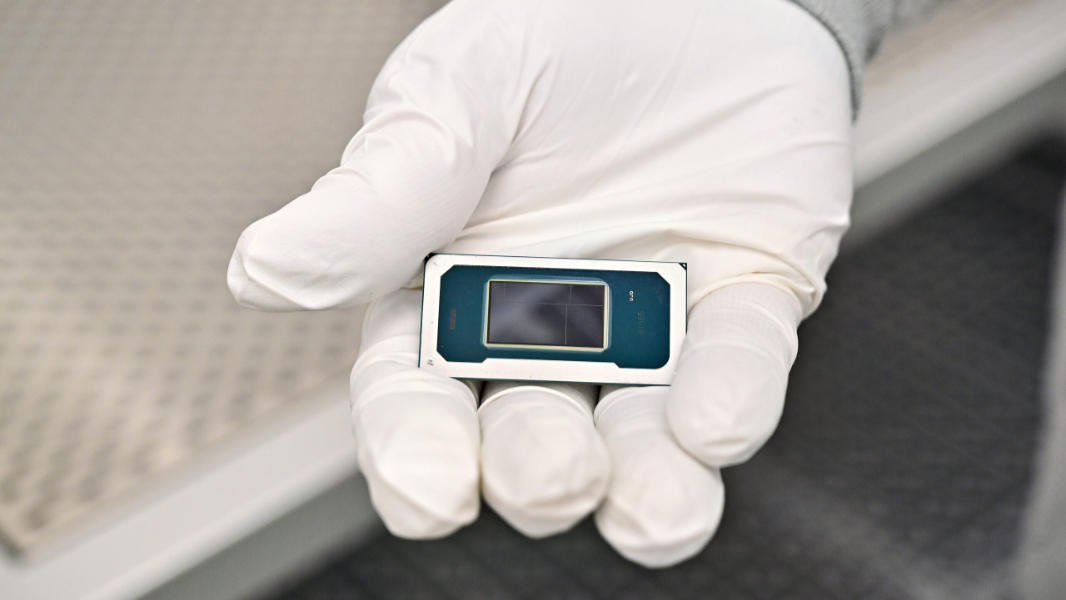
Core Ultra Series 3 “Panther Lake” chips deliver “Luna Lake-level power efficiency and Arrow Lake-class performance,” Intel says, referring to its current generation Core Ultra Series 2 processors for laptops and desktop PCs, respectively. The chips feature up to 16 performance and efficient cores, up to 50 percent more processor performance than Lunar Lake, an Intel Arc integrated GPU with up to 12 X cores and over 50 percent faster graphics, a 50 TOPS NPU that’s nearly identical to the one in Lunar Lake, and an Image Processing Unit (IPU) specifically aimed at live video quality for webcams.
Panther Lake chips support Wi-Fi 7 Release 2, Bluetooth 6.0 with Auracast, and Thunderbolt 4, not Thunderbolt 5, oddly. But I’m more concerned about reliability than anything else, given the mixed to negative experiences I’ve had with Lunar Lake across dozens of laptop models.
We should see some early Panther Lake-based laptops in December, followed by many, many more in 2026 after announcements at CES in January. We should also learn more about the specific CPU models that Intel will create, and what it will do the scale these chips to take on AMD’s Ryzen Pro-series offerings.