Actually, Steve Jobs Did Want Us to Use Our iPhones Like This (Premium)
- Paul Thurrott
- Jan 28, 2019
-
19
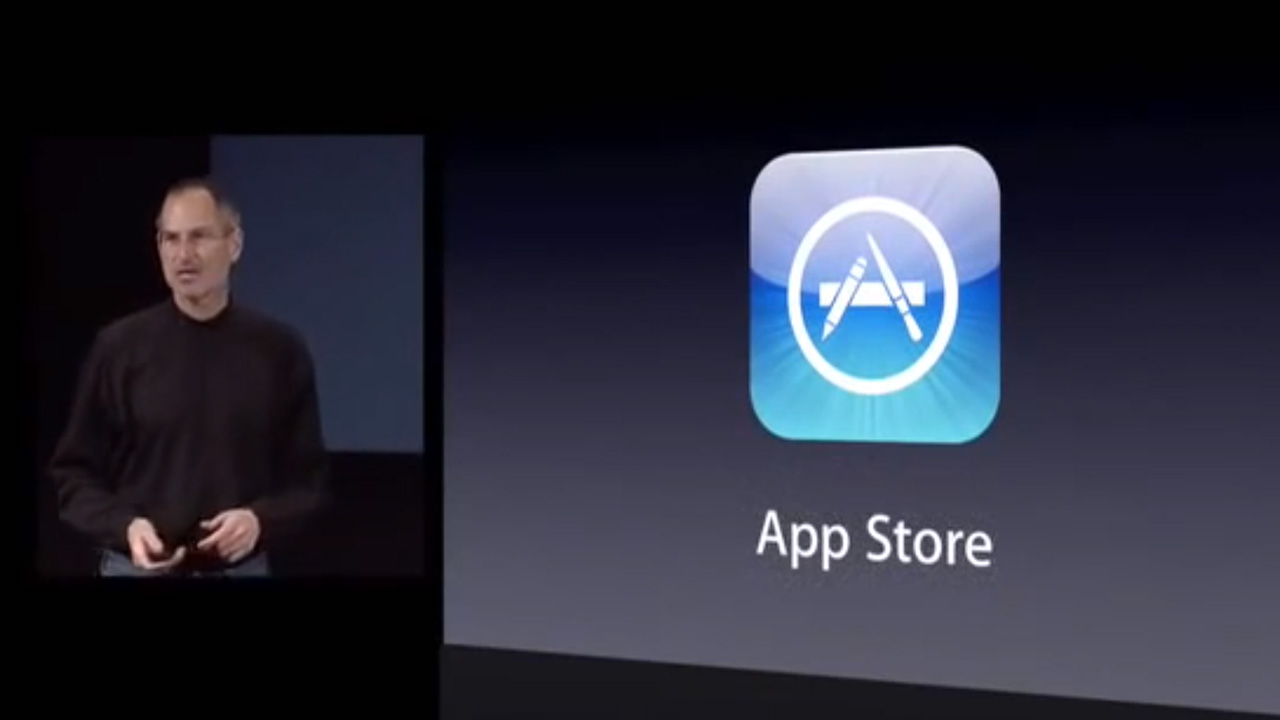
A recent editorial about smartphone obsession is well-intended, but it gets the history of Steve Jobs and the iPhone all wrong.
Cal Newport is a computer scientist and author, according to the byline of his recent New York Times editorial, Steve Jobs Never Wanted Us to Use Our iPhones Like This. I’m a bit peeved that gets credit for ideas that others have long had—like my notion of “deep work,” which I independently added as a daily block to my calendar many years ago—but he has done a good job of marketing himself and his self-help advice.
With the popularity of Deep Work behind him, Newport has moved on to digital minimalism, a topic that is, perhaps not coincidentally, of great interest to me as well. (I’m not sure who’s stalking whom here, but we certainly seem to be on the same page most of the time.) Actually, I’m generally interested in minimalism as well—my desire to scan photos and destroy all the original paper copies is tied to this—but let’s just focus on the subject at hand for now.
“In 2007, Steve Jobs … introduced the world to the iPhone [and] if you watch the full speech, you’ll be surprised by how he imagined our relationship with this iconic invention, because this vision is so different from the way most of us use these devices now,” he explains. “The presentation confirms that Mr. Jobs envisioned a simpler and more constrained iPhone experience than the one we actually have over a decade later. For example, he doesn’t focus much on apps. When the iPhone was first introduced there was no App Store, and this was by design.”
You get the idea.
So, two things.
One, Newport’s description of the original iPhone introduction is accurate. Thanks to several insider books and even Steve Jobs’ official biography, we know that Mr. Jobs originally did not want his iPhone sullied by third-party apps.
Two, things changed … a lot. And what Mr. Newport is ignoring—because it runs counter to his notion that we’ve overdone it when it comes to smartphone usage—is that Steve Jobs didn’t just go along for that ride. He led the charge.
Yes, Jobs had to be convinced in 2007-2008 that putting an app store on the iPhone wasn’t just the right thing to do, but the obvious thing to do. But there are dozens of examples of this kind of thing with Steve Jobs, a man who everyone knows as “mercurial” specifically because of his ability to suddenly twist 180 degrees and head off, with gusto, in a completely different direction.
What Newport doesn’t describe, of course, are the many, many Jobs public appearances in which he boasted of the success of the App Store and his iPhone’s ability to run an ever-larger selection of apps in the years following that first device. Or the many, many times he boasted of the money that Apple handed over to third-party app developers. Or that Apple, thanks to the very success of this platform—not the iPhone as a standalone device, but rather the broader ecosystem of the iPhone and its mammoth apps and content libraries—made Apple the richest company on earth. Jobs went to his deathbed assured of his place in history, tied decisively to him turning Apple around thanks to iPhone and the App Store.
Newport may or may not have a great command of history—I imagine he was being purposefully selective—but his ideas about turning down the dial on smartphone usage, which he calls “a minimalist vision for the iPhone [that Jobs] offered in 2007”—are sound. They’re so sound, that Apple itself has begun offering technology in iPhone specifically designed to lessen the hold of the product on its users. Yes, this happened under Tim Cook—Steve Jobs, of course, passed away in 2011—but this is a trend that Jobs, assuredly, would have embraced as well. Perhaps even earlier, given his clear-headed understanding of where tech trends were/are headed.
“To be a minimalist smartphone user means that you deploy this device for a small number of features that do things you value (and that the phone does particularly well), and then outside of these activities, put it away,” Newport writes. “This approach dethrones this gadget from a position of constant companion down to a luxury object, like a fancy bike or a high-end blender, that gives you great pleasure when you use it but doesn’t dominate your entire day.”
Oh, Cal. I feel like you’re channeling me. Again.
This is exactly how I treat all my digital devices. Not just my smartphone, but my tablet and my PC as well. You’ve seen or heard me write/talk about the notion of “the right tool for the job,” and I use each of these for very specific tasks. My PCs are for work, and just for work. And you can see how minimalist my must-have apps list is in my recent article These are the Apps I Rely On (Premium). My iPad is even more minimalist: I use this device only to read the news each morning, books, and, when traveling, to watch videos. That’s it. As you can see in These are the Mobile Apps I Rely On (Premium), my iPad has so few apps it only needs a single home screen.
My minimalistic tendencies often run counter to my job as a personal technology analyst and reviewer, and this is an issue I struggle with every day. I see people in groups, in restaurants and elsewhere out in the world, together but not together, each ignoring the others as they stare at their own phone screens, and I want to scream. You’ve seen how I struggle with expensive technology purchases, how I use a matrix of decision points to arrive at what I hope will good choices. How I take my recommendations very seriously, much more so than most reviewers, I think, in a similar space.
But I do have a slightly different take on some of Newport’s advice.
“To succeed with this [minimalist] approach, a useful first step is to remove from your smartphone any apps that make money from your attention,” he writes, which I do agree with. “This includes social media, addictive games, and newsfeeds that clutter your screen with ‘breaking’ notifications. Unless you’re a cable news producer, you don’t need minute-by-minute updates on world events, and your friendships are likely to survive even if you have to wait until you’re sitting at your home computer to log on to Facebook or Instagram. In addition, by eliminating your ability to publish carefully curated images to social media directly from your phone, you can simply be present in a nice moment, free from the obsessive urge to document it.”
Here’s what I do. And what I recommend.
I aggressively minimize the notifications that my phone(s) can emit. As a reviewer, that means I usually have 3-4 phones around, so the ones I’m not actually using day-to-day are permanently in Do Not Disturb mode. So, too, is my iPad. I never need a notification on that device. Ever.
On my daily-use smartphone, I allow notifications from Phone, Messages, Skype, and just a handful of other apps, but most without annoying reminder sounds. Like most of you, I am annoyed when I newly-installed app triggers a notification, but that only happens once: When it does, I turn off the notifications for that app.
I do not play games on my phone. If I have free time, I will read. Pocket, usually. The Google feed, perhaps. Never about celebrities or other nonsense. I try to learn.
I do not use social media unless I’m out in the world and see something I’d like to share. Then I catch up on whatever else is happening with friends and relations, quickly. The one exception to this is Instagram. I follow a very small number of people I really know only, and a short list of accounts and hashtags that offer great photography, and I do enjoy seeing that each day. (In Marie Kondo terms, Instagram “sparks joy” for me because of the way I use it.)
I often test apps in the course of my job. I will leave them on there for a while even if I don’t use them, but the one thing I’ve come to understand is that apps have a “weight” to them: They need to be updated, regularly, for example. So, I cull them from time-to-time, aggressively.
“Early in his 2007 keynote, Mr. Jobs said, ‘Today, Apple is going to reinvent the phone’,” Newport writes. “What he didn’t add, however, was the follow-up promise that ‘tomorrow, we’re going to reinvent your life’.”
That’s true: He didn’t say that. But Jobs very much led the charge on the life-changing addiction of smartphones, and that’s something he would have acknowledged were he still with us. I’ll do it for him: Steve Jobs didn’t ride the iPhone wave, he led it, and it brought us to where we are today. Now it’s up to us, as responsible adults, to do what’s right for us. And not blame Jobs or anyone else when we fall short.
Digital minimalism, like general minimalism, is a goal, not a destination, and it’s something that requires work over time, with adjustments and check-ins to make sure we’re always on track. And that is something that I suspect Mr. Newport would agree with.

Gain unlimited access to Premium articles.
With technology shaping our everyday lives, how could we not dig deeper?
Thurrott Premium delivers an honest and thorough perspective about the technologies we use and rely on everyday. Discover deeper content as a Premium member.