Sonos Responds (Poorly) to Complaints About Its New App
- Paul Thurrott
- May 15, 2024
-
6
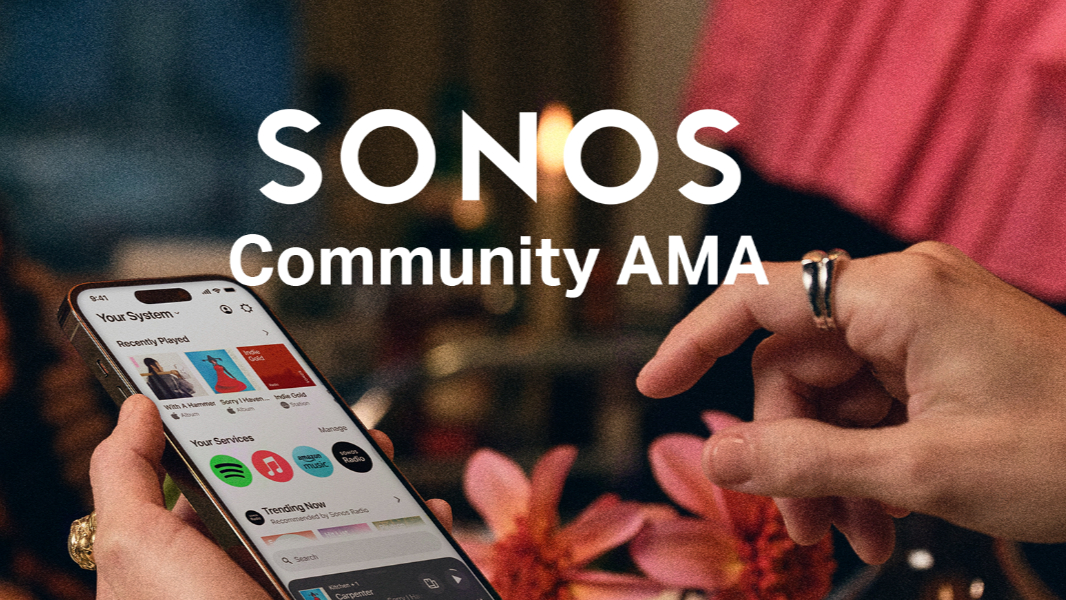
Yesterday, Sonos held its first-ever AMA to answer questions about its controversial new app. As you might expect, it didn’t go well. Worse, Sonos never gave a reasonable excuse for shipping the new app in such an unfinished and buggy state.
For those unfamiliar, Sonos announced that it would replace its Sonos S2 app with new mobile and web apps back in April. It then did so, but to the surprise of virtually its entire user base, this new app is a dumpster fire of reliability issues and functional regressions. Among its many, many problems, it doesn’t even let you edit the Now Playing queue: Contrary to its official documentation, the app doesn’t let you “add, remove, and reorganize the songs coming up in your active listening session” in any way.
To get ahead of its latest—and, uniquely in this case, warranted—PR disaster, Sonos held an AMA (ask me anything) event on its Community website (as opposed to, say, Reddit). And as noted, it didn’t go well, predictably turning into a vent session for Sonos’s understandably frustrated customers. But I’ve pulled out some key comments from Sonos representatives so we can determine whether the company is addressing this drama appropriately.
The quotes below are all from Sonos representatives that were only identified by their first names. And I’ve separated this into specific topics.
The negative feedback
The most obvious complaint is that Sonos released this app too soon, in an unfinished state, replacing an existing functional app with a broken app. And here, Sonos clearly failed its customers: These answers range from clueless to beyond clueless.
“I’ve personally been excited to bring the experience to our users, but also understand that anytime you are making a change to an interface that someone uses, you’re going to be met with a breadth of reactions, and understandably some negative ones, simply due to the nature of change,” Mike said. “We knew that some customers would be understandably upset by the delay in certain features, but are eager to continue to roll out updates to ensure these features are in place, and to address the feedback we are getting from our users. I’m thankful to have an app that is easier for the team to work with and publish updates to with far greater frequency than we’ve had in the past.”
“An app is never finished!” Tucker claimed. “This is a new app – we started from an empty project file. As the project progressed, we stopped investing our time in the old app code. Over time we ‘cross-faded’ our engineering attention into the new app. We need to make the new app be the app going forward so we stop splitting our attention. We decided that now is the moment to bring you the new app. This is the beginning, and we will be continually iterating going forward. As I said – an app is never finished.”
“Regarding the idea of a separate app, the problem with this approach is that the functionality between these apps would diverge over time, leaving a large group of users with an out of date and potentially not fully supported experience,” Diana responded, completely missing the point.
Of course, they will diverge over time. The point is to get the new app up to speed before forcing it on all users.
The app redesign
While one might quibble with specific changes to the UI in the new app, I think it’s objectively an improvement over the previous app, and the customization is nice. But not everyone agrees, of course. Here, I will take Sonos’s side: The new app isn’t perfect. But it’s an improvement from a UX perspective.
“The refreshed UI design is rooted in the needs that we’ve been hearing from our listeners for years,” Mike explained. “We heard from users that the information architecture of the S2 app felt like work, particularly in navigating between multiple tabs to get core jobs done. The intent of the new app home feed is to put the most useful content and controls immediately within thumb’s reach, offering quick access to the content that means most to users, and enabling them to drive what is prioritized in their personal home experience.”
Specific feature complaints
This one still blows my mind. I raised very specific issues about core media player functionality that impact everyone, but the people in the AMA were bitching about alarms, how the new app handles speaker group volume settings, local library results in search, Internet radio station availability, and other less important issues.
The only interesting bit here is that the missing alarms feature was a last-minute bug (now restored thanks to an app update).
“The morning of the app launch, we discovered a data corruption error around the new Alarms APIs,” Diana says.” The corruption could cause alarms to go off in the wrong room at the wrong volume with the wrong content! In order to save your alarms, we made the difficult decision to remotely disable the alarm settings feature and then completely lock it out. It allowed us to make sure your alarms stayed as they were – but at the steep cost of taking away your ability to change them yourself.”
“The team rallied to make sure we could turn this feature back on safely – and today we are so delighted to say that we have re-enabled alarm settings,” she continues. “To get this feature, you must do a full system update. But that’s not how we expect to introduce features every time. We have built the new app to be able to update independently of the speaker firmware. As we go forward, you can expect us to bring out new features with smaller, less intrusive, updates.”
Technical details
I have no idea why Sonos would even address these questions, but the new app uses a hybrid architecture with cloud and local components. The mobile apps are mostly native code—Swift UI on iOS and Kotlin and Jetpack Compose on Android—but they also use Flutter for the Setup and “wizard” panels that slide up from the bottom of the screen. In other words, they’re not that different from the previous app, architecturally. The most significant change is that the apps use new cloud services that provide richer music discovery features than were possible with the old app.
“Our previous app was built on APIs that did not provide enough metadata to make that rich experience,” Diane said.
No one addressed the move from desktop apps to a single web app, but that was obviously the right choice: Few users access Sonos from the desktop and so a single, cross-platform app makes the most sense.
Regaining trust
This is the biggest issue going forward: Sonos was unfairly blasted for obsoleting out-of-date hardware a few years back, but fair or not, that experience still resonates today, and it should have informed what it did here. In this case, Sonos customers are right to not trust this company or how it makes decisions. And here, there is no good answer beyond apologizing.
And I don’t see that apology. Just a promise that this won’t happen again. Which, if I’m not mistaken, is what they said last time.
Actually, it’s worse than that. When asked specifically for an apology, Diana declined to do so.
“Our goal is to build the best products for you—to add sound to your lives,” Tucker said. “Along the way we may make mistakes. What we learned this past week is that we should have communicated more openly with you about changes that may impact you. Going forward we plan to be more communicative to you all about changes that are coming. We are also committed to acting on your feedback—and delivering you improvements—rapidly. Over the coming weeks and months we seek to fix the issues that you have surfaced and earn back your trust.”
Key takeaways and the future
Sonos says that it will address key feedback in a May 21 update to the new app, which sounds like a better timeline than the previous schedule (“in the coming weeks”) they also kept repeating in the AMA.
This is a disappointing showing from Sonos. No meaningful apologies, not even to the blind users who were impacted particularly badly. No acknowledgement that shipping a buggy, incomplete app and replacing S2 was clearly the wrong decision. And far too much focus on silly individual features or, worse, how the app was made and architected.
Sonos represents a significant investment for many of its customers. It’s reasonable to want the damn thing to work.