Build 2026: Microsoft Project Solara Envisions a Future of Agent-First Devices
- Paul Thurrott
- Jun 02, 2026
-
6
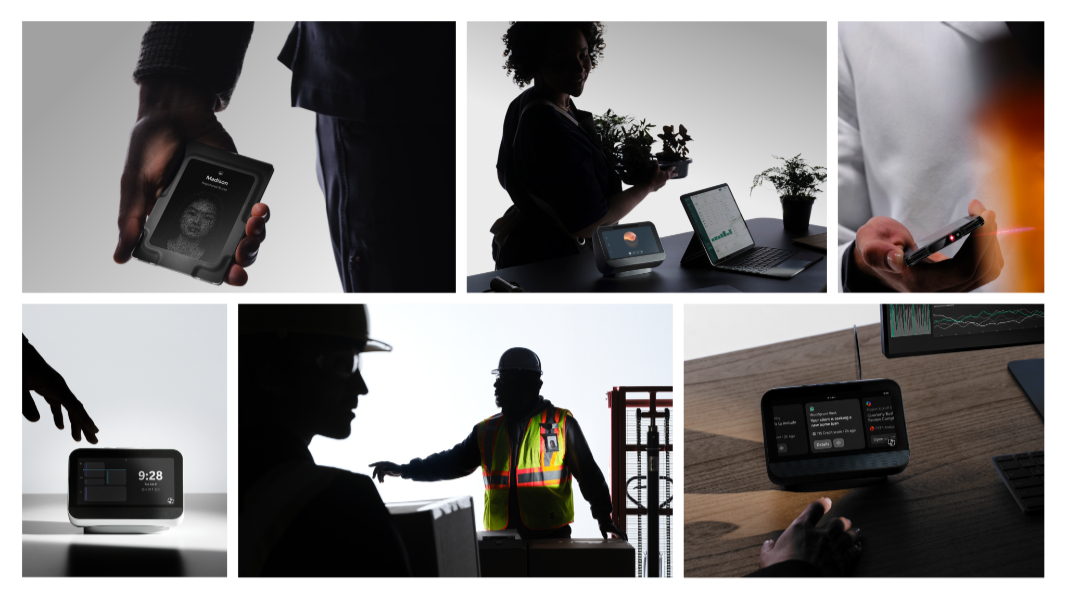
During the Build 2026 keynote, Microsoft technical fellow Stevie Bathiche introduced Project Solara, a new software platform designed for potential agent-first hardware solutions of the future.
“Agents and AI accelerate the creation of even more specialized computers without incurring the full cost and tradeoffs that in the past limited the creation, diversity, and specialization of those new forms,” writes on the Command Line blog. “We imagine a diverse ecosystem of agent-first devices, from small to large, from fixed to hypermobile, from personal to professional. We’re starting this journey with two concepts designed for the enterprise—and we’re excited to navigate this transformation with you all.”
As Microsoft sees it, AI agents will jumpstart a new generation of devices that augment the way we do things today, much like the PCs and phones did. Bathiche referenced the AI app structures he first introduced at Build 2020–besides AI, inside AI, and outside AI, and noted that these new devices of the future will utilize that third structure, with AI orchestrating tasks across multiple apps and services. You can see early versions of this type of AI app structure in OpenClaw and other claws, he said.
Agent-first devices will be even more specialized than the hardware we use today, but they will require a base OS, shell, developer ecosystem with apps, and web-based intermediation on top of the silicon layer, just like today’s computers and related devices. To address this, Microsoft has created Project Solara as a chip-to-cloud platform designed specifically for agent-first experiences and the new device form factors they enable.
With Project Solara, the OS layer is liminal, which means–yes, I had to look it up–that it is minimal on whatever edge devices and intermediary, with operations moving between those devices and the cloud via agents. In some ways, Project Solara addresses the problem Microsoft used to describe as “the next wave,” in this case, the next form factor. Because there isn’t a form factor, there is a constellation of devices working together as one system. And the next platform shift is from apps to agents.
“This is not just about bringing intelligence to the PC, the browser, or the phone,” he notes. “It is about bringing intelligence into the places where people need it most: In the flow of work, in the environment, and closer to the task at hand.”
Project Solara is designed for an open, multiple-agent world, Bathiche says. It can include Microsoft agents, but also new agents that users will build for their specific workflows and needs. Microsoft is building enterprise manageability into the platform, of course. And it is investing in just-in-time UI where the agent experience will adapt across devices and modalities without requiring developers to redesign everything for every new form factor.
Bathiche previewed two concepts, one mobile and one stationary, both of which are multimodal with “glanceable access, voice, vision, and getting to the right agent at the right moment.” And he says that Microsoft is investigating healthcare, retail, the financial industry, and other verticals.
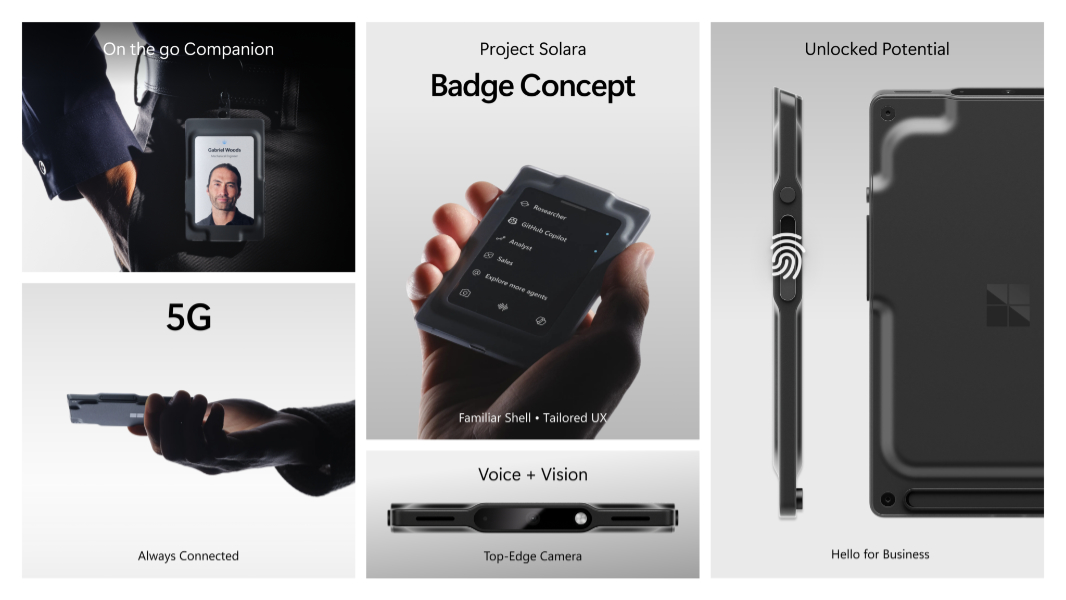
The mobile concept is a smart badge with 5G connectivity, voice and vision capabilities, a touchscreen display, and a camera.
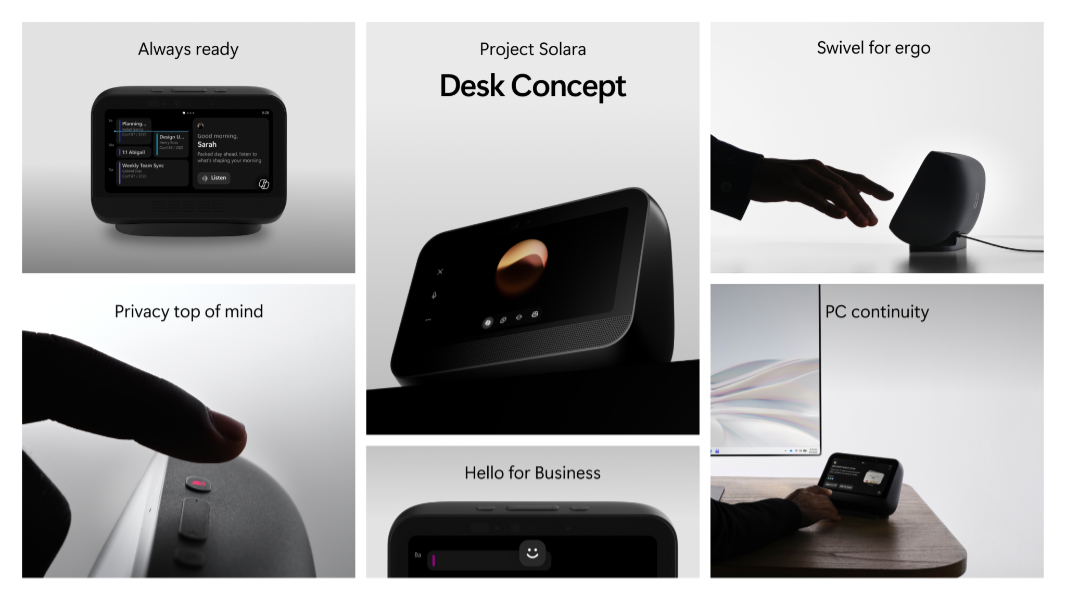
And the stationary concept is a desk-based device with a touchscreen display, microphones and cameras, a presence sensor, and USB-C ports for expansion. It is piloting both with hundreds of employees internally.
Project Solara isn’t theoretical: Microsoft has already created an AOSP (Android)-based OS called the Microsoft Device Ecosystem Platform (MDEP) so that device makers can get started, an agent shell for handling local and cloud-based agents, Microsoft Intune, Entra ID, and Hello Business support, and privacy controls, and it’s specified which MediaTek and Qualcomm Arm-based chipsets it will work with and has provided applicable reference designs.
“These attributes represent our current thinking and will continue to evolve as we continue to build out the platform,” he says.
Microsoft will begin an external pilot of Project Solara in the coming months, and it says that AccuWeather, Best Buy, CVS Health, Levi’s, Target, and others will be involved.