Woody
- Paul Thurrott
- Mar 12, 2025
-
3

I never met Woody Leonhard in person, but he could not have had a bigger impact on my life. And now I only have questions.
I found out this morning that Gregory Forrest “Woody” Leonhard passed away on March 8 at the age of 73. It was a stark reminder of how little I know of the man, and that was apparently true for so many others as well: The editor of the AskWoody newsletter reached out to me, as he did to others, to see whether I could write or contribute to an obituary. Despite the number of lives he touched, including those of writers like Fred Langa, Brian Livingston, and me, few seem to know his full life story.
All I really know myself is how Woody impacted me and my career.
Woody’s first book was Windows 3.1 Programming For Mere Mortals. This may literally be the first book I ever read about Windows software development ahead of me going back to school to learn programming. I write “may” there because I’ve mis-remembered and mis-told that story many times, but looking at it now, I do think that’s the one.
“My wife’s parents bought me a book about WordBASIC by Woody Leonhard that year [1992], I wrote in Programming Windows: Visual Basic to the Future (Premium). “It was transformational. Leonhard, like Jerry Pournelle, wrote in a conversational and humorous style that I immediately became quite enamored of. And it’s fair to say that both writers profoundly impacted my own future career: Technical writing, I discovered, needn’t be dry or boring.”
I can’t overstate how important Woody was to my eventual writing career. Though I had no designs on writing in the early 1990s–my plan was to become a developer–life had other ideas, and within a few short years I met a professor in Arizona who set me off on what is now a 30-year career in writing. (See below.) When it came to writing, there were influences, and Woody was chief among them. (My second book on Windows development, Programming Windows 3.1 by Charles Petzold, was important but also far less approachable.)
Windows 3.1 Programming for Mere Mortals is described as “an irreverent guide to Windows programming,” and at the time Woody wrote it, he lived “atop the Colorado Rockies with his wife, son, and cocker spaniel.” The mystery here, sadly, is what happened between then and now. At some point, Woody moved to Thailand, which my experiences in the much closer and less exotic Mexico City tell me was an astonishing life changer. He continued writing, shifting like all of us to digital. And he lived in Thailand until pandemic restrictions eased up, at which point he moved to Tennessee.
I interacted with Woody sporadically over the years, but never met him in person. My understanding is that we’ll eventually learn more about his later life. As you may imagine, I regret not reaching out, not knowing more, not doing anything, really, to support this person who I can only hope knew about the stunning and positive impact he had on so many. Including me.
I’m sorry, Woody. Rest in peace.
—
In September 2019, I wrote an editorial called Influences for From the Editor’s Desk, which was then an email newsletter, which mentions Woody. Here’s the full write-up.
Influences
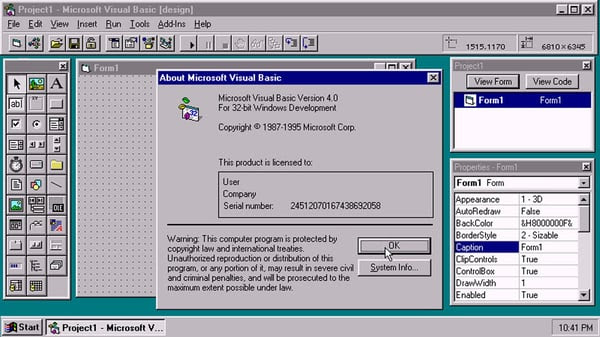
As you may know, I’ve been examining the history of Windows in a series on Thurrott.com from the perspective of application development. The theory is that Windows evolved over time more in response to market forces and competing products than in response to customer needs. It’s been a rewarding effort, and a nice reminder of my developer roots. And of the people who influenced me along the way.
Almost 30 years ago, I was working at a bank but planning to go back to school to study computer programming. At the time, I was an Amiga user and enthusiast, and knew that, despite my affinity for the platform, I’d have to embrace what I thought of as the Evil Empire of Microsoft Windows. And so I began preparing for that the year before my wife and I moved to the Phoenix area, as I would be attending Arizona State University.
This was late 1992, there was no public Internet to speak of, and so we learned things from books. Paper books.
The first Windows developer book I received was a Christmas present from my wife’s parents. I’m not sure what it’s like in your family, but oftentimes when it comes to intra-family gifts like this, it’s a matter of them, in this case, asking my wife what I want and my wife then asking me. And I knew exactly what I wanted.
Oddly, I can’t tell you what that is today. As I wrote earlier in Programming Windows: Visual Basic to the Future (Premium), I’m still not exactly sure despite a lot of research. It was either Hacker’s Guide to Word for Windows or The Underground Guide to Word for Windows: Slightly Askew Advice from a Winword Wizard, both by Woody Leonhard.
Either way, the book was indeed transformational. It taught me that you could write about a technical topic—in this case WordBASIC—in a way that was conversational, light, and humorous. I’d never read anything quite like it. And while I didn’t know at the time that I’d one day become a writer, Woody profoundly influenced me and I’m grateful.
My second Windows developer book was Programming Windows 3.1 by the inestimable Charles Petzold. Petzold is an excellent writer, and while he’s not as breezy and conversational as Woody, he is incredibly technical and approached Windows development from a very low-level perspective. I read this book again and again, several times before I even had a Windows PC, and was often asked about it by friends or coworkers who were curious about the Bible-sized tome. Above all, Petzold taught me to be precise.
When I couldn’t get in-state tuition to ASU the first year we were in Arizona—our scheme to get Arizona licenses a year earlier didn’t fool anybody, apparently—I was forced to attend the much cheaper Scottsdale Community College for that first year or so instead, and I went back to work at a bank that was subsequently robbed several times. (That’s a story for another day.) During my time at SCC, I met Gary Brent, whom to this day is one of the smartest people I have ever known.
I could tell Gary was special from the way he answered a nonsensical question one night in a C++ class. He was writing on the whiteboard, back to the class, when another student asked why we were doing this. Gary paused, with his marker held in midair, and said, “Why do anything? You’re just doing to die.” And then he just started writing again. I literally clapped. And made sure to take as many of Gary’s classes as possible.
I loved Gary. And at some point, he asked me if I’d be interested in helping him by tech-editing a Visual Basic 3.0 book that he and another professor were expanding from a booklet that they had created for SCC classes.
Of course I was interested.
And then he changed my life: Would I be interested in … helping to write the book?
Oh my. Of course.
Over time, I wrote more of the book than Gary or the other coauthor, Jim Elam, and Gary agreed I should be listed as the lead author. But it was Gary’s oversight, writing abilities, and technical acumen that were so crucial to making it come together. Gary’s biggest gift to me was turning me into a writer, and he made me question everything I’d written and coded. He’d read a printout of code I’d written, and I could see him literally get stuck on something, circle back, read it again, and then finally ask, “are you sure about this?”
“Yes. Well, I was. Now I’m not so sure.” It happened again and again. And Gary was always right.
Our writing partnership expanded over the next few years, and we co-wrote several books together, including books about Excel, Windows 95, and of course The Delphi 3 SuperBible, an enormous tome that documented Borland’s Object Pascal-based class libraries in ways that the company had never done itself. During this period, I also finally got in-state tuition to ASU, and so I attended that school the following year. I really enjoyed a particular class, which was a survey of computer programming languages. And since I intended to take the follow-on class the following semester, I approached the professor and asked him which languages and books he’d be using so I could get started during the holiday break. (Books. Always so key.)
One of the languages was Visual Basic. And one of the books was the Visual Basic book that I had cowritten.
After a quick visit with school authorities to see whether I could get real-world credit—no—I dropped out of ASU and pursued a writing career full-time. It was 1995.
But one thing had always bothered me. Why on earth had Gary picked me to help him write the VB book? I was technical enough and enjoyed programming, sure. But I had never done anything that suggested I could write before we started on that book. So I decided I’d ask him, and I assumed that his answer would unlock some great secret, something I could perhaps pass down to someone else someday. Finally, I asked.
“I could just tell,” he told me.
Well. So much for that.
– Paul