Review: iWar by Tim Higgins
- Paul Thurrott
- Sep 22, 2025
-
1
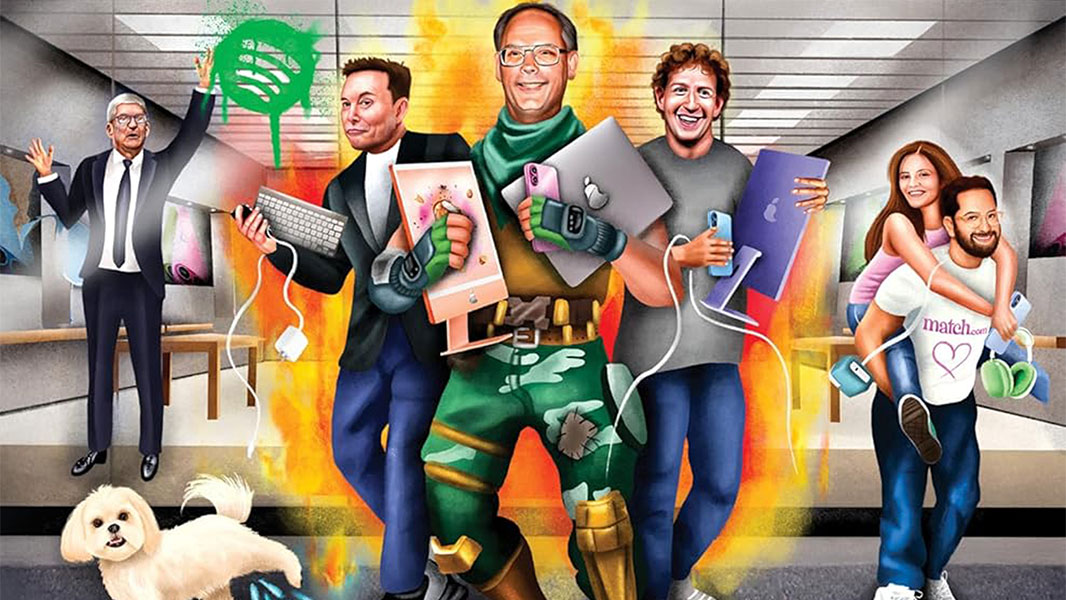
“iWar: Fortnite, Elon Musk, Spotify, WeChat, and Laying Siege to Apple’s Empire” by Wall Street Journal columnist Tim Higgins is a mostly chronological account of multiple overlapping efforts by app developers, would-be competitors, and antitrust regulators to tear down the abusive mobile app store policies enacted by Apple and, to a lesser degree, Google. It’s worth reading, as it provides a measured and non-biased accounting of the events of the past several years. But it delivers no new revelations, and this history is still unfolding, so it ends on a bit of a cliffhanger.
As with Apple in China: The Capture of the World’s Greatest Company by Patrick McGee, this book is most useful as an important reminder—or, for fans, a heads-up—that Apple is as terrible if not worse than the other Big Tech companies it seeks to distance itself from. Oddly, Google comes off better than Apple, even though the company eventually dropped its original plans for a truly open Android apps market and simply copied everything Apple was doing in this space.
At a high level, this story is well understood. The iPhone App Store is “an economic miracle” that’s far more successful than anyone inside the company anticipated. Apple came to rely on this insanely profitable business so much that it began squeezing its partners and customers more and more over time by expanding its arbitrary and indefensible 30 percent fees—the so-called “Apple Tax”—to new markets. And when the very partners that drove those successes complained, whether it was about the high fees, communicating with their own customers, or anything else, Apple exerted what antitrust regulators on both sides of the Atlantic was illegal monopoly power to harm or even destroy the businesses that complained. Oh, and then Google did the same thing.
The details unfold over numerous chapters, most as short as those in a typical Dan Brown book. None of them will be unfamiliar to those following Apple’s multiple antitrust cases closely. But I was hoping to learn more about two inflection points that I feel are as important to the mobile industry as was Microsoft’s disastrous mistake in reverting to proprietary solutions at the height of its Internet Tidal Wave: Apple’s arbitrary decision to charge 30 percent for paid apps and then in-app payments in the App Store and Google’s decision to copy Apple and drop its open app store platform and start charging the same fees.
Neither of these inflection points is directly covered in the book because none of the court cases and related evidence in each uncovered why these things happened. And it’s impossible not to wonder how different this industry would be now if either or both companies lived up to the ideals they promote so often, especially Apple, and just conducted business legally.
History shows that didn’t happen, so the book recounts what’s happened so far. Apple’s illegal collusion with book publishers, its illegal tax breaks in Ireland, and its abusive, retaliatory behavior against developers who dared to question its policies are all dutifully reported. But here are several points made in the book about the profitability of the App Store and its unfair fee structure.
Apple determined in 2018 that the App Store was generating a 74.9 percent operating margin, meaning profits after costs. This means that the company could have lowered fees dramatically and the business still would have been wildly profitable. Instead, almost 10 percent of its profits came from a business that couldn’t justify the fees it charged developers.
In 2018, Apple’s profits from videogames were more than those from Xbox, Sony, and Nintendo combined.
As Apple squeezed developers harder over time by charging fees on more transaction and app types, including those that occurred outside the App Store, it crossed a line where it was making more profits on apps and games than their developers, Epic CEO Tim Sweeney testified in his company’s antitrust court battle with Apple.
Apple generated over $2,000 in profit every second of every day in 2021, and that figure is even higher today.
Phil Schiller doubted that Apple could keep charging such high fees to app developers. He told Tim Cook in 2011 that lowering fees below 30 percent was not a matter of if but rather of when and then how. He suggested that once App Store profits reached $1 billion, Apple could start lowering the fees. Cook ignored him.
When Schiller testified in Epic v. Apple, he oversaw the App Store and yet he claimed not to know whether the App Store had been profitable since 2009. (As noted above, it was wildly profitable.) He said that it just “never came up.” As an Epic lawyer correctly noted, only a monopolist with no competition could make this claim. And Epic uncovered documents showing that Schiller had lied: App Store profitability was, of course, a topic of discussion at Apple. Tim Cook later conceded the point, but he also said Apple didn’t really track it explicitly. “I have a feel, if you will,” he said of App Store profitability.
By the time Google’s annual payments to Apple for being the default search engine on iPhone surpassed $20 billion, this was almost 20 percent of Apple’s total annual profits. And this was almost “pure profit” for Apple, and it had over the next ten years a guaranteed sum north of $120 billion. It would be much higher than that.
In 2009, Google told Samsung that it operated the Android Marketplace, the predecessor to today’s Play Store, as a “revenue neutral service” through which it did “not seek to profit off application sales. We invest in Market because it is essential to the open ecosystem.” This “build it and they will come” model is identical to what desktop system makers like Microsoft and Apple had used in the pre-mobile days, with the implicit understanding that app developers would do the heavy lifting and make those platforms more valuable. But it simply copied what Apple was doing after it saw how profitable this business could be.
It goes on and on. And yet, there’s more to come, for Apple and for Google.
Like many of you, I’m curious to see the end game here. So perhaps we’ll get a sequel to this book in a few years. But in the meantime, “iWar: Fortnite, Elon Musk, Spotify, WeChat, and Laying Siege to Apple’s Empire” is available now in Kindle, Audible, and hardcover formats at Amazon.com.