DuckDuckGo Usage Surges Since Google I/O 26
- Paul Thurrott
- May 26, 2026
-
8
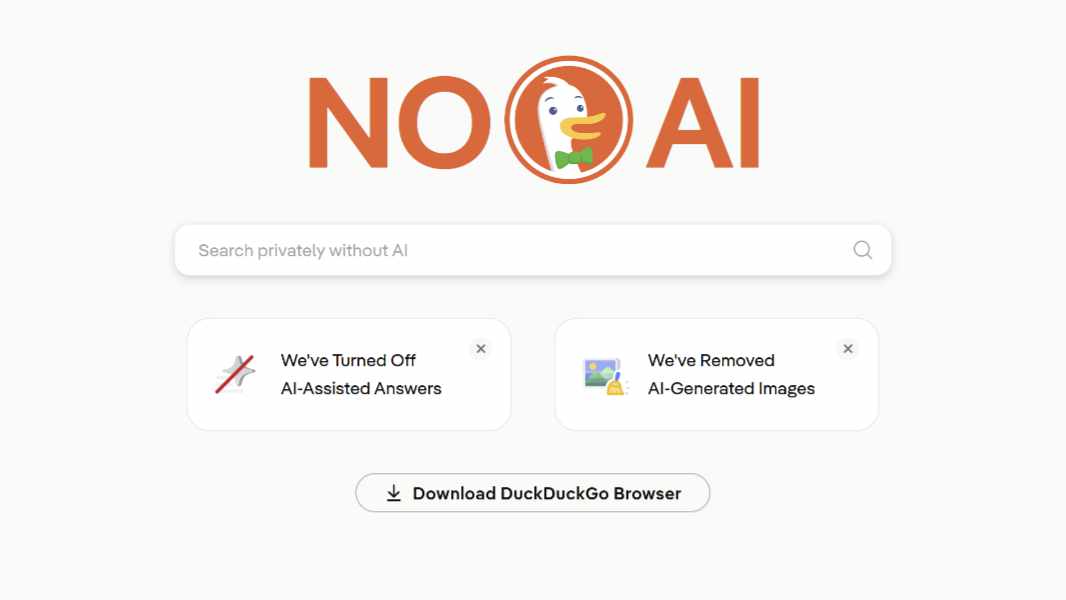
Depending on your view of the promise of AI, last week’s Google I/O tsunami of news was either thrilling or terrifying. For those in the latter camp, DuckDuckGo offers some hope: It says that usage of its private and AI-free products and services is up dramatically since those announcements.
“Google is force-feeding AI with no way to opt out,” DuckDuckGo founder and CEO Gabriel Weinberg says. “As a result, their results are getting worse, not better. We want to be the place that puts users in charge and allows them to decide how much or how little AI they want. That’s why we’re seeing a spike in people coming to DuckDuckGo this week, it’s as simple as that. Not only do we respect user choice, but also user privacy. Everything you do in DuckDuckGo is private, we don’t collect search histories or chats and nothing is used for AI training.”
Through the Memorial Day long weekend, DuckDuckGo experienced a mobile app installation surge 18.1 percent week over week (WOW) in the U.S. on average, with peak growth of 30.5 percent on May 25. Usage on iPhone and iPad was highest, with an average growth of 33 percent and peak growth of 69.9 percent on May 25.
Visits to the No AI version of the DuckDuckGo web search engine were also up over the long weekend, with 22.7 percent WOW growth on average during that time period and a peak growth of 27.7 percent on May 24.
“U.S. growth ran multiples of the international rate, which suggests this is a response to Google’s US-centric announcement, and not a global trend,” the company told me. “All of this held (and accelerated) through Memorial Day weekend, when activity typically dips. The underlying demand shift is likely larger than the headline numbers reflect.”
In addition to its No AI web search, DuckDuckGo also offers optional AI features like Search Assist, Duck.ai, and an AI Image Filter that are both free and private. You can learn more about those offerings on the DuckDuckGo website.
“One of the most popular search features we’ve launched in years is a filter that removes AI images from image results,” DuckDuckGo chief communications and policy officer Kamyl Bazbaz adds. “The other most popular feature? Search Assist, which uses AI to anonymously generate answers to search queries at the top of the search page. People just want a choice. Google can force AI on its users without fear. A federal judge already ruled in U.S. v. Google: ‘Google is a monopolist, and it has acted as one to maintain its monopoly’ and monopolists don’t worry about users leaving’.”