Windows ML is Generally Available with Windows App SDK 1.8.1
- Paul Thurrott
- Sep 23, 2025
-
3
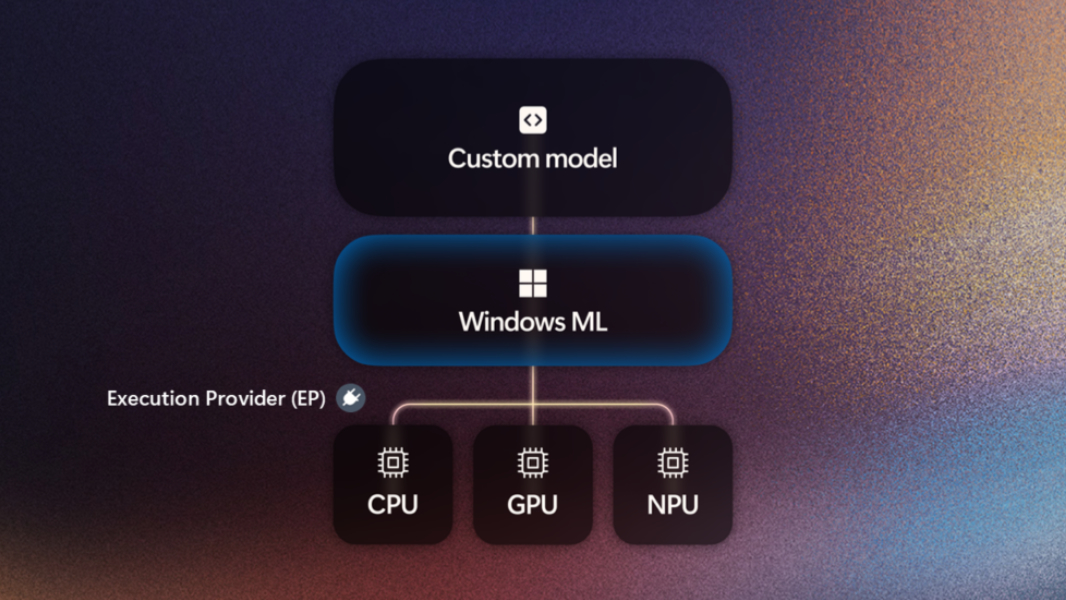
Microsoft today announced the first stable release of Windows ML, its AI inferencing runtime for Windows 11. Windows ML (Windows Machine Learning) is optimized for inferencing on-device AI models, like those used by Copilot+ PCs, though it offers streamlined model dependency management across CPUs, GPUs and NPUs. It’s also the basis for the Windows AI Foundry, which was originally called the Windows Copilot Runtime.
“The future of AI is hybrid, utilizing the respective strengths of cloud and client while harnessing every Windows device to achieve more,” Microsoft distinguished engineer Logan Iyer explains. “At Microsoft, we are reimagining what’s possible by bringing powerful AI compute directly to Windows devices, unlocking a new era of intelligence that runs where you are. With groundbreaking advancements in silicon, a modernized software stack and deep OS integration, Windows 11 is transforming into the world’s most open and capable platform for local AI.”
Microsoft first announced Windows ML (and the Windows AI Foundry) at Build 2025 this past May, so this is a pretty quick turnaround. (Compare this to the Windows Copilot Runtime, which was announced at Build 2024 and never shipped in stable.) With this release, developers can use Windows ML capabilities in production, and that tells me that there must be a new stable release of the Windows App SDK, the framework that developers use to access Windows ML. And there is: Windows App SDK 1.8.1 is now available with support for Windows 11 version 24H2 and newer. (You can download that here.)
In keeping with the nature of Windows itself, Windows ML acts as a hardware abstraction layer so that developers can target specific local AI capabilities without worrying about which hardware architectures or chipsets are available on the PCs on which their apps will run. Apps built with Windows ML will automatically download any necessary execution providers, so they don’t need to be bundled with specific (or multiple) runtimes. But developers can also create device policies to optimize their apps for low power (NPU) or high performance (GPU), or to specify the silicon used for a model.
“Windows 11 has a diverse hardware ecosystem that includes AMD, Intel, NVIDIA and Qualcomm and spans the CPU, GPU and NPU. Consumers can choose from a range of Windows PCs and this variety empowers developers to create innovative local AI experiences,” Iyer continues. “Windows ML can fully leverage their latest CPUs, GPUs and NPUs for AI workloads … Leading software app developers such as Adobe, BUFFERZONE, Dot Inc., McAfee, Reincubate, Topaz Labs and Wondershare are among many others working on adopting Windows ML in their upcoming releases, accelerating the proliferation of local AI capabilities across a broad spectrum of applications.”
You can learn more about Windows ML on the Microsoft Learn website.