Opera is Bringing Local AI to its Web Browsers with WebAI
- Paul Thurrott
- Oct 27, 2026
-
0
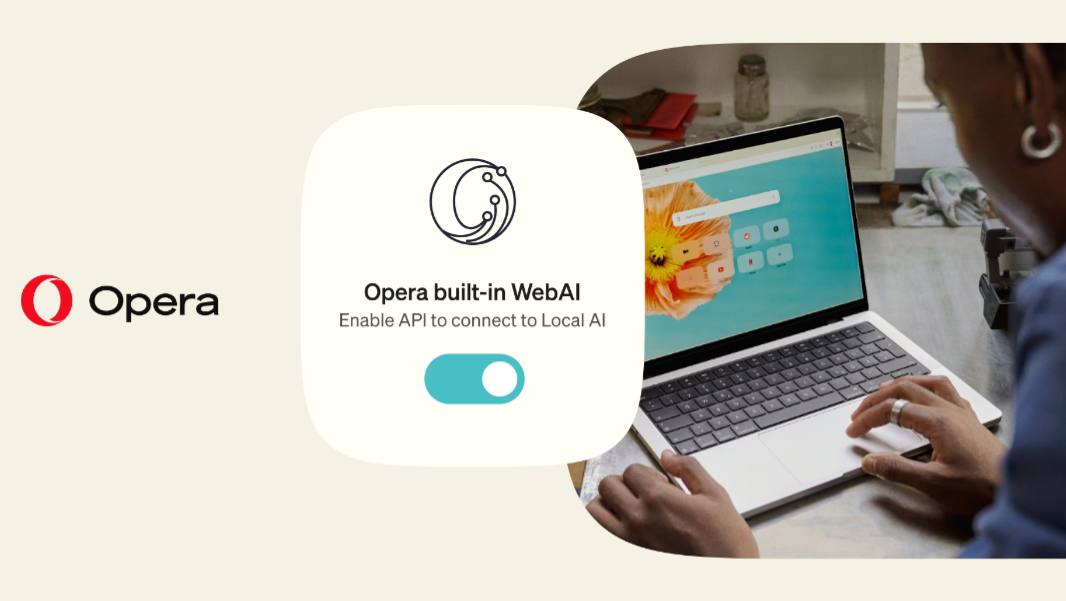
Opera announced that WebAI local AI capabilities are now available in early preview for Opera One, Opera GX and Opera Neon.
“We’re starting a bigger push into local AI, making it a central part of our browsers,” Opera’s Emily Northway explains. “The first step is WebAI, now in early preview across Opera One, Opera GX and Opera Neon. With local AI built into the browser, you can start creating your own browser capabilities instead of waiting for software companies to build them.”
Opera first brought local AI to Opera One as an experimental feature in early 2024 and a month later it said that it would expand availability to over 2000 local models. But since then, running local AI has become more practical, and as a proposed web standard backed by Google, Microsoft, and others, WebAI has emerged as the right way to let web browsers and extensions use local AI instead of cloud AI.
The Opera implementation of WebAI supports its the Prompt, Decision and Semantic Embeddings APIs and lets developers use a range of AI models directly in the browser, including open-weight models running on Opera’s inference engine. In that latter case, there’s no need to install or configure an AI app, as local inference is built into Opera’s browsers.
Opera created six experimental extensions to show the types of solutions that developers can build on WebAI:
- Project Lens. Tell it what you’re working on, and it colors any article by how much each paragraph matters to your project
- Got It? Writes a quick quiz about the article you just read, so you can check you understood it
- Questionable Intelligence. Asks playful questions about the article you’re on and draws the verdict as a chart
- Semantic Art. Turns an article into moving art, with similar sentences becoming visual neighbors
- RecordIn Alchemy. Turns any article into an insufferably inspirational social media post
- C·I·A·O (Cat Intelligence at Opera). Two ASCII cats improvise a scene on any topic you give them
WebAI in Opera One, Opera GX and Opera Neon is opt-in and can be disabled at any time. To give it a shot, update to the latest version of Opera One on Windows (x64 only for now) or Mac (Apple Silicon), navigate to Settings > Opera AI, turn on “Enable Web AI API,” and Opera One will download a local model. This feature will come to Opera GX and Opera Neon soon and, presumably, to the Windows 11 on Arm and Linux versions of each browser too.