Discord Wants to Power Games’ Social Features With New SDK
- Laurent Giret
- Mar 17, 2025
-
0
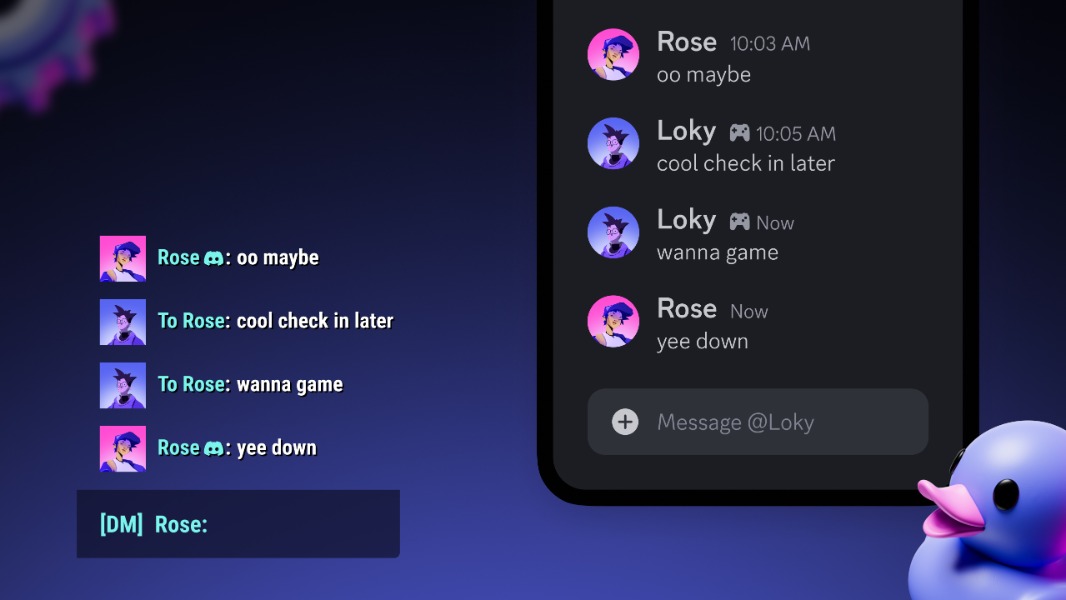
Discord announced the launch of a new Social SDK that game developers can use to integrate social features into their games. The in-game social features that this SDK supports include friends lists, chats, and voice calls, and gamers won’t need to have a Discord account to use them.
In recent years, Discord has pretty much become the main social layer for gamers on PC and consoles, with Xbox and PlayStation both integrating Discord features into their platforms as well. On PC, Discord can be used as an overlay, similar to Microsoft’s Xbox Game Bar. However, Discord would very much like developers to integrate its social features directly into their games, and this has already started with select PC games like Rust and Splitgate 2.
“Social integrations include a unified friends list that serves as the foundation for the in-game social experience, deep-linked game invites that enable players to invite their friends to directly join their party or lobby, and communications features such as cross-platform messaging and voice chat,” the company explained today.
While in-game social experiences powered by the Discord Social SDK won’t require gamers to have a Discord account, those who do will be able to link their account in supported games and sync their in-game social activity in Discord. This will allow them to have the game they’re playing shown on their Discord profile and allow their friends in the app to join them in one click. Moreover, Discord users will also be able to link their in-game chat to specific channels on their servers.
Discord said today that it has over 200 million monthly active users who “spend a combined 1.5+ billion hours each month playing across thousands of titles on PC alone.” This new Discord Social SDK is the continuation of the company’s previous game integrations for developers such as leaderboards, stats, and quests to reward players with in-game items and Discord avatar decorations.
Earlier this month, the New York Times reported that Discord was in talks with investment bankers in preparation for a possible IPO. The company previously refused a $10 billion acquisition offer from Microsoft back in 2021.