Google is Releasing Android 16 Beta 1 Today
- Paul Thurrott
- Jan 23, 2025
-
1

Later today, Google will release the first beta of Android 16 for developers and enthusiasts with supported Pixel devices (Pixel 6 and newer). As noted previously, the firm intends to ship this release on an accelerated schedule as part of a longer-term shift in its annual release cycle from Q3 to Q2.
“The first beta of Android 16 is now available, which means it’s time to open the experience up to both developers and early adopters,” Android vice president Matthew McCullough explains. “You can now enroll any supported Pixel device here to get this and future Android Beta updates over-the-air.”
Some of the key new features in Android 16 Beta 1 include:
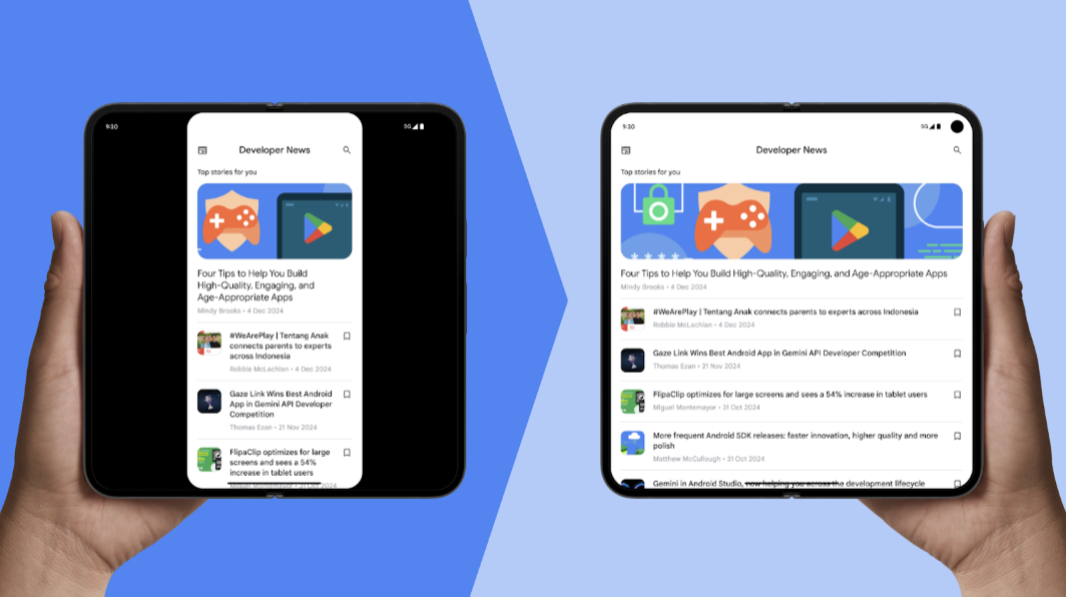
Adaptive apps are becoming a requirement. Starting with Android 16, apps can no longer restrict their orientation and resizability on large screen devices like foldables and tablets. That is, they will no longer appear in a floating phone orientation, but will instead scale across aspect ratios and orientations. Google long ago added APIs so developers can adapt to large displays, but those apps that don’t support this will now fill the screen. Developers can explicitly opt-out of this for this release only, which means they’ll have to touch the code. But that will end with the next release. Love it. You can learn more about this change on the Android Developer blog.
Live Updates. It’s not just Samsung: Live Updates–Google’s take on Dynamic Island, one of the best features in iOS–is coming to Android broadly. “Live Updates are a new class of notifications that help users monitor and quickly access important ongoing activities,” Google explains. “They help prevent these critical progress tracking use cases from being lost among other less-timely notifications, give them a prominent home on the lock screen, and provide a more consistent user experience.” Live Updates are always high priority and the feature is optimized for ride-sharing, food delivery, and navigation use cases.
Camera and media updates. Android 16 supports the Advanced Professional Video (APV) codec used in professional video and post-production. There’s also a new Night mode indicator extension for camera apps, so they can switch automatically if needed.
Accessibility improvements. Android 16 includes new accessibility APIs related to supplemental descriptions and required form fields.
Gemini extensions. With Android 16, developers can create their own Gemini extensions, just like Samsung did for its Galaxy S25 family of phones.
As a reminder, Google will ship two Android 16 API releases in 2025. The first, with app-impacting behavior changes, arrives with Android 16 in Q2. And the second, in Q4, will be a minor update with new features, optimizations, and bug fixes, but no new app-impacting behavior changes. Google will also continue to deliver quarterly Android OS updates that mostly focus on quality (i.e. bug and security fixes). So the Android 16 Preview Program will run through November 2025 to accommodate the Q3 and Q4 updates.
Google expects Android 16 to hit the Platform Stability milestone in March after a Beta 2 release in February. Platform Stability is when it finalizes the SDK and NDK APIs and all the internal and app-facing system behaviors.
Those interested in testing Android 16 Beta 2 can install it over-the-air later today on a supported Pixel or use the latest pre-release Android emulator in Android Studio. If you are already using Android 16 Developer Preview 2, you will be offered Beta 2 OTA.