A Game (Pass) with No Winners (Premium)
- Paul Thurrott
- Jul 20, 2024
-
4
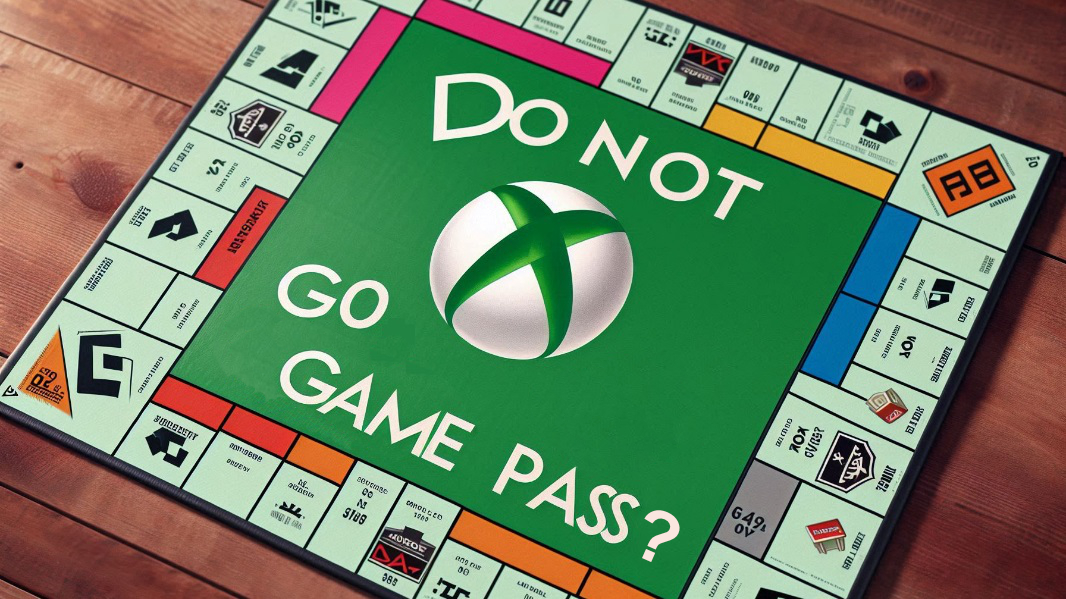
This past week, the U.S. Federal Trade Commission (FTC) filed a complaint with a U.S. Appeals Court explaining that Microsoft’s controversial recent Xbox Game Pass changes constitute “consumer harm.” There’s a lot to unpack here. But the FTC assertion is incorrect in every regard. Which is a shame, because everything Microsoft has done this year with Game Pass is, in fact, wrong too.
I’ll start with the FTC.
Since losing its bid to halt Microsoft’s $68 billion acquisition of Activision Blizzard—twice, mind you—the FTC has taken the unprecedented step of continuing its legal challenges in an attempt to unwind the merger ex post facto. This week’s filing is the most recent example of the agency wasting taxpayers’ money, but it’s not the only one: The FTC previously argued that Microsoft shouldn’t be allowed to lay off any of the 10,000 former Activision Blizzard employees it subsumed despite the obvious and expensive redundancies that occurred when it literally doubled its videogame head count. As I noted at the time, the FTC never expressed any concerns about Activision Blizzard’s employees during its year-long battle to stop the merger. And as Microsoft noted at the time, Activision Blizzard would have laid off many employees itself had the merger collapsed.
To the consumer harm bit, recall that the FTC’s goal is to unwind the Activision Blizzard acquisition. That is, we must view the complaint in that light: Had Microsoft not acquired Activision Blizzard, would it have made these changes?
As the FTC points out in its filing, and as I wrote in Microsoft Turns Game Pass Into a Hard Pass (Premium), Microsoft quietly revealed via a support document that the cost of Xbox most popular Game Pass tier, for Console, with a new Game Pass Standard offering. The FTC refers to this offering, which is 36 percent more expensive than the Game Pass for Console subscription, as “a degraded product” because it no longer includes Microsoft Studio day-one releases. This, the FTC alleges, “is exactly the sort of consumer harm from the merger the FTC has alleged.”
Except that it isn’t. What the FTC left out here is as important as the information it provided to the court: Game Pass Standard also differentiates from the previous Console tier by adding online console multiplayer capabilities. Those who subscribed to Game Pass for Console had to also subscribe to Game Pass Core (previously Xbox Live Gold) to get that functionality. And Game Pass Core cost $59.99 per year (or $9.99 per month) before last week’s price hikes. When you consider that Xbox Game Pass for Console was $10.99 per month before the changes, the cost of the two together was $15.99 to $19.99 per month, depending on how you paid for them. And so the changes, which include Xbox Game Pass Standard at $14.99 per month (multiplayer, console only, no day-one guarantee) and Xbox Game Pass Ultimate at $19.99 per month (multiplayer, console + PC + cloud gaming, with a day-one guarantee) constitute very little in the way of change from a cost perspective.
In other words, the FTC’s complaint—”a degraded product” causing “consumer harm”—isn’t just fanciful, it’s factually and legally incorrect. Microsoft has a right to rethink how it differentiates its different subscription tiers and make changes, just as it has a right to raise prices. And while I hope this is obvious, we live in a horrible age of ongoing subscription services price hikes. Microsoft is, if anything, late to the game: It had raised the prices for these services only once in their history before last week.
That said, there is one interesting sentence in the FTC filing. It notes that Microsoft “promised that ‘the acquisition would benefit consumers by making [Call of Duty] available on Microsoft’s Game Pass on the day it is released on console (with no price increase for the service based on the acquisition).” By removing Xbox Game Pass for Console and replacing it with a subscription tier that does not guarantee day-one Microsoft Studio releases, Microsoft has broken this promise, which it made to secure acquisition approval.
Did Microsoft make this promise?
In May, Microsoft confirmed that the next Call of Duty title, Call of Duty: Black Ops 6, due in late October, would be made available to “Game Pass members” on day one. Then, in July, it revealed that the open beta of this title would be made available across all supported platforms at the same time, whereas previous games came to PlayStation first. This announcement came after the Game Pass changes were revealed, and so we reported (correctly) that Call of Duty: Black Ops 6 will be made available on day one to subscribers of Xbox Game Pass for Console (which was discontinued but is still available to existing subscribers), PC Game Pass, and Xbox Game Pass Ultimate.
Pedantically, Microsoft is fulfilling its promise. Whether it is doing so legally is another matter, perhaps one of opinion for now. But did Microsoft promise to keep Call of Duty on Xbox Game Pass? Was this somehow one (of probably many) conditions of the acquisition approval?
The FTC references this type of promise in each of its legal filings, but finding the sources of these claims is difficult. In her ruling approving the Activision Blizzard acquisition—i.e. denying the FTC’s attempt at blocking it—U.S. Appeals Court Judge Jacqueline Scott Corley notes that the FTC was concerned that Microsoft would make the Call of Duty games exclusive to Game Pass, not that it would take the games away from Game Pass. Microsoft’s promise, such as it was, was far more general: It instead pledged, repeatedly and publicly, that the acquisition would only serve to make Call of Duty more accessible to gamers. So, yes, it would come to Game Pass, but it would also come to the Nintendo Switch and competing cloud streaming services.
As Judge Corley quoted in the ruling, the Xbox pledge was (and is) “to enable gamers to play the games they want, with the people they want, anywhere they want.” But these aren’t just words: Microsoft has enacted and expanded on this strategy. So much so that it’s controversial: Its decision to bring four previously Xbox-exclusive titles to PlayStation and Nintendo this past year was met with outrage by some Xbox fans.
“The merger has the procompetitive effect of expanding access to Call of Duty,” she writes in the ruling. “Adding Call of Duty to Game Pass gives consumers a new, lower cost way to play the game day and date … The FTC does not identify evidence that disputes these procompetitive effects … In sum, the FTC has not raised serious questions on whether the merger will probably substantially lessen competition in the game library subscription services market.”
That’s all the ruling has to say about Game Pass: The FTC argued that Microsoft would constrict access to Call of Duty, Microsoft said it would not, and then Microsoft made Call of Duty available to more gamers via more outlets. It doesn’t mention a promise to keep Call of Duty on a specific Game Pass tier, nor does it address—why would it?—Microsoft’s product offering and pricing strategies.
I find the FTC’s stance on Microsoft and Activision Blizzard troubling, especially this ongoing attempt to find something, anything, that “proves” that its “beliefs”—and yes, the agency has used that term—that the deal would harm consumers. This “fake it until you make it” strategy is beneath a federal regulatory body that can and should be focusing on the real harm Big Tech is doing to consumers every single day. It is, again, a waste of time and of taxpayers’ money.
But that doesn’t absolve Microsoft. As it turns out, the software giant is wrong too.
As I wrote previously, the recently-revealed Xbox Game Pass changes are just the latest in a long string of disappointments that Microsoft has inflicted on its Xbox user base this year. How Xbox has taken the incredible come-from-behind victory of the Activision Blizzard acquisition and turned it into such a muddled mess is a story for the ages, a master class in how badly a company can treat its fans through a perfect combination of miscommunication and lack of communication. This company has remained silent when we needed answers, and it has communicated superfluous nonsense instead of what we, the fans and customers, need to know.
Today, 9 months after it acquired Activision Blizzard, Game Pass subscribers have access to just a single Activision Blizzard title, Diablo IV. And we only know of a single other title, the upcoming Call of Duty: Black Ops 6, that will come to the service, in October, one year after the acquisition. That’s it. Microsoft has never once said anything of note about other Activision Blizzard games on Game Pass, has in fact never acknowledged this issue at all. And yet, the months creep by, me and tens of millions of others continue to pay up to $20 each month for access to a catalog of titles that we were told was going to expand dramatically. But never has.
Microsoft revealing major Game Pass changes via an Xbox support page was one of two things: A mistake, meaning that this change would have been accompanied by a formal announcement of how Game Pass was also getting better thanks to the inclusion of whatever Activision Blizzard content on whatever schedule. Or it was deliberate, meaning that Microsoft intended to make this change as quietly as possible, knowing that it would upset the user base, in particular because it doesn’t have—for reasons unclear—any new information to offer about Activision Blizzards games on the service.
We still don’t know which it was, not that it matters: Both are terrible, inept, and unnecessary mistakes. So whatever happened, Microsoft and Xbox have once again face-raked in a year in which it just can’t afford to make any more blunders. We’ve been treated to silence on Game Pass and Activision Blizzard, a major Xbox/Microsoft Gaming reorg, multiple rounds of layoffs and studio closures, a lackluster console refresh at a time when PlayStation consoles are outselling Xbox by 5-to-1, and now a price hike with no new games to counterbalance the bad news. Cripes, even the Halo TV series was canceled. Xbox fans have been getting kicked in the nuts repeatedly.
Microsoft held a hastily organized Xbox ecosystem update in February, allegedly to address fans’ many questions and concerns. And while I was quite happy with that update, the events since, as noted, were almost universally negative. And the expectation—that Microsoft would spend the rest of 2024 methodically adding Activision Blizzard catalog titles to Game Pass—never materialized. The only high point of the subsequent several months was June’s Xbox Game Showcase, when Xbox showed off an impressive catalog of new games coming in the next year. Thanks largely to the Activision Blizzard acquisition, of course.
One year. $68 billion. A Game Pass price hike and subscription tier change. And two games. That’s all we will have to show for it, unless something changes. Meanwhile, Microsoft already brought four Xbox titles to rival consoles this year, and that effort was apparently so successful that it now plans more ports in the future, including—gasp–Halo. And it announced plans to bring a mobile games store to the iPhone, for some reason. But Game Pass and its actual paying customers spending money every month this past year? Silence.
Until now. Sort of.
Last night, Microsoft’s lawyers filed a response to the FTC complaint, correctly noting that it was “a misleading, extra-record account of the facts and is a continuation of the agency’s attempts to reinvent its case on appeal.” It then discussed Game Pass in more detail than it has in recent months, anywhere. So that alone warrants some attention. We are, after all, starving for information.
Unfortunately, it starts off badly.
“Earlier this month, Microsoft announced changes to its gaming subscription service, Game Pass, to provide consumers valuable options at different price points,” the filing reads.
Let me stop you right there, Microsoft. You did not “announce” changes to Game Pass. You quietly uploaded a support document to the Xbox Support website where no one would see it. There was no announcement.
“Microsoft is offering a new service tier, Game Pass Standard, which offers access to hundreds of back-catalog games and multiplayer functionality for $14.99/month,” the filing continues. “It is wrong to call this a ‘degraded’ version of the discontinued Game Pass for Console offering. That discontinued product did not offer multiplayer functionality, which had to be purchased separately for an additional $9.99/month (making the total cost $20.98/month).”
Fair enough: I made the same argue above.
“While Game Pass Ultimate’s price will increase from $16.99 to $19.99/month, the service will offer more value through many new games available ‘day-and-date’,” the filing continues. “Among them is the upcoming release of Call of Duty, which has never before been available on a subscription day-and-date.”
Here, again, I must take exception. I’ve repeatedly noted Microsoft’s curiously malicious silence on Activision Blizzard titles coming to Game Pass in this article,” and it is claiming here that “many new games” are coming at some unstated time in the future is a slap to the face. Microsoft acquired Activision Blizzard in October 2023, and nine months later, we have just a single Activision Blizzard game on these services. And the moths just keep ticking by.
“The FTC barely mentioned subscription at trial, instead focusing on the theory that Microsoft would withhold Call of Duty from Sony’s console,” Microsoft continues, again channeling what I wrote above. “The district court correctly rejected that theory, which is now further eroded by Microsoft and Sony’s ten-year agreement to keep Call of Duty on PlayStation–a contract Sony was ‘thrilled’ to enter.”
This is, of course, correct. Antitrust cases are often undermined by this type of outcome: Netscape being acquired by AOL undermined the DOJ’s assertion that Microsoft’s anticompetitive behavior so much that it made Netscape worthless. And Slack’s acquisition by Saleforce.com likewise undermined that service’s complaints about Microsoft Teams bundling with Office harming it. (Note that, in the latter case, the EU’s European Commission has nonetheless sided with Slack, despite Microsoft’s ongoing changes to appease the regulators.) In this case, the FTC “believed” that Microsoft would withhold Call of Duty from Sony, but Microsoft instead ensured that will never happen. As is so often the case with the FTC, belief and reality are in two different time zones. Actually, the FTC’s belief is in the Twilight Zone. Moving on.
“While the FTC has now tried to shift focus to its alleged subscription market, its letter does not map onto its arguments,” Microsoft continues, again making the same argument I did. “Setting aside that it is common for businesses to change service offerings over time, the FTC’s case in all of its alleged markets has always been premised on vertical foreclosure, i.e., that Microsoft would withhold Call of Duty from rivals and therefore harm competition. But even in the alleged subscription market, Call of Duty is not being withheld from anyone who wants it. And there remains no evidence anywhere of harm to competition: Sony’s subscription service continues to thrive, even as they put few new games into their subscription day-and-date, unlike Microsoft.”
That one is a bit difficult to swallow.
The argument here is that Sony typically withholds day one in-house studio titles from its PlayStation Plus subscription, which now comes in multiple tiers that now more closely map to those in Game Pass; the most expensive even offers a cloud streaming perk, like Xbox Game Pass Ultimate. (Also, Sony raised the monthly cost of its PS Plus subscription tiers in late 2023, a fact Microsoft might have presented here.)
By comparison, Microsoft thus “puts many new games into its subscription day-and-date.” This is true, but with an asterisk: Its most popular Game Pass offering, Xbox Game Pass for Console, has been discontinued, and its replacement does not offer the day-one perk. To get that with Xbox, you have to choose the most expensive tier. Or, presumably, PC Game Pass, though this is not mentioned in the Xbox support document; it notes only that the price is going up (from $9.99 to $11.99 per month).
As I noted up front, Microsoft does still offer the day-one perk via (some) Xbox Game Pass subscriptions. But there are fewer of them now, and the ones that remain are more expensive. Touting this as a benefit compared to what Sony offers is a bit tough to take. Sony and Microsoft have always competed a bit differently from each other. But Xbox Game Pass fans feel like they’re getting less for more now. What we are comparing is the present condition of Game Pass to how it was before. We’re not comparing it to Sony.
“The transaction thus continues to benefit competition and consumers-exactly what the district court correctly found,” the filing concludes.
Obviously, I agree with that sentiment. Indeed, I have always supported Microsoft’s strategy to expand Xbox beyond a console family that has never been profitable and Microsoft’s decision to dramatically expand that ecosystem to include rival console platforms and mobile via its Activision Blizzard acquisition. I still do. This is all about the health of the platform, about making Xbox profitable. Some Xbox fans don’t get it, but I’ve always pushed back against insular thinking: Xbox will never be successful as a console-centered platform.
But the silence, Microsoft. Dear God, the silence.
How does Phil Spencer or anyone else in the Xbox leadership sleep at night knowing that they are undermining the value of this ecosystem they built almost every day, and that, in doing so, they’re harming their most ardent fans by ignoring the understandable questions and fears they have? How do they let a slow-motion train wreck like the Game Pass price hike pass without formally announcing why it’s making these changes and why the consumers who pay it each month will get more value from those subscriptions? This is the type of behavior I associate with Windows, not Xbox.
After all, Phil Spencer is the gamer’s gamer, a terrific guy, and a plain-spoken genius. He knows how to communicate effectively. Even when it’s bad news.
But not this year. The Phil Spencer of 2024 feels like he was replaced by an alien duplicate from Invasion of the Body Snatchers, one dedicated to undermining the business from within. Instead of communicating clearly about Game Pass and the Activision Blizzard catalog titles, Spencer has wasted our time this year babbling about things that aren’t happening, like an Xbox mobile gaming device. Get your head back in the game, Phil. We’re waiting.
And we’re getting restless. The signs of dissent are everywhere. And just as I’ve started pondering a post-Netflix life thanks to that service’s best-in-breed enshittification, I’m starting to think about doing something I would have previously described as unthinkable when it comes to Xbox. I know many other Xbox fans are too.
If this reads like a threat, so be it. It is a threat: As I’ve noted, trust is something that needs to be earned again and again and again. And Xbox has lost my trust.
I’ve paid Xbox a monthly fee since it first offered Xbox Live Gold in 2002, and that never lapsed. Instead, my monthly costs have only gone up and up. Granted, this was a choice, a choice I made because I saw the value. And I have described various versions of Xbox Game Pass as a no-brainer for those who love choice and the growing selection of games each tier offered.
Thanks to the costs associated with the Activision Blizzard acquisition, not just the upfront cost but also the ongoing costs related to maintaining those studios, their many employees, and the game titles they bring to fruition, it was always obvious that something had to change with Game Pass, and that price hikes were inevitable. But we accepted those changes knowing that they would be offset by the value of gaining access to all those Activision Blizzard games.
And sure enough, Microsoft raised prices. It also assassinated its most popular Game Pass subscription. But it has never addressed the Activision Blizzard value-add part of this equation. It has barely even mentioned doing so. This isn’t all talk, no action, this is no talk, negative action. And for beleaguered Xbox fans suffering under the weight of far too much bad news, it’s time to think the unthinkable. As always, we must do what’s right for ourselves.
Microsoft, you could fix this right now. And you should. Speak, dammit. Then do.

Gain unlimited access to Premium articles.
With technology shaping our everyday lives, how could we not dig deeper?
Thurrott Premium delivers an honest and thorough perspective about the technologies we use and rely on everyday. Discover deeper content as a Premium member.