Lenovo Yoga 9i 2-in-1 Aura Edition First Impressions
- Paul Thurrott
- May 12, 2025
-
1
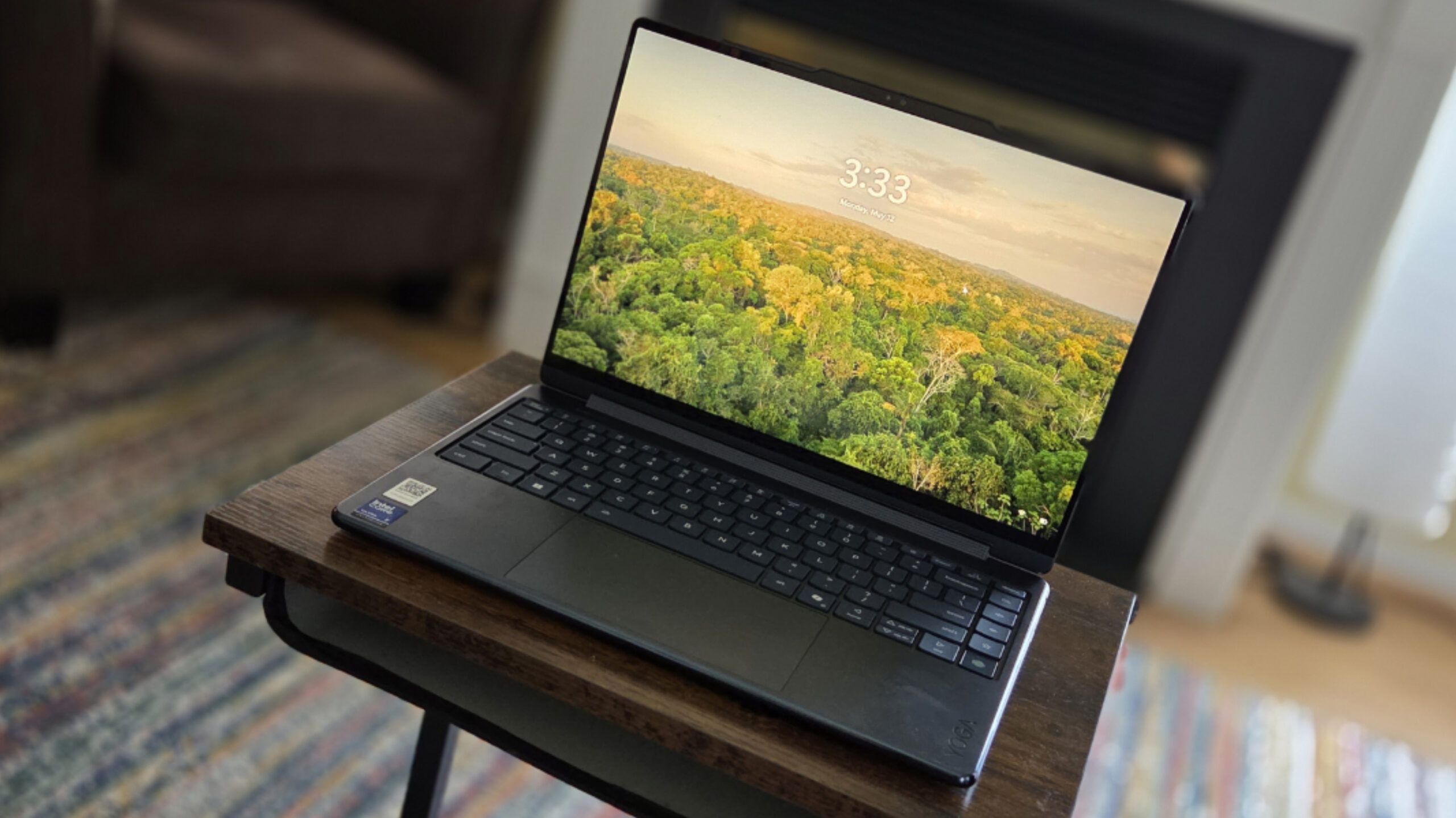
The 10th generation Lenovo Yoga 9i 2-in-1 Aura Edition is a premium convertible Copilot+ PC with a 14-inch OLED display and an Intel Core Ultra Series 2 (“Lunar Lake”) processor.
If it looks familiar, that’s because it is. Last November, I reviewed the Lenovo Yoga Slim 7i 15 Aura Edition, which is in a lower price category, but with a bigger 15-inch display (and one generation older). And last summer, I reviewed the Lenovo Yoga Slim 7x 14 Gen 9, which was based on a Qualcomm Snapdragon X Elite processor (and also a generation older).
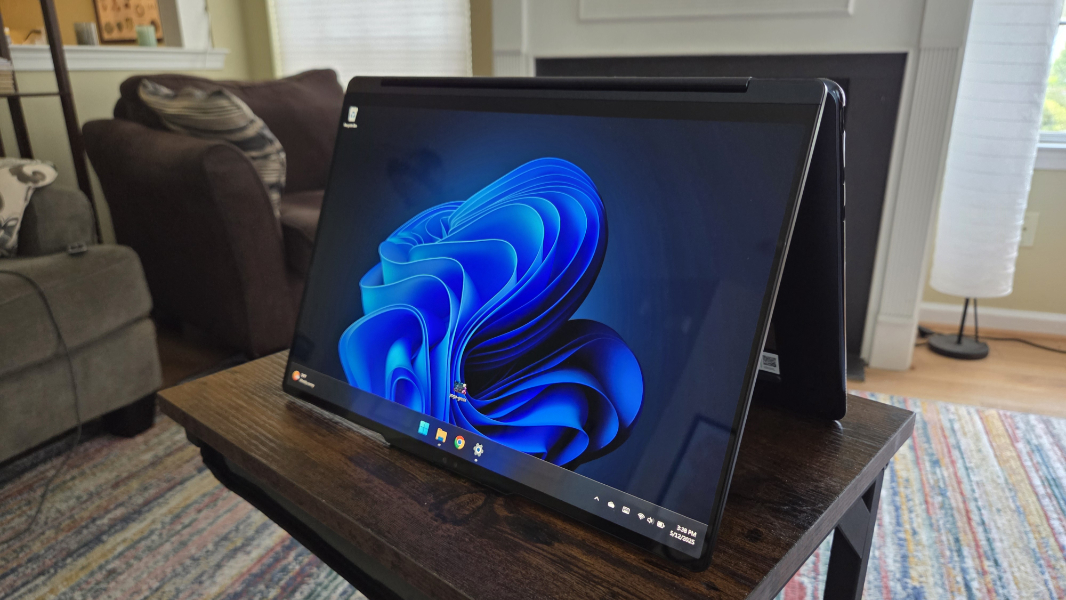
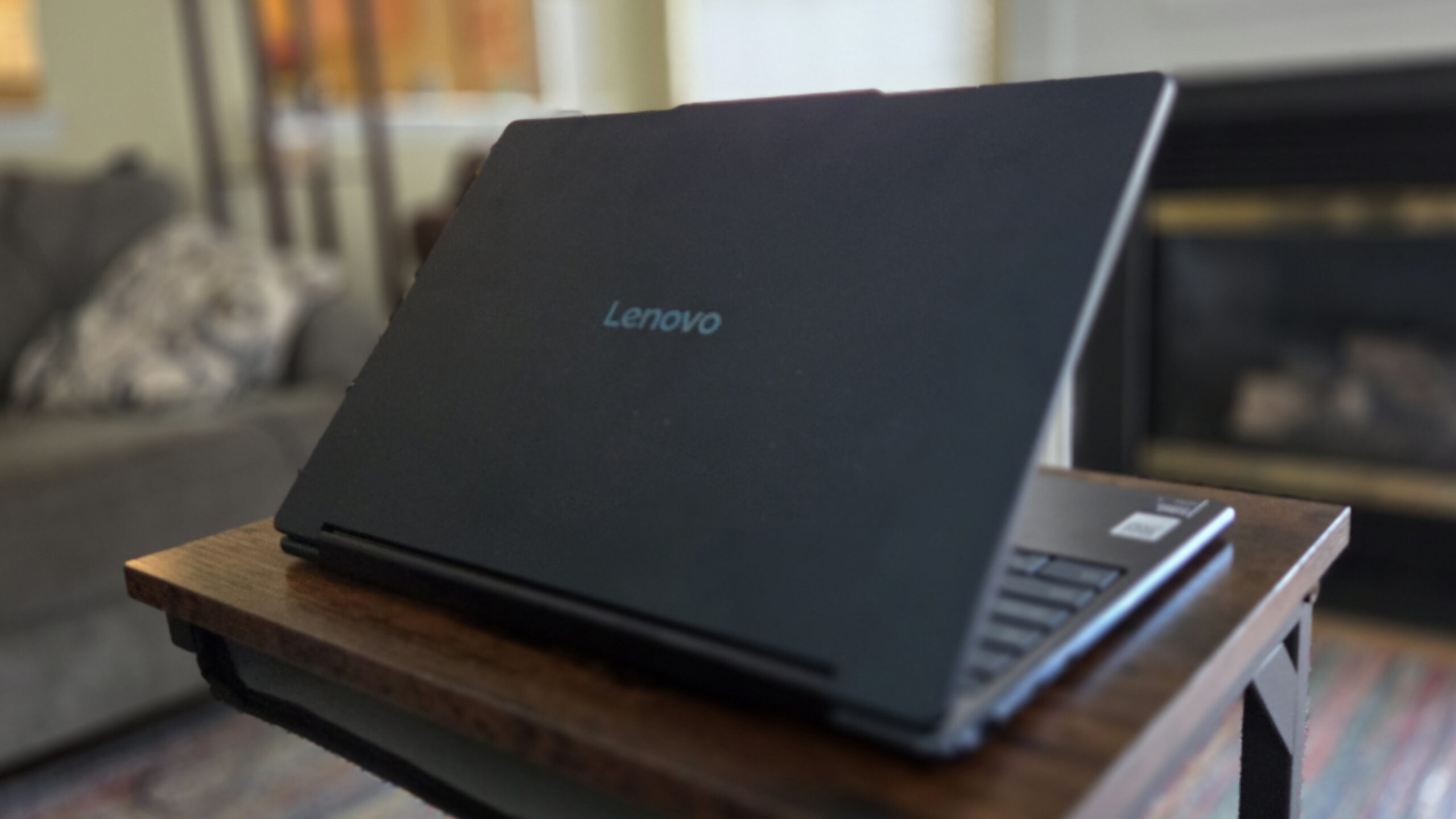
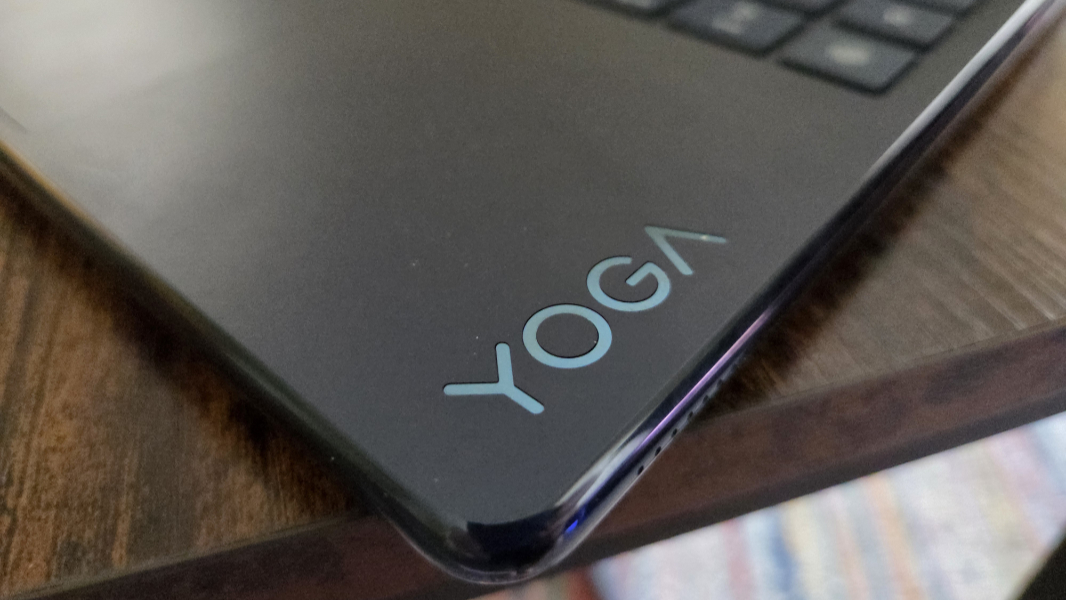
From a branding perspective, Lenovo’s PC products are usually logical enough to understand if you know a few key details. The “Yoga” name indicates that this is a convertible (2-in-1) laptop form factor. (Well, probably. In the one major deviation from logic, Lenovo now sells Yoga-branded laptops like this one that are not convertibles. So I guess the “2-in-1” bit in the clearer identifier there.) The “9” indicates the product’s premium positioning (compared to, say, the “7” in the mid-range Yoga Slim 7i from last year). The “i” tells us that this PC uses an Intel processor of some kind; Lenovo uses “a” for AMD-based PCs and “x” for Snapdragon X-based models. The “14” indicates the screen size, in inches. And “Aura Edition” indicates that this is part of a range of Lenovo PCs that includes unique AI features co-developed with Intel. (Over and above the AI features you get with any Copilot+ PC.)
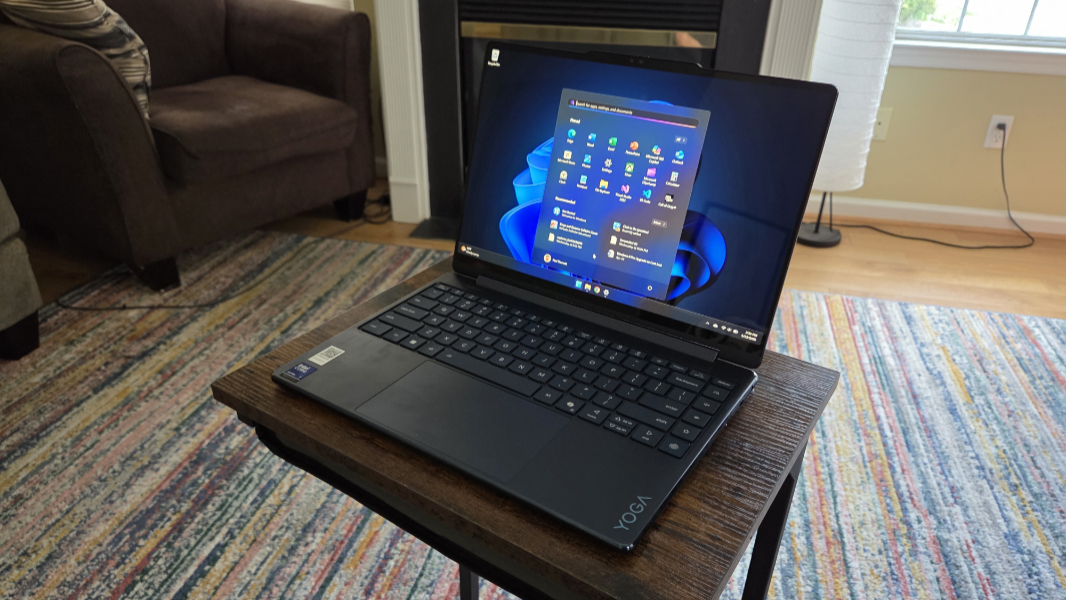
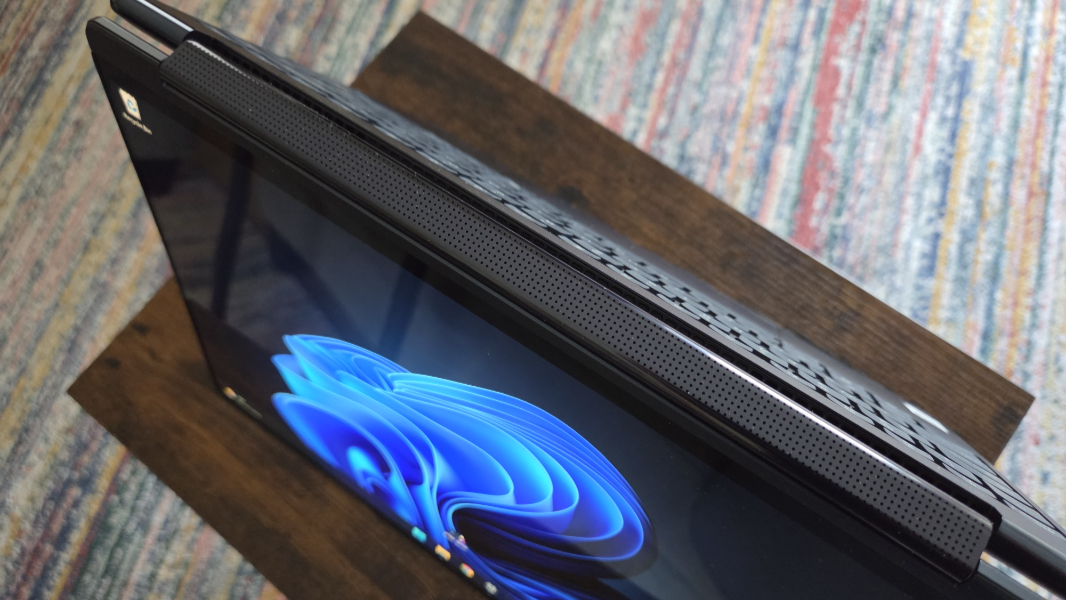
As with its predecessors and current generation stable mates, the Yoga 9i 2-in-1 is gorgeous, with a high resolution OLED display, the iconic Lenovo communications bar and rotating soundbar, and a premium all-aluminum form factor in Cosmic Blue with wrist-friendly curved edges. That rotating soundbar covers the 360-degree hinge, ostensibly providing decent sound in whatever configuration you choose. But it also frees up space on either side of the keyboard that might otherwise be used for speakers, and that means the keyboard is basically edge-to-edge in the bottom deck. So it’s nicely functional, but it’s also a great look.
The display is familiar now, but it still impresses every time I open the laptop’s lid. It’s a 14-inch 2.8K (2880 × 1800) PureSight OLED panel with a 16:10 aspect ratio, a dynamic 120 Hz refresh rate, 500 nits of brightness (with 1100 nits of HDR peak brightness), and Dolby Vision 2.0, DisplayHDR True Black 1000, and EyeSafe Certified 2.0 capabilities, and it covers 100 percent of the DCI-P3 color space. The display was configured for 60 Hz out of the box, but I enabled the 120 Hz and dynamic refresh rate options.
There’s only one processor choice, an Intel Core Ultra 7 258V “Lunar Lake” processor with Intel Arc 140V integrated graphics and an Intel AI Boost NPU with 47 TOPS of hardware accelerated AI performance. Generally speaking, Lunar Lake lags behind the latest generation AMD Zen 5 processor family and Qualcomm’s Snapdragon X in so many ways, but my experience with the Yoga 9i 2-in-1 Aura Edition has been nothing but positive so far. We’ll see how it fares over a longer time frame, especially with battery life and efficiency, but it’s been terrific in these first several days.
The review unit comes with 32 GB of LPDDR5x-8333 dual-channel RAM, which is ideal, though it’s soldered on, which is not ideal (but required with Lunar Lake), and 1 TB of PCIe Gen 4 M.2 2242-based SSD storage, also terrific. That said, Lenovo sells a configuration with 512 GB of storage, which you can upgrade at purchase time to 1 TB. (A single 1 TB version is at Best Buy, too, it seems.)
Connectivity is modern, as expected: You get Wi-Fi 7 and Bluetooth 5.4, but there’s no cellular data option.
Expansion is good, too. There’s a headphone/microphone combo jack and a USB 20 Gbps Type-C port (with Power Delivery 3.0 and DisplayPort 1.4) on the right, along with the power button.
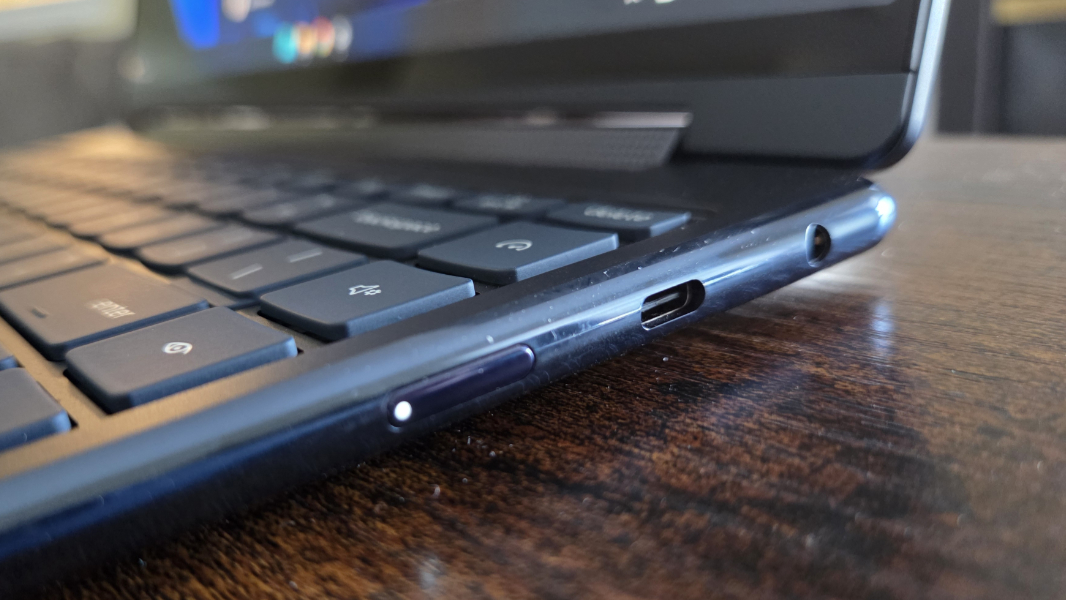
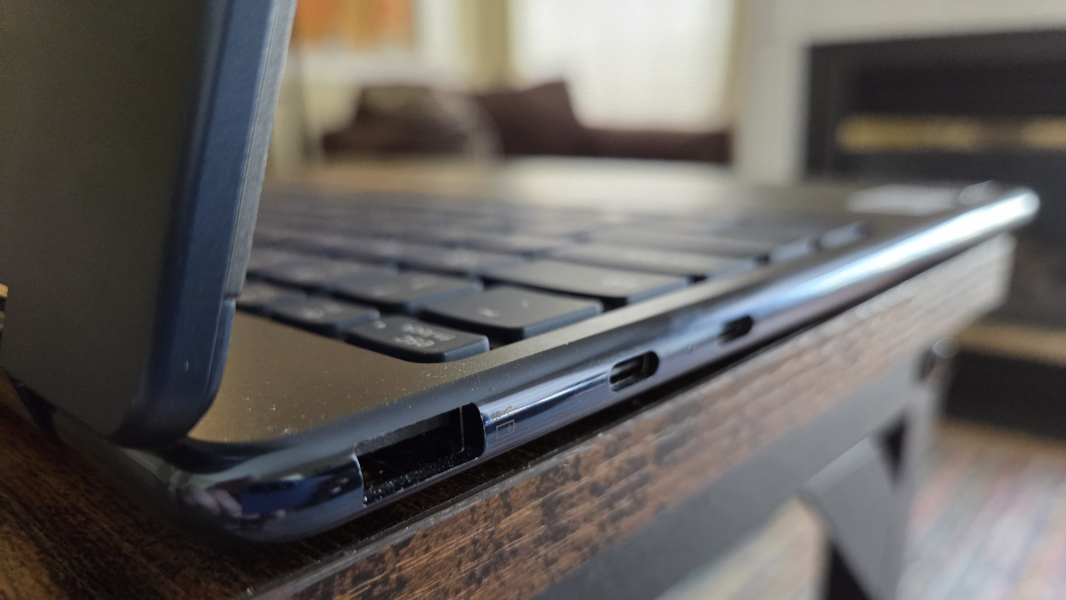
And on the left, you get a full-sized USB 10 Gbps Type-A port and two Thunderbolt 4/USB4 Type-C ports, both of which offer Power Delivery 3.0 and DisplayPort 2.1 capabilities.
Sound is delivered via four stereo speakers in the soundbar, with two 2-watt woofers and two 2-watt tweeters.
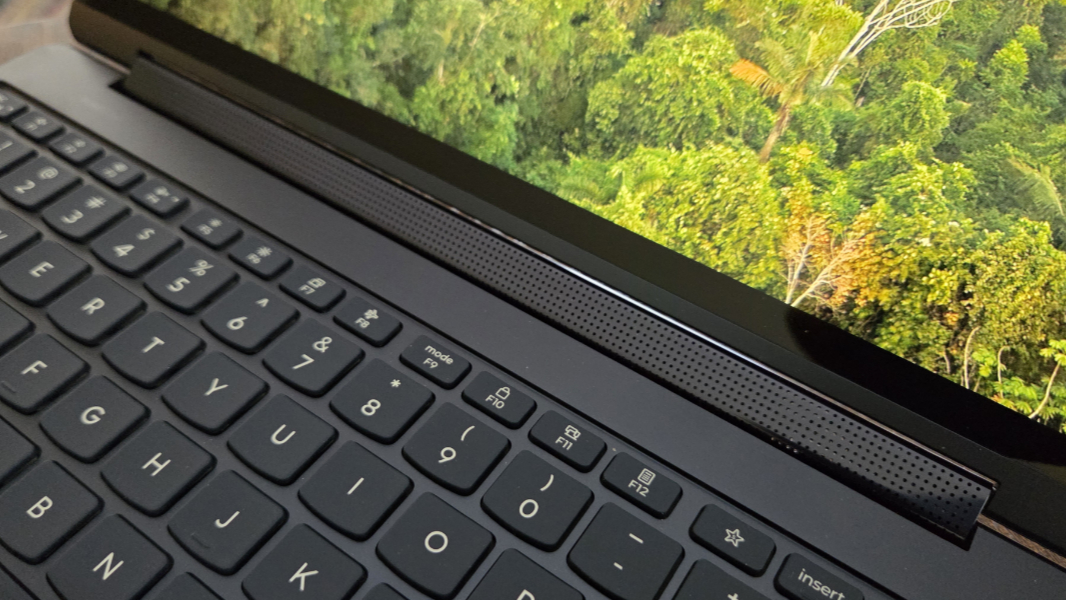
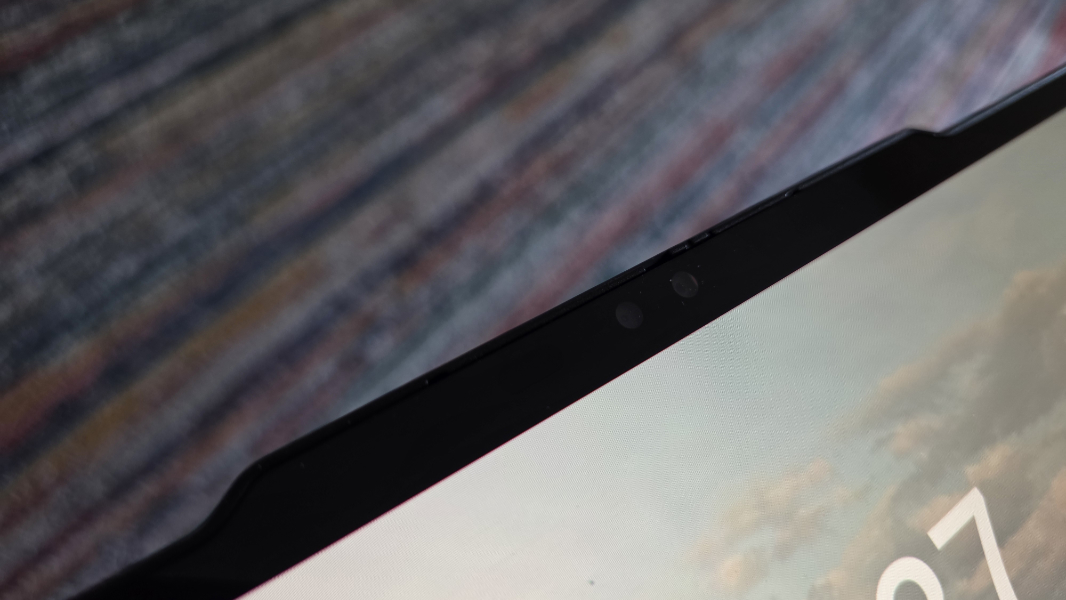
The system delivers Dolby Atmos spatial sound and has quad-array noise-canceling microphones. The webcam is 5 MP (2.5K) with IR capabilities for Windows Hello ESS support.
The keyboard is full-sized, with a smooth and soft touch that I like, and it offers a long (for these days) 1.5 mm of key travel. It offers two levels of backlight and, more importantly, an automatic mode that I prefer and love seeing.
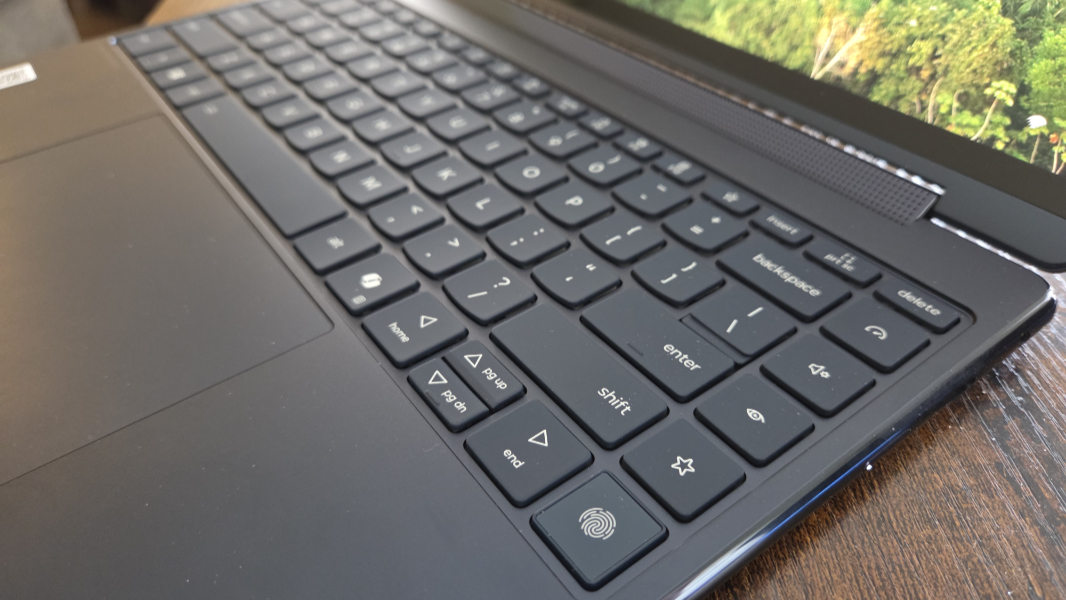
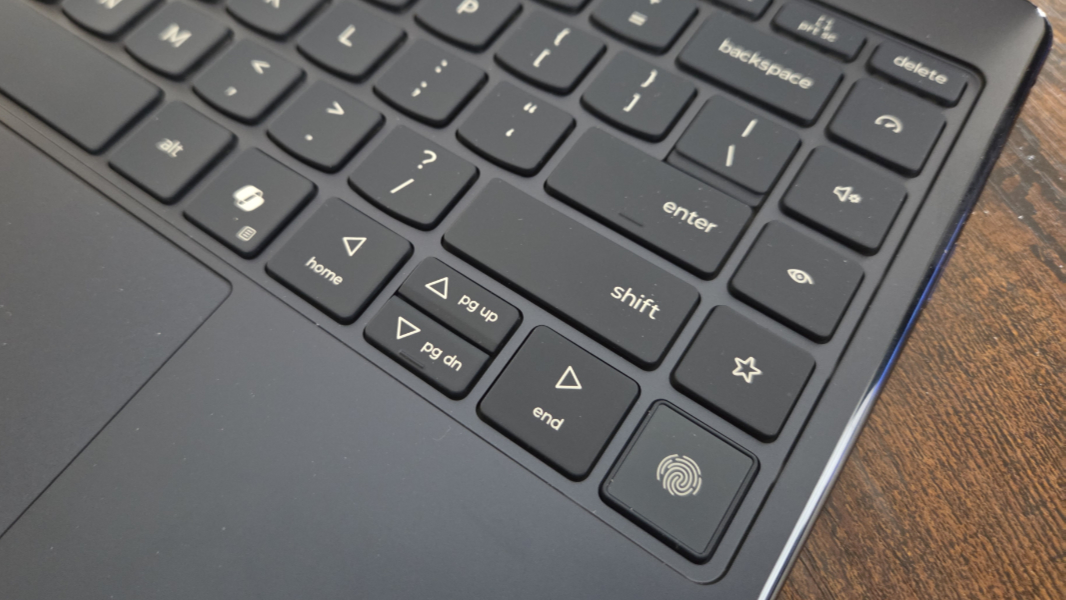
There is one weirdism I’d like to see Lenovo get past: As with some previous Yogas, it features a column of so-called Quick Keys on the right side that are made less quick by the obscure hieroglyphic-like icon each displays, and then a dedicated fingerprint reader pseudo-key I do like.
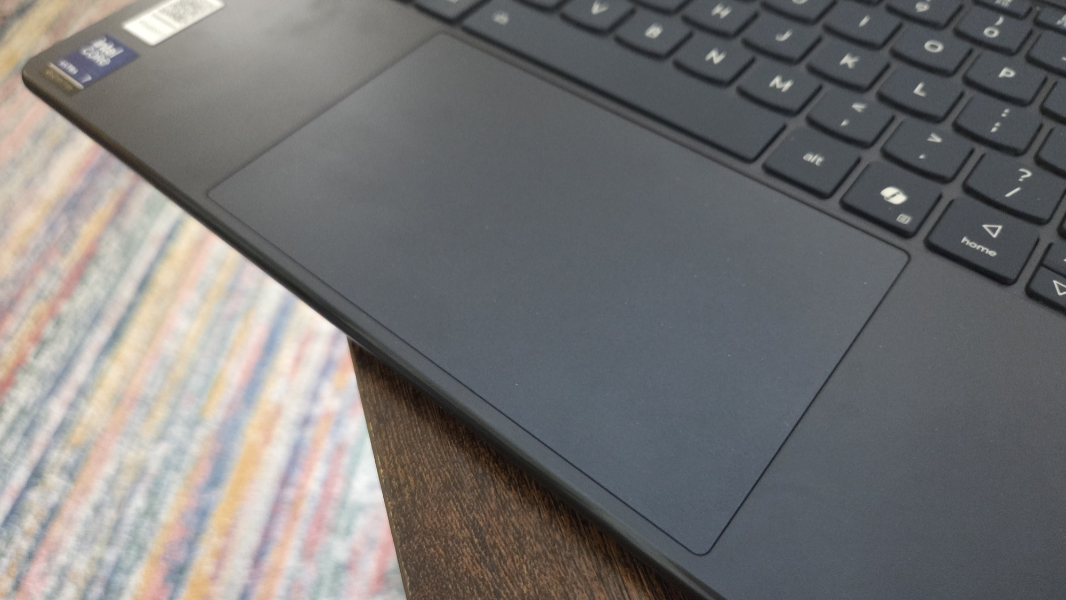
The touchpad is quite big, but it’s been smooth, responsive, and error-free in early use. As with all things, time will tell.
The Yoga comes with a 75 watt-hour battery that supports Rapid Charge Express when using the bundled 65-watt USB-C power supply. Lenovo says that it should be capable of a 3-hour charge in just 15 minutes, but I will test that. No word yet on battery life, but this has been all over the place with Lunar Lake over time. For now, I’m leaving it configured for the “Balanced” power mode on power and battery, but we’ll see how that goes.
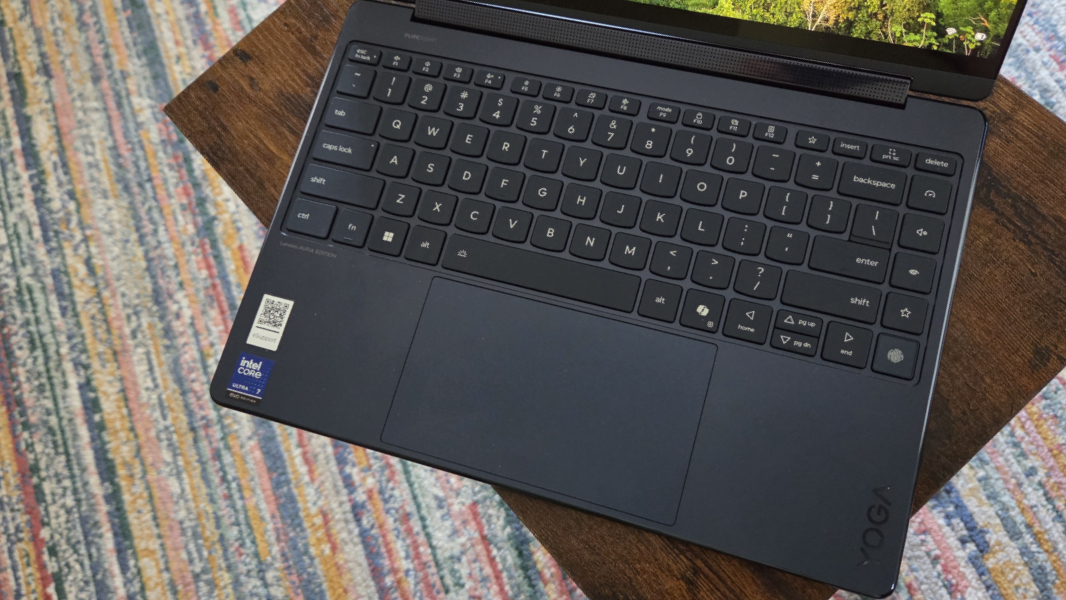
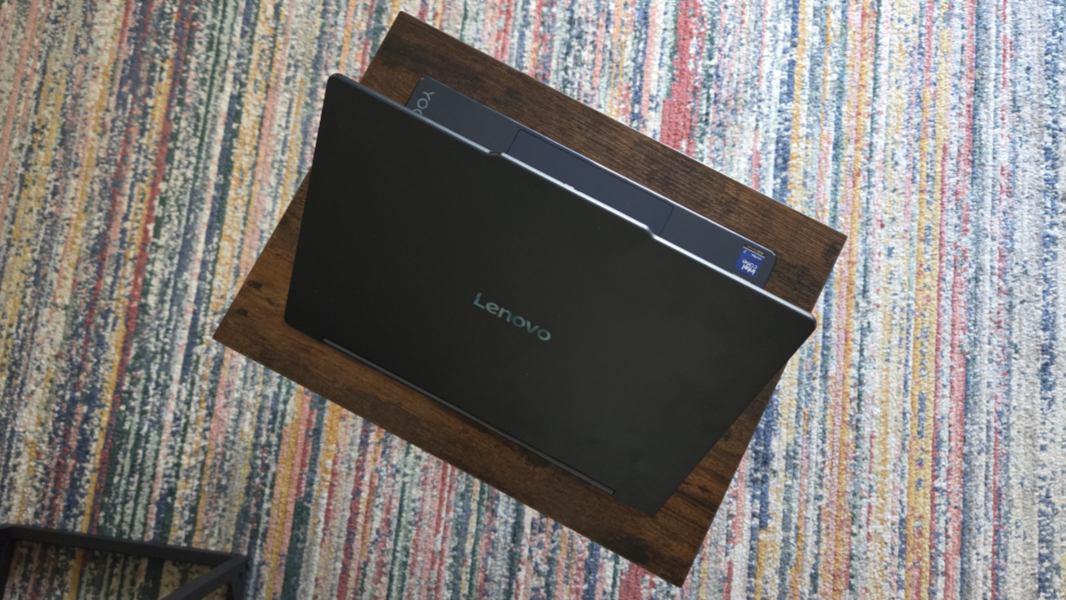
From a portability perspective, the Yoga is both thin and light, and it’s unclear how it didn’t qualify for the “Slim” branding some of its predecessors used. The body is 12.44 × 8.66 × 0.63 inches, and it weighs 2.91 pounds, which is great for a 14-inch convertible PC.
As a consumer model, the Yoga 9i 2-in-1 Aura Edition doesn’t get the same clean software build that Lenovo provides to its ThinkPad and ThinkBook customers. And if first impressions matter, my first look at this PC’s desktop was almost disgraceful, with an overly busy and colorful wallpaper, far too many superfluous app shortcuts in Start and on the Taskbar, and a floating Modes widget that I struggled to figure out how to hide. Gross.
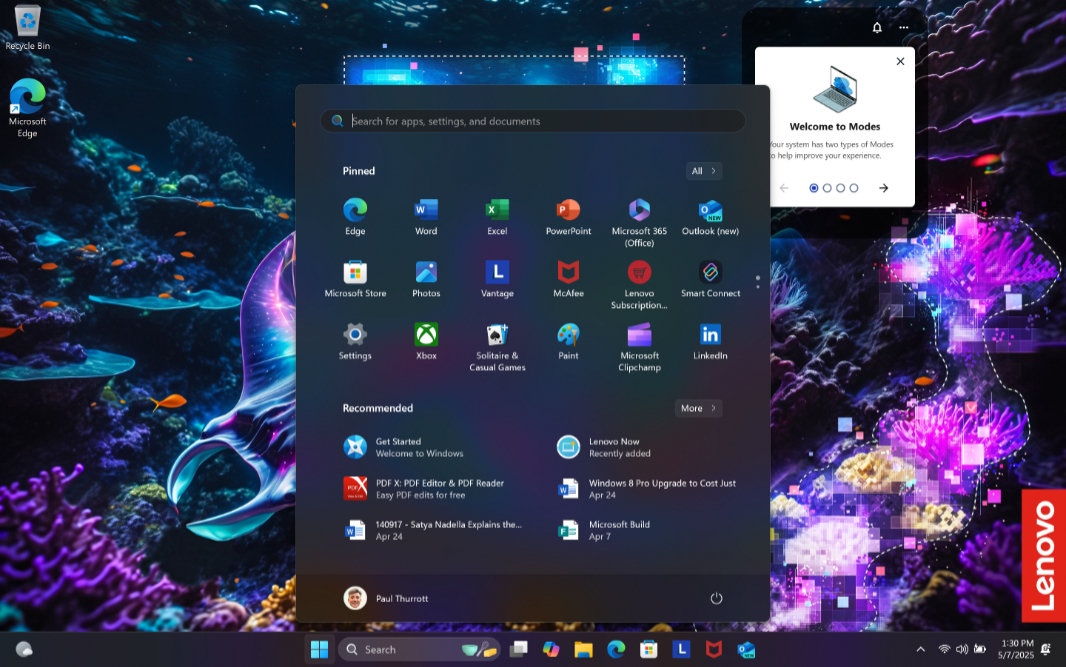
But the more I dove into Start and the bundled apps, the worse it got. In addition to the suddenly shrinking Aura Edition exclusives–the only truly great Aura Edition utility, Smart Share, was based on Unison, which Intel is killing this year–Lenovo bundles all kinds of crap in addition to the more useful offerings. And even some of those are bogged down with crap, like Lenovo Now and Vantage, the latter of which is a Frankenstein’s combination of ads and utility. Sigh.
The Yoga is a Copilot+ PC, at least, so you do get the increasingly interesting set of local AI features that Microsoft has been adding to this family of products over the past year. This probably won’t be an issue for most, but it does come with Windows 11 Home, not Pro.
The 512 GB configuration of the Lenovo Yoga 9i 2-in-1 Aura Edition is $1512 at Lenovo.com at the time of this writing, with a street price of $1680. There are a few upgrades: Windows 11 Pro is an additional $70 (you can do better), the storage upgrade to 1 TB is $50, and there’s an even a WQUXGA (3840 × 2400) display panel upgrade that feels like overkill to me. As noted, you can also get the 1 TB configuration at Best Buy for $1750.
So, yes, it’s expensive. But let me see how the battery life, efficiency, and performance pan out. If those things can match the build quality and elegant form factor of this PC, it may just be worth the asking price.
More soon.