Report: Microsoft Adds New Android Division Following Internal Reorg
- Laurent Giret
- Apr 01, 2022
-
34
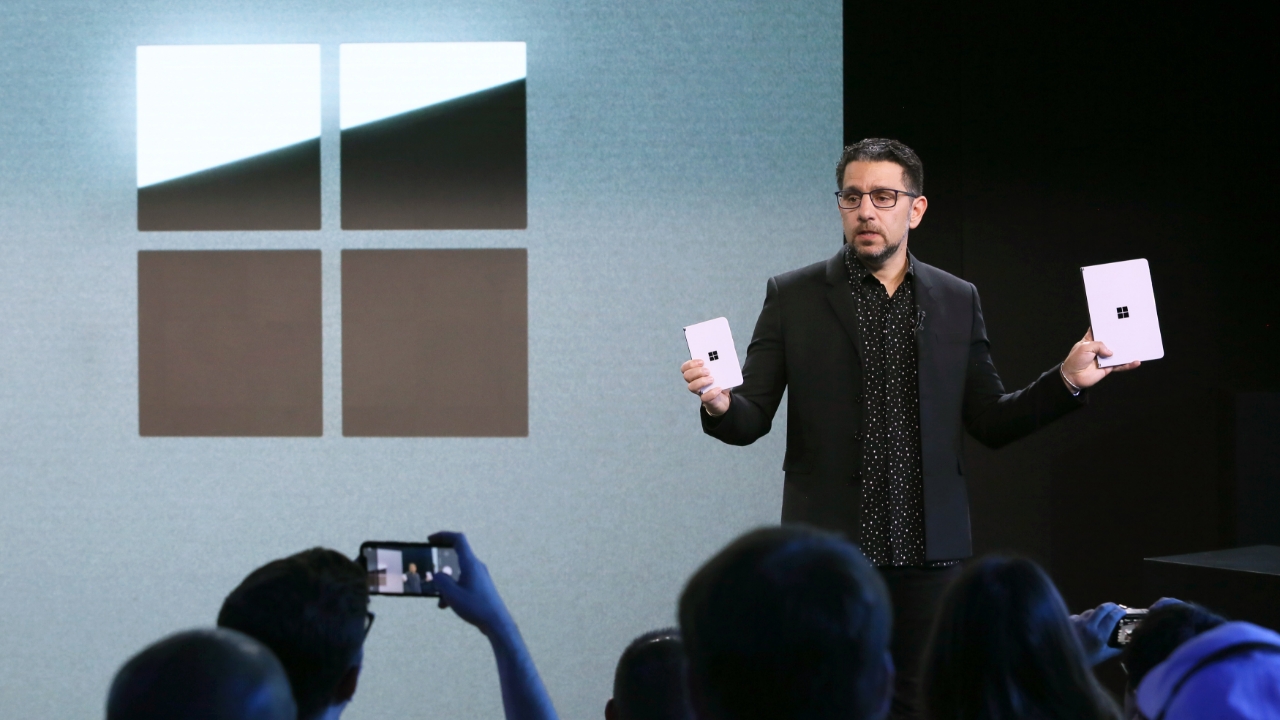
Microsoft has reportedly announced an internal reorganization earlier this week, which has led the company to regroup its different Android teams under a new Android division. According to Windows Central, the company announced the reorg via an internal memo from Chief Product Officer Panos Panay, who’s set to make an appearance at Microsoft’s hybrid work event next week on April 5.
The report says that Microsoft’s new Android division is called “Android Microsoft Platform and Experiences” (AMPX), and it includes the different teams working on Surface Duo, the Microsoft Launcher, the new Phone Link app, and the Swiftkey keyboard. Until now, many of these employees were diluted into the larger Microsoft Mobile Experiences (MMX) division that’s also responsible for Microsoft’s iOS apps.
Microsoft confirmed the internal reorganization in an email shared with Windows Central. “Like all companies, we evaluate our business on a regular basis. We recently made an organizational change to accelerate our impact and better serve our customers and partners,” a Microsoft spokesperson said.
The software giant could have big ambitions with this new Android division under Panos Panay. Android is now pretty much Microsoft’s preferred mobile OS, and the company may want to create better synergies between Windows and Android, similar to what Apple achieved with iOS and macOS.
“Sources tell me that Microsoft has big ideas in mind for Android and Windows over the next handful of years, including more advanced integrations between Android smartphones and Windows PCs beyond what’s already available via the Phone Link app today. Microsoft wants to position Android smartphones as an extension to Windows PCs, with the goal of creating interoperable experiences similar to what can be had with an iPhone and Mac,” explained Windows Central’s Zac Bowden.
Microsoft rebranded its Your Phone app as Phone Link yesterday, and this app is getting a new “Recent Apps” continuity feature that will let Android users quickly access their recently used Android apps on their PC. This feature is currently being tested on select Samsung Galaxy devices, and that’s unfortunately been an ongoing theme with some of Microsoft’s Android efforts. You still need to own a Surface Duo or a high-end Samsung Galaxy phone to enjoy the best of what Microsoft has to offer on Android, so let’s hope this new Android division will finally start thinking about everyone else.