Windows Update is Going to Update Third-Party Apps, Too
- Paul Thurrott
- May 28, 2025
-
11
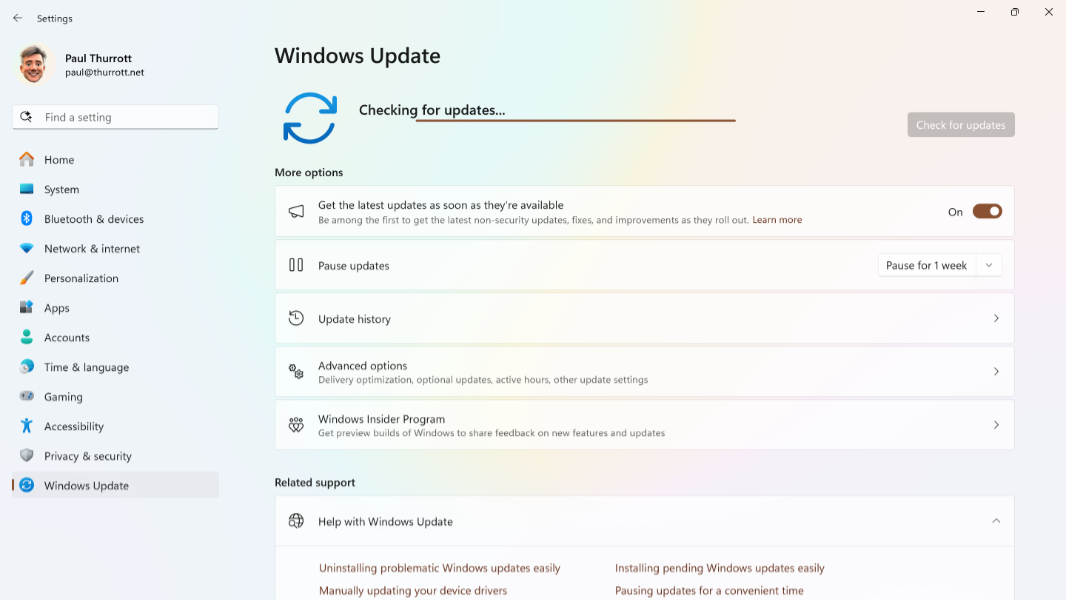
Today, Windows Update is used to provide system and driver updates, but Microsoft is evolving it to support app updates, too.
Why? Why not?
“Updates across the Windows ecosystem can feel like a fragmented experience,” Microsoft’s Angie Chen explains. “To solve this, we’re building a vision for a unified, intelligent update orchestration platform capable of supporting any update (apps, drivers, etc.) to be orchestrated alongside Windows updates.”
It’s unlikely that Microsoft is doing this because updates “feel” like a fragmented experience. Indeed, the way Windows works today mirrors how mobile platforms like Android and iOS work: Monolithic system updates occur through Windows Update, at the system level, while componentization allows it to provide smaller updates–apps, of course, but also smaller system updates–through its online store, the Microsoft Store. This allows it to be more agile, as these smaller updates don’t have to wait for bigger monthly or annual OS updates.
So, what problem does this solve?
As Chen describes it, the Windows Update orchestration platform, now available in private preview, orchestrates updates that are today delivered through different mechanisms into a single place, Windows Update. It provides developers with an API (oddly, based on the Windows Runtime, or WinRT) that they can target so that their apps can provide updates through Windows Update, rather than using the Store or their own systems. Windows Update will intelligently schedule updates, provide a simplified notification experience, support admin policies, and provide future improvements automatically.
So this is really about third-party apps. Some developers won’t or can’t put their apps in the Microsoft Store, so they’re forced to provide their own update mechanisms. With this platform, Microsoft can offload that requirement, which benefits developers, and it can centralize those updates with a known-good system, providing admins with better control over what gets updated and when. This should be a better user experience for end users as well, since individual apps won’t be updating at seemingly random times.
App and management tool developers can join the private preview by emailing Microsoft, which is a bit odd.