Lenovo Yoga Pro 9i Aura Edition 16 First Impressions
- Paul Thurrott
- Aug 16, 2025
-
6
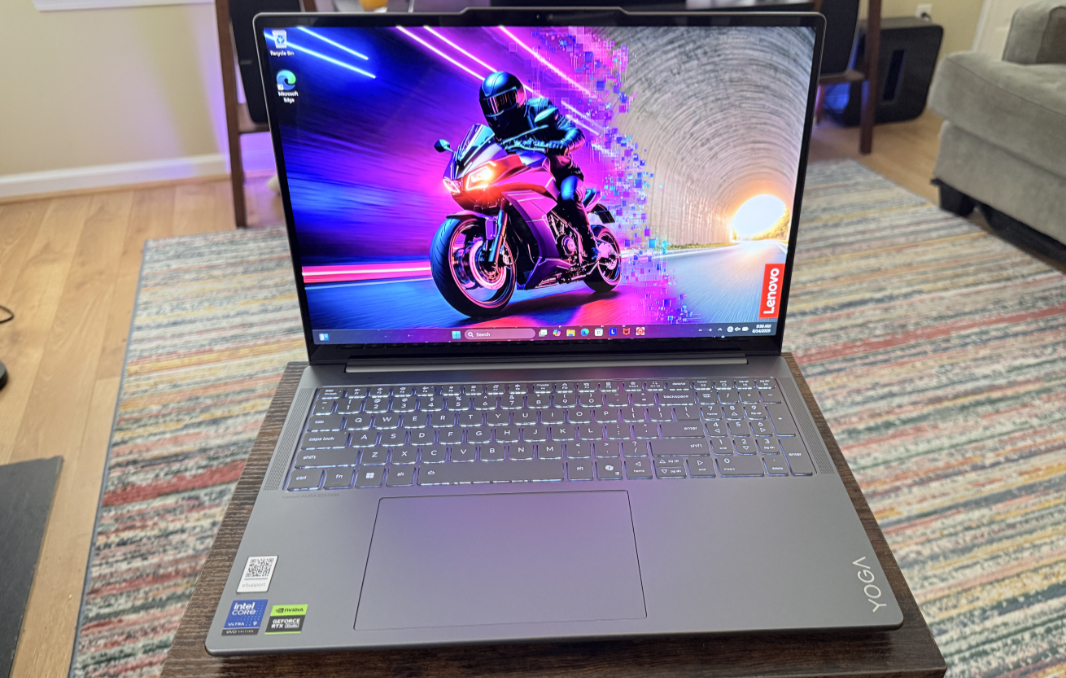
I’ve written repeatedly about how well any modern mainstream laptop can play games these days, a transformative capability that makes this versatile form factor even more versatile. But the 10th generation Lenovo Yoga 9i Aura Edition 16-inch laptop, with its powerful Nvidia GeForce RTX 5070 graphics, makes a compelling case for “you get what you pay for.” Meaning it makes a mockery of mainstream laptops when it comes to overall performance and graphics quality.
Granted, it does this with a constant, jet engine-like whooshing of fan noise, so much so that I’ve been turning up the volume more than usual while playing games. But it’s worth it: Where the latest Intel- and AMD-based mainstream laptops run Call of Duty: Black Ops 6 at roughly 30 to 60 FPS and what I’ll call low to medium graphics quality, the Yoga Pro 9i pegs the needle. At a native 2880 x 1880 and with graphics quality set to high/ultra, this laptop routinely delivers 140 to 150 FPS.
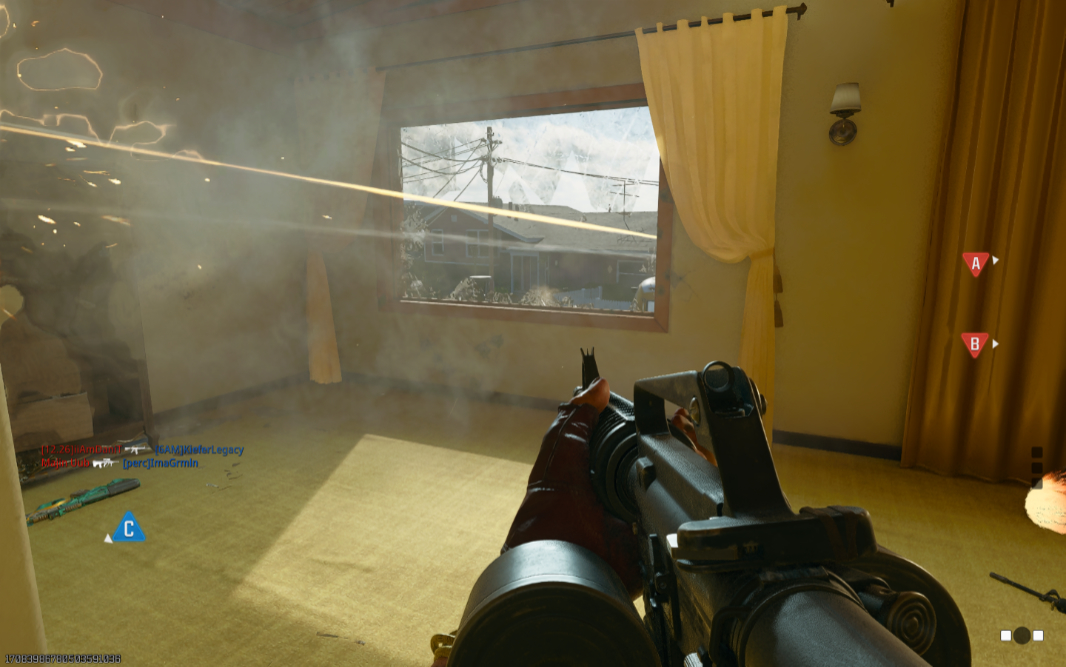
But it’s not just that. Using this laptop to play Call of Duty, I see details in the game I’d not seen before. Wispy, transparent smoke moving and then dissipating. Little leaves and blades of grass blowing around during lulls in the mayhem. Little broken corners of glass in windows that were previously blown out by explosives. And so on. And it got even more impressive when I enabled HDR.

Everything about this laptop is high-end and tailored to the performance-heavy needs of gamers, creators, engineers, and others who want the PC equivalent of a muscle car.
The processor is an unusual and high-end Intel Core Ultra 9 285H with 16 cores–6 performance, 8 efficient, and 2 low-power efficient–16 threads, and a clock speed of up to 5.4 GHz. It supports 32 or 64 GB of LPDDR5x-8400 dual-channel RAM, meaning that, yes, 32 GB is the minimum. And you can configure one or two 1 TB M.2 2242-based PCIe Gen4 TLC SSDs for storage.
The dedicated graphics you get is determined by the configuration, but it will be an Nvidia GeForce RTX 5050, 5060, or 5070 laptop GPU with 8 GB of dedicated GDDR7 RAM. And there are two display choices, both of which are 16-inch matte panels with a 16:10 aspect ratio and a 120 Hz refresh rate.
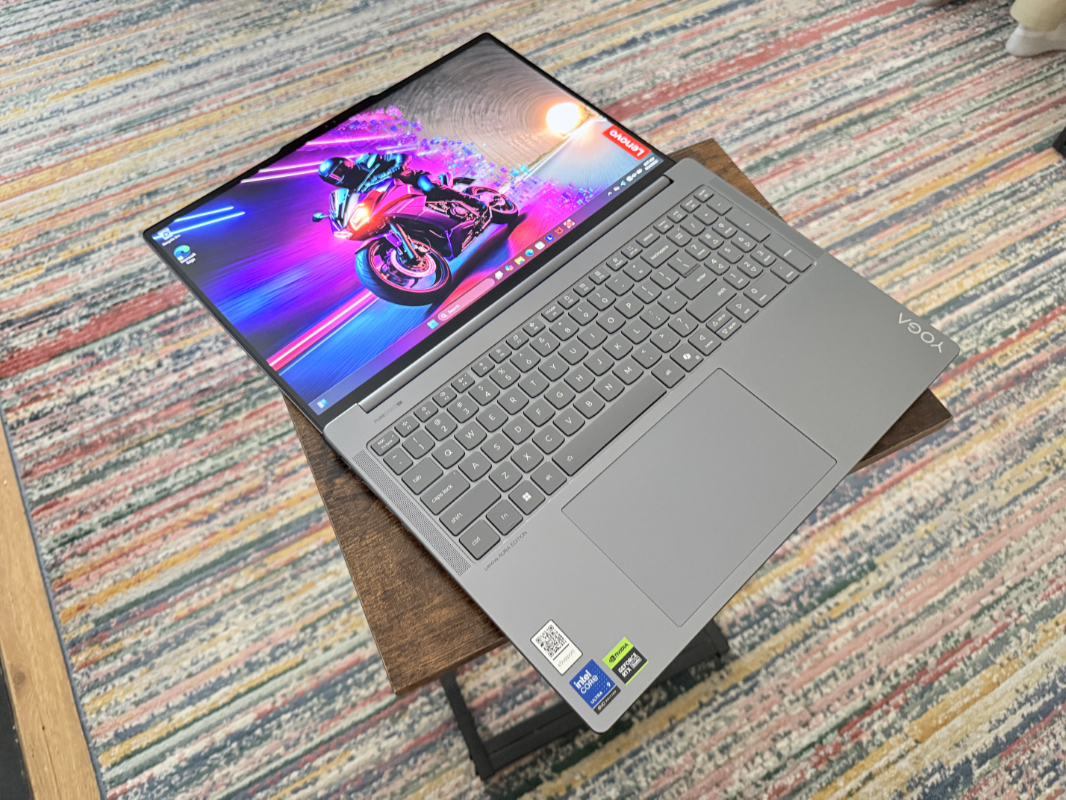
The base display, lacking a better term, is a 2.8K (2880 x 1800) OLED PureSight Pro panel with 100 percent coverage of the sRGB color gamut, 99 percent coverage of Adobe RGB, Dolby Vision/HDR 1000, and TÜV Low Blue Light, Eyesafe, and TÜV Flicker Free certifications that emits 500 nits of light for SDR content and 740 nits for HDR.
But you can also opt for a 3.2K (3200 x 2000) tandem OLED PureSight Pro panel with 100 percent coverage of the sRGB, P3, and Adobe RGB color gamuts, Dolby Vision/Display HDR TrueBlack 1000, and TÜV Low Blue Light, Eyesafe, and TÜV Flicker Free certifications that emits 1000 nits of brightness with SDR content and 1600 nits (!) for HDR.
PC makers typically send me maxed out configurations, but the Yoga Pro 9i I’m reviewing is actually a lower-end configuration. It has 32 GB of RAM, a single 1 TB SSD, and the 2.8K display. This display is glorious. And it lies flat.
Connectivity is as modern as can be, with Wi-Fi 7 and Bluetooth 5.4. There’s a 5 MP webcam with a Windows Hello-compatible IR sensor, a time of flight (ToF) sensor, and an electronic privacy shutter, plus a 4x microphone array. There are four speakers in total, two tweeters and two woofers. Also glorious. And necessary to mask the fan roar that kicks in when gaming or, I assume, doing other work that cranks up the processor and GPU.

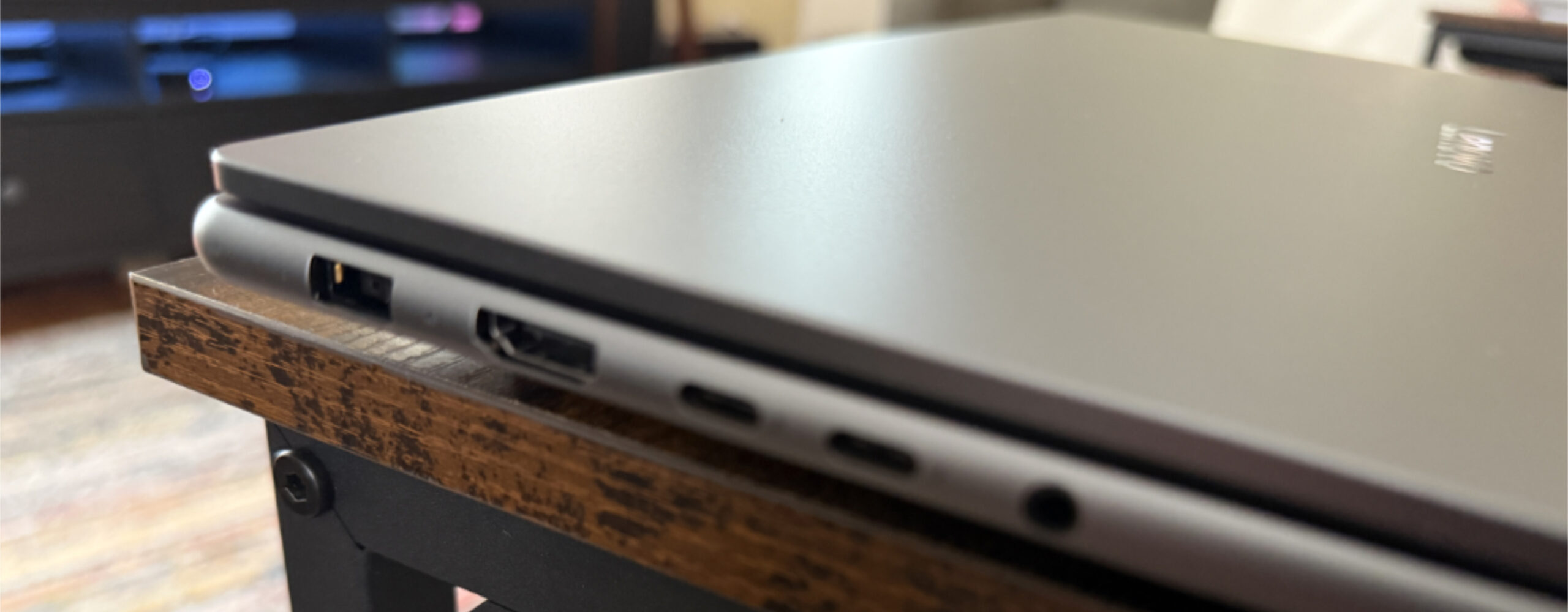
Expansion is solid, with a good mix and modern and legacy ports. But with all this room, it’s too bad that Lenovo couldn’t have put at least one USB-C port on each side.
The left side of the laptop features a proprietary charging port, a full-sized HDMI 2.1 video-out port, two 40 Gbps Thunderbolt 4/USB4 ports (with Power Delivery 3.0 and DisplayPort 2.1) , and a microphone/headphone combo jack.
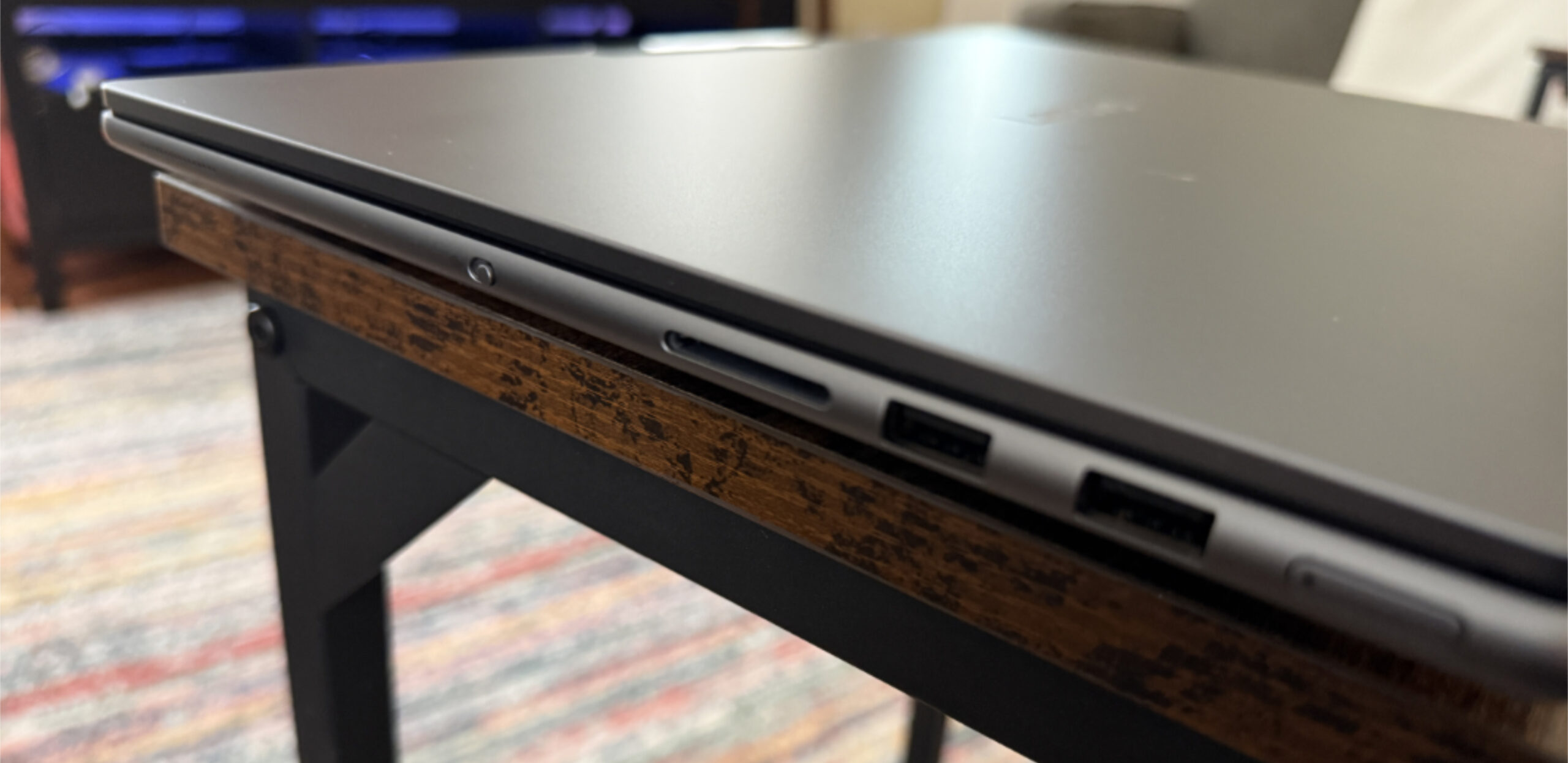
And the right has two 5 Gbps USB Type-A ports, one with always-on power, and a full-sized SD card reader.
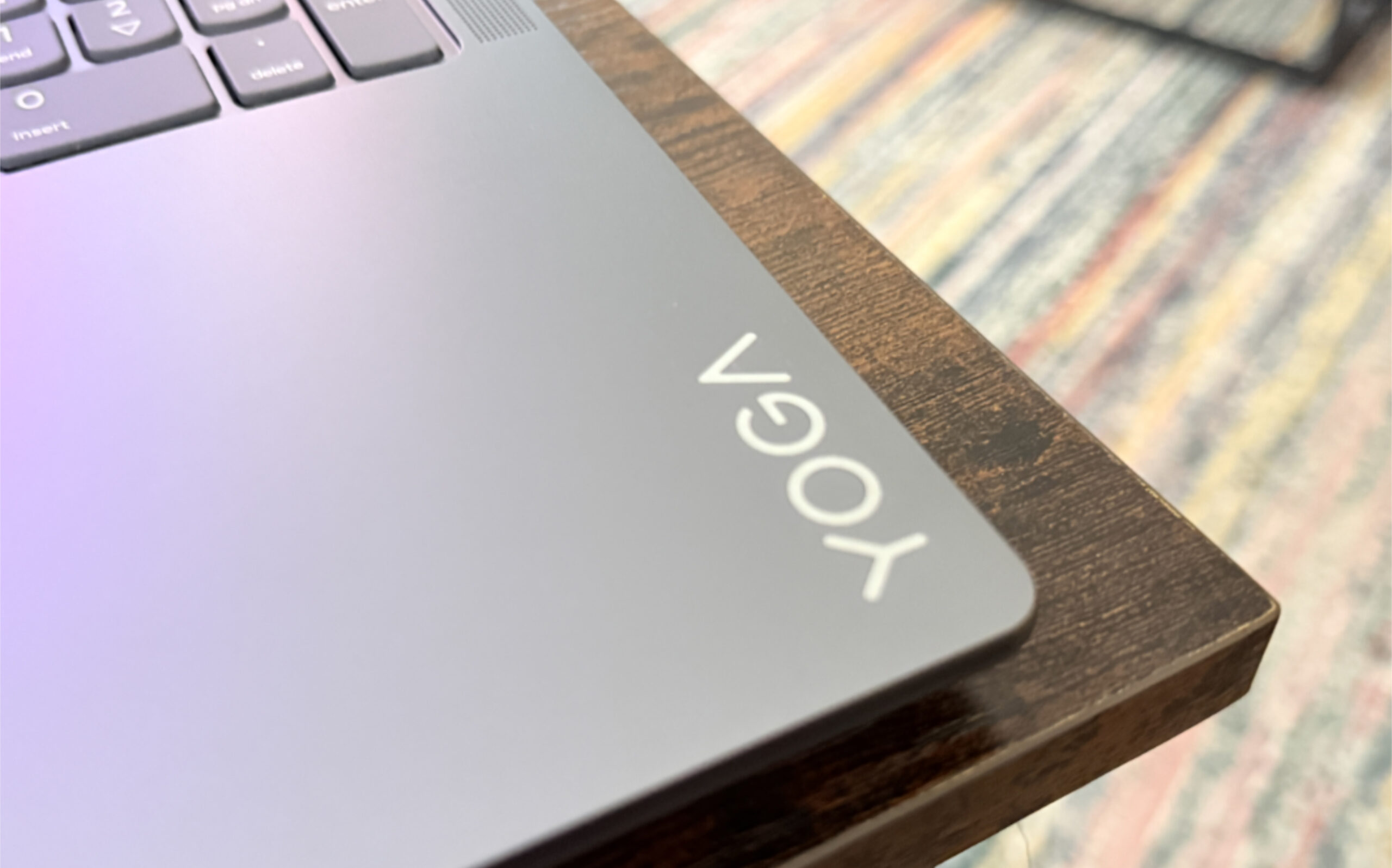
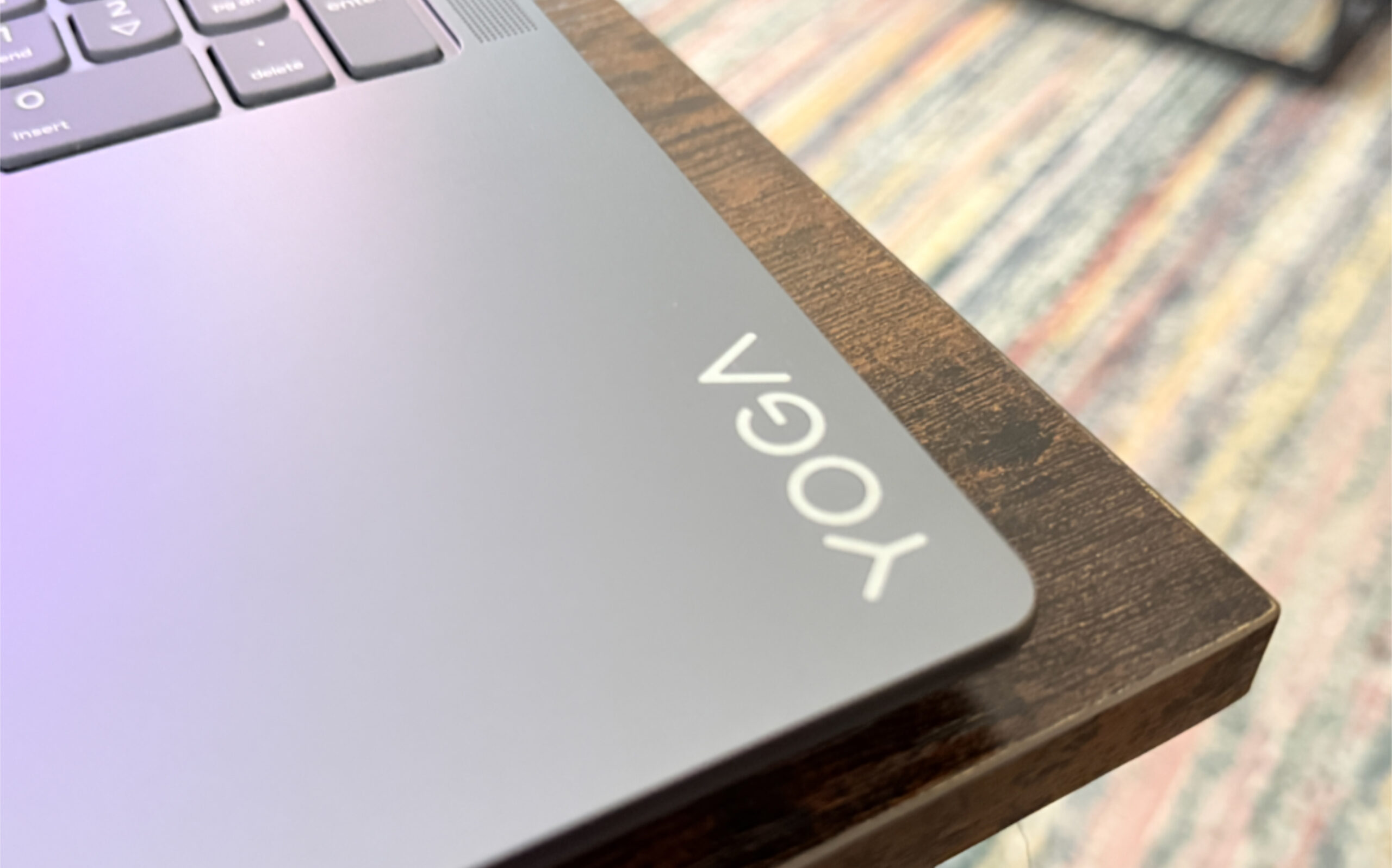
The keyboard and touchpad both take advantage of the copious real estate on the bottom deck. The former includes a numeric keypad, which is unfortunate, and the touchpad is enormous. The keyboard is flanked by two smaller speaker grills and it’s a slightly darker gray than the Luna Grey of the aluminum body.
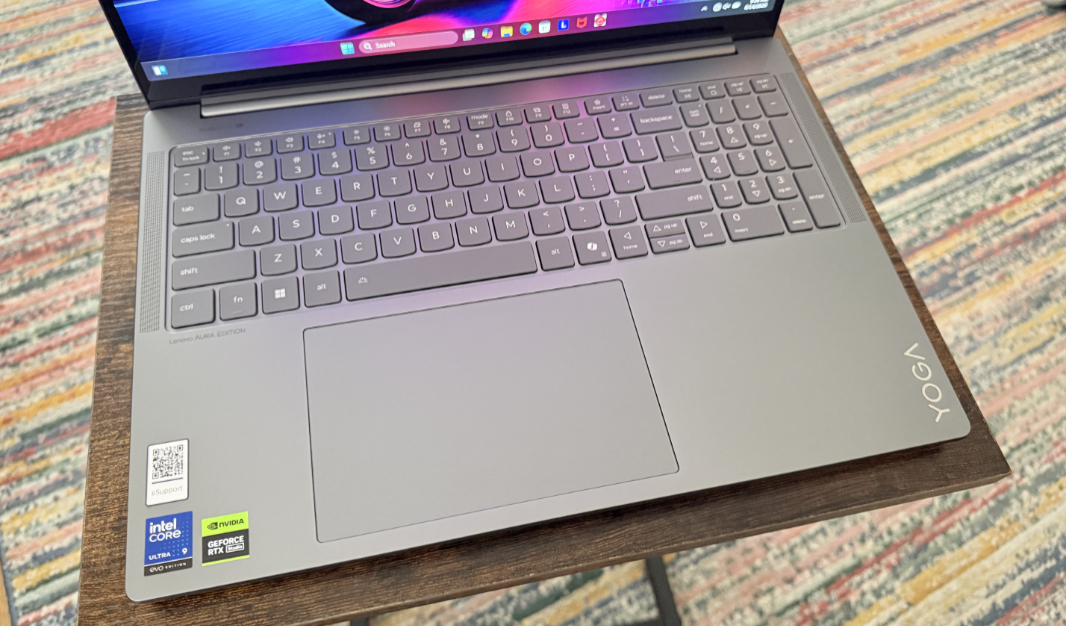
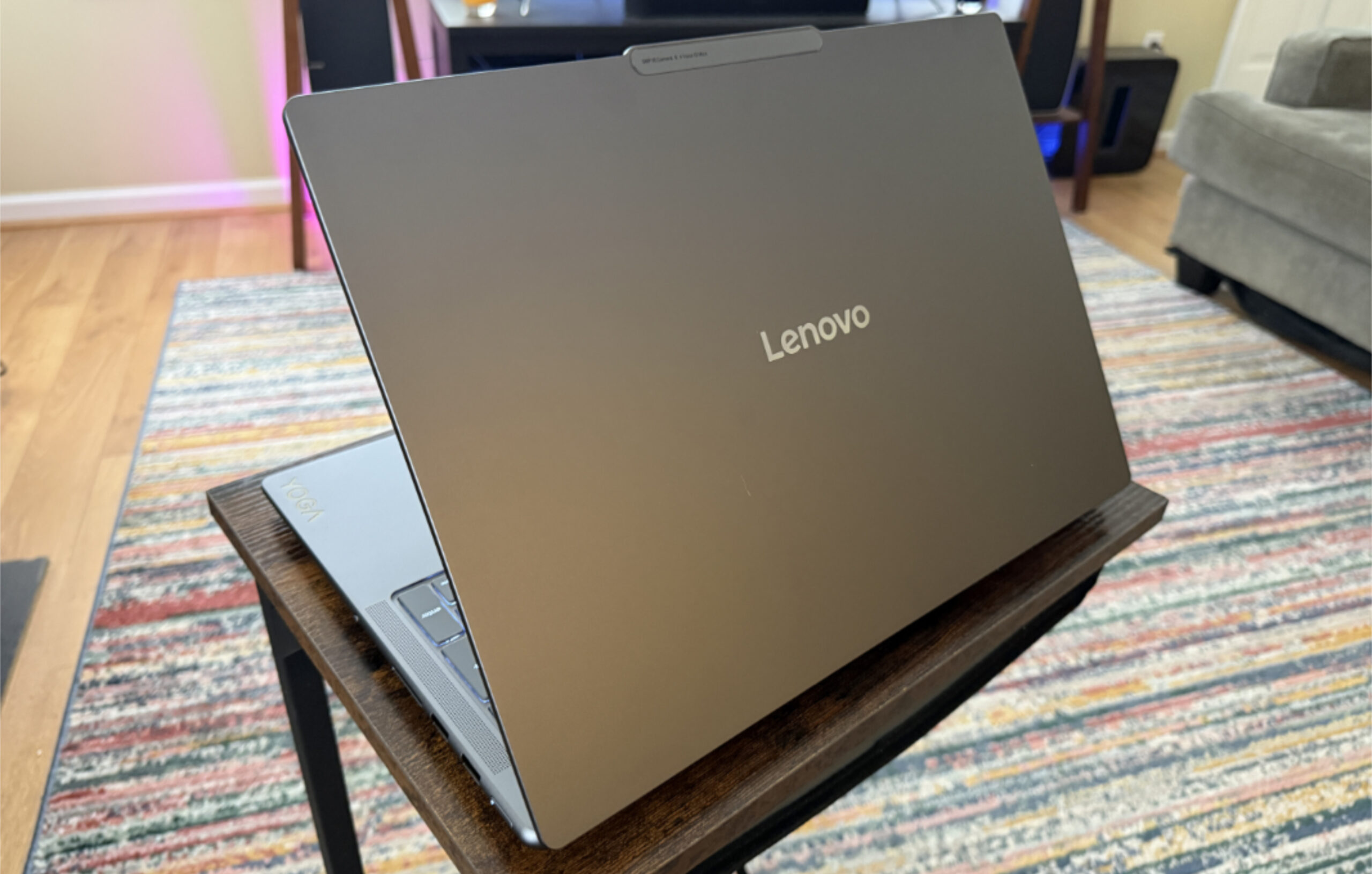
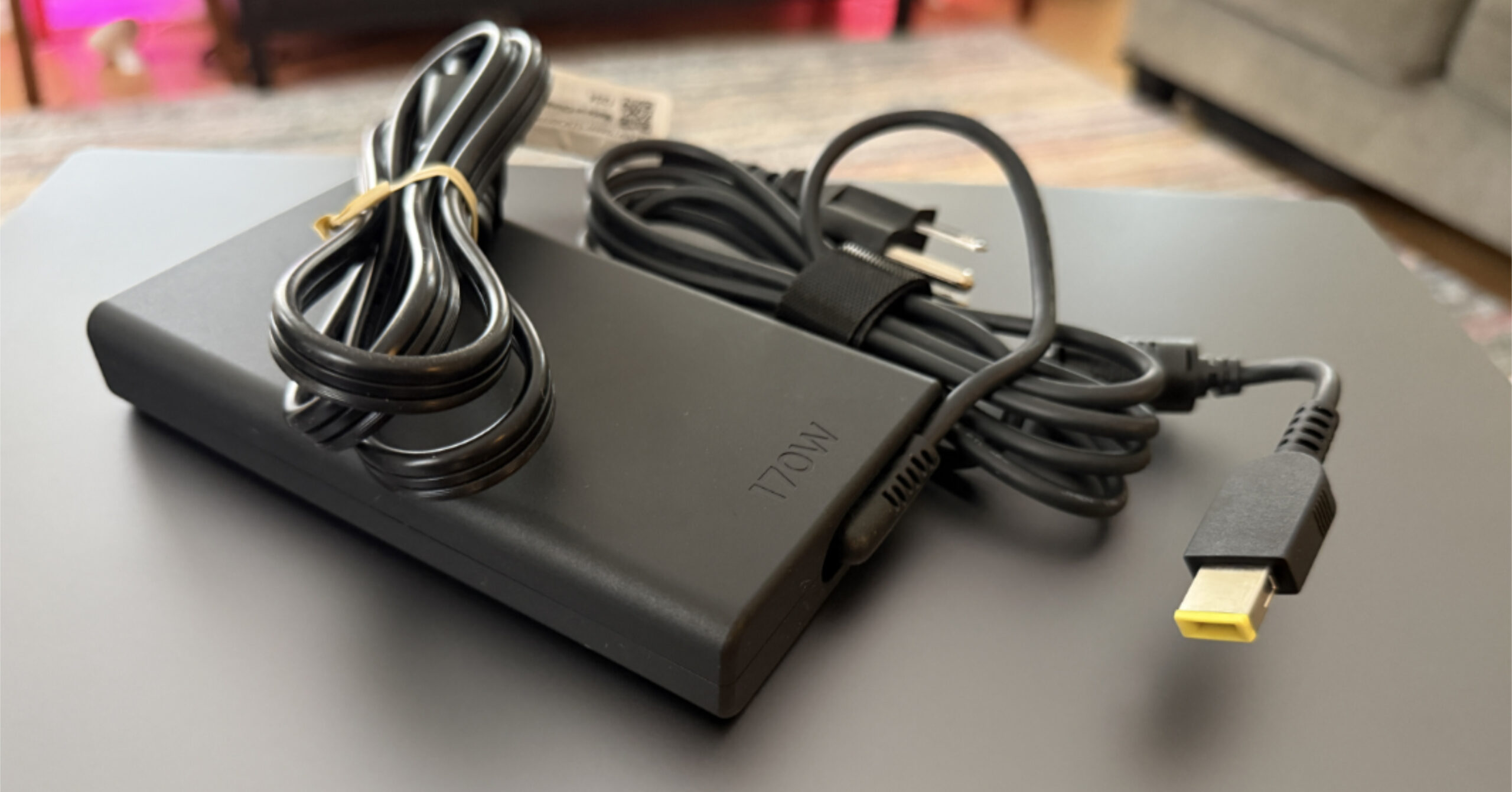
That body is big but also surprisingly thin, relatively, at 14.28 x 9.99 x 0.7 inches. And it’s quite heavy at 4.25 pounds. Portability will likely be less than ideal, but the mammoth and proprietary 170-watt charger can charge the laptop’s 84 watt-hour battery to 3 hours in just 15 minutes.
As a consumer-focused product, the Yoga Pro comes with a bit of crap, like an Adobe Creative Cloud trial, McAfee, and a Lenovo Subscription Marketplace in addition to several other Lenovo, Nvidia, and Intel utilities, and Dolby Access. As an Aura Edition laptop, it has three unique features–Smart Modes, Smart Share, and Smart Care–that Lenovo co-created with Intel now that Intel Unison (oddly, still bundled here) is winding down.
Pricing starts at about $1900, but I’d look for one of Lenovo’s regular sales.
More soon.