Mind the Gap (Premium)
- Paul Thurrott
- Aug 05, 2024
-
0
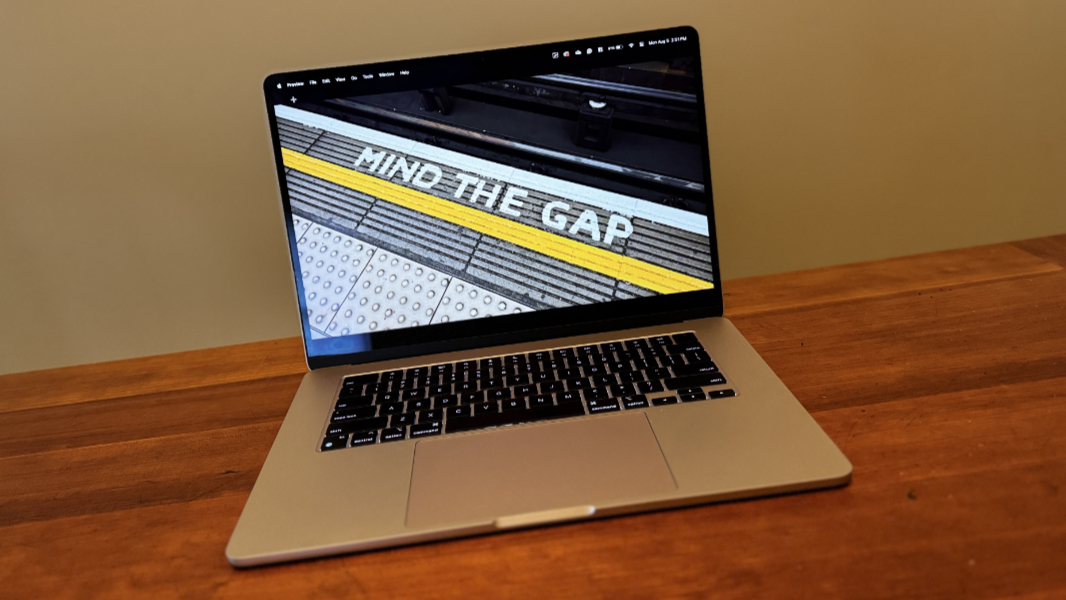
Windows fans are taking a long-awaited victory lap thanks to the success of the Snapdragon X Copilot+ PC platform. But we’re not done yet: The MacBook Air still comes out ahead in some key ways, thanks in part to some remaining hardware and software advantages, but especially because of the strength of Apple’s integrated ecosystem. Microsoft and its silicon and PC maker partners will never fully emulate the combined advantages that Apple gives to those customers who go all-in. But that’s not a fair bar, as Apple likewise can’t counter some of the advantages inherent to the Windows PC market. The question, as always, is whether PCs can close the gap enough to be “in the ballpark.”
I’ll start with the hardware.
Hardware
As I noted in my review, the Snapdragon X-based Surface Laptop 7 is a viable Windows laptop to Apple’s MacBook Air M3. Indeed, Surface Laptop has always been about bringing the MacBook Air experience to the PC market, not that Microsoft ever explicitly admitted to this. It has a handsome, minimalist, and wedge-shaped design that clearly evokes the iconic MacBook Air, offers minimal expansion capabilities, and comes in two sizes, roughly matching what Apple provides. From a mile high, these computers are quite similar, if not nearly identical.
But after spending months with the MacBook Air, it’s not difficult to see where Surface Laptop stumbles and falls short enough. The 15-inch versions of each laptop are roughly the same size, but the Surface is demonstrably thicker and heavier: At 3.67 pounds, Surface Laptop is roughly a third of a pound heavier than the 3.3-pound MacBook Air, and while that may not seem like a big difference, it’s quite noticeable in use. Some of this is no doubt just practical reality, but some of it is also about paying attention to the details: Where the Surface feels dense with off-centered weight, the MacBook Air’s weight is balanced, and I think that contributes to it feeling lighter.
The MacBook Air also provides a more modern design now, and it no longer uses the wedge shape that Microsoft still emulates with Surface Laptop. That doesn’t bother me looking at the two side-by-side, but the Apple design is equally thin at all points, which, again, contributes to the advantage noted above.
But I should note, too, that the MacBook Air is considerably thinner and lighter than the MacBook Pro models that share this design. Were those the standard for measuring Microsoft’s success, this would be more of a toss-up. MacBook Pro, in 14- or 16-inch guise, is a brick of a laptop. I was almost shocked by this when I took a look at them in Mexico back in June. The 14-inch models weigh 3.4 to 3.6 pounds and are 0.61 inches thick, vs. 0.45 inches for the Air. And the 16-inch versions are huge, 4.7 to 4.8 pounds, and 0.66 inches thick. But Surface Laptop, inexplicably, is even thicker in 15-inch form, at 0.72 inches.
I pointed out some other fit and finish issues with Surface Laptop, like the non-identical curves of the display lid and display edges. And let’s not forget the Surface Laptop fan: It doesn’t come on that much, but it’s there. The MacBook Air is always silent. That’s the dream.
When I think about the MacBook, the primary takeaway is that magical, seemingly impossible combination of attributes: The build quality, thinness, lightness, performance, silence, battery life, reliability, and consistency. Surface Laptop comes tantalizingly close, with reliable instant-on capabilities, good quality all-around, and terrific battery life. It’s in the ballpark. But it also falls short across the board.
Software
This one will be quick. Software is where Microsoft comes out ahead: Despite its growing enshittification, Windows 11 is dramatically better than macOS when it comes to basic multitasking consistency and efficiency in day-to-day work. To get the Mac up to that level, you need a handful of third-party utilities. And perhaps the next version of macOS, Sequoia, which will finally pick up reasonable Snap-like functionality. And even then, you can only sign in with your finger, not your face. Though Apple, unlike Microsoft, will force you to use a PIN or even your password sometimes for some freaking reason.
But there are exceptions here, too. The Mac’s touchpad gesture support is ungodly good. It has a better (and true) full-screen mode that I love, especially in tandem with those gestures. There’s no crapware or spying, and some of the bundled apps in macOS are quite good.
Also, did have a serious–and odd–issue with the Surface Laptop mouse cursor: As promised, I reset the PC after I reviewed it to see if that might fix it, but it did not.
Ecosystem
Even non-technical Apple fans can quickly identify the broader ecosystem as the single biggest advantage of choosing this company’s products over the competition. They know not only that everything just works, but that everything works together too. And even with my semi-limited exposure to Apple’s broader set of experiences–which, come to think of it, isn’t that limited at all–I immediately saw some of these benefits. For example, the seamless ability to copy and paste between my iPhone and the Mac. The AirPlay capabilities that factored into my Sonos experiences, capabilities I do not get with Android. The way a software keyboard pops up on my iPhone whenever I use search on Apple TV, which so much more efficient than using the remote. The way AirPods 2 switch seamlessly between my iPhone, iPad, and Mac, without needing any configuration or even thought on the user’s part.
It just works is the phrase we’re all thinking, and if we’re being honest with ourselves, this is said most often in jest in the Windows world. But that short list above is only hitting on the tip of the proverbial iceberg when it comes to Apple’s cross-device capabilities. There is so much more. And those advantages are so deep and broad, and seamless and reliable, that one might be forgiven for buying into the lock-in that’s required. For succumbing to the Matrix-like warmth of Apple Knows Best.
And sometimes, Apple does know best. Sometimes.
My approach to Apple and the personal technology products I use has shifted somewhat over the years. But since Steve Jobs returned to Apple in the late 1990s, modernized the Mac starting with Mac OS X, embraced digital media, entered the devices market with the iPod, revolutionized personal computing with the innovative iPhone, and then ushered in (but didn’t fully deliver) the poorly named post-PC world, I and many others who align with Microsoft, Windows PCs, and/or open systems have faced a reckoning. I will be writing on that topic soon, but the short version is that the Dark Side is indeed compelling. And I mean that in a mostly light-hearted way: There are tradeoffs to everything, and while it’s perhaps too easy to refer to any embrace of Apple as selling one’s soul, there’s also a sliver of truth there. In the end, though, you have to do what’s right for you.
And many, many people have chosen Apple.
It starts with the iPhone, as you all know. Apple’s smartphone platform may control just 28 percent of the market by usage worldwide, according to StatCounter, but it’s dominant in the United States (with 56 percent share, over double that of Samsung, its next-biggest competitor). (This explains why the U.S. government believes Apple has a monopoly: The legal bar is tied to market power so durable that the product’s owner can ignore competition, as Apple does. And with 65 percent market share–i.e. unit sales–Apple clears the precedent hurdle: “Courts typically do not find monopoly power if the firm has less than 50 percent” market share, the FTC notes.)
Most would then point to Apple’s other hardware devices and peripherals, with the iPhone providing a “halo effect” that causes its satisfied customers to seek out its other similarly high-quality products. But here’s something I didn’t make note of until after I wrote up the company’s most recent earnings report: Apple’s Services business isn’t just its second-biggest business, after the iPhone. It was also bigger, by revenues, than all of Apple’s other businesses combined. That is, Service delivered $24.2 billion in revenues in the quarter, while the Mac, iPad, and Wearables, Home, and Accessories delivered combined revenues of $22.2 billion. I could be wrong, but I believe this is the first time that happened. This may be peak Apple, lacking a better term.
The many ways in which Apple’s products and services are intertwined are almost too complicated to even comprehend. But when you as an iPhone-using Apple customer survey its other hardware products–Mac, iPad, Watch, TV, AirPods, whatever–you know not only that they will work well but that they will work together. And this is doubly true of the Services. While I’m sure there are random exceptions, services like iCloud+, Apple TV+, Apple Music, whatever, don’t just work with the iPhone, they work with most or all of Apple’s other devices as appropriate. And in a virtuous cycle sense, this cross-ecosystem integration is the ultimate aphrodisiac in that the more you buy in—to its hardware and services–the more valuable each is.
This is pretty obvious, so a single example will suffice. Apple Music offers whatever value if you use an iPhone. But because it works everywhere across the ecosystem, and can be shared with any family members through a Family Plan, it can be wherever you are at all times. Apple Music is also a rare example of an Apple offering with cross-platform benefits: It’s available to you on Android, in Windows, and even on the web. Each time you accept the trade-offs of an Apple product or service, you’re one step further inside the wall around its garden. And as the gate closes behind you, metaphorically speaking, you start to care less and less about the high-minded ideals about open solutions or whatever else you have held.
This may feel hypothetical, but it’s not. The benefits are real.
In addition to the handful of advantages I noted above, you get AirDrop file sharing, Handoff “pick up where you left” functionality, the ability to use your iPhone as your Mac’s webcam, and the ability to scan a photo or document or sign a document on your iPhone and have it appear, automatically, on your Mac. There’s Universal Control. You can use your iPad as a second display for your Mac, and that can be a dumb display or a multitouch- and Apple Pencil-compatible display, so you can take advantage of the device’s unique capabilities. You can send and receive text messages seamlessly on the Mac, iPad, and Watch. Make and receive phone calls on your Mac. Unlock your Mac with your Watch. Instant Hotspot, so you can use your iPhone’s connection from your Mac or iPad without having to configure something on the phone first. It goes on and on and on.
Microsoft–and, to a lesser degree, its PC maker partners–try to emulate some of these capabilities in Windows. We have Phone Link, which works OK when it works at all, but is unreliable and frustrating, and requires certain expensive flagship phones for certain features. And Intel’s Unison app, which is only available to some customers on some PCs. These only work well or at all with Android phones, of course. But because Windows and Android are made by companies that can’t seem to partner or agree on anything outside of web browsers, it’s never seamless. It will always be a subset of what Apple can do, done less well.
In some ways, we’ve grown numb to this. Those who despise Apple or just make other choices simply suffer, in silence or not, as everything fails around them or doesn’t work in the first place. We transfer files by emailing ourselves, or via USB-based sneaker net. We enable our phone’s hotspot on the phone manually and then connect to it on the PC, rationalizing that it only takes a few seconds. We suffer through all the ads on Roku and Fire TV … for some reason. Pretend that Miracast makes any sense at all.
Many of us just don’t know any better. And Microsoft keeps trying. Its many attempts to expand the capabilities of Windows Share, which I’m positive almost no one uses anyway (I do, daily) and the File Explorer-based access to an Android phone’s file system (even over Wi-Fi) are just two recent examples. But the bar is so high here. And it’s clear from Phone Link alone that the dream is just that, a dream. We’re never going to get there.
This level of functionality has been good enough so far. Despite all its impressive advances, Apple still controls less than 10 percent of the PC market–Mac market share was 8.7 percent at the end of 2023–and Windows 11 has improved to the point where even the Windows 10 diehards are grudgingly starting to upgrade. Thanks to the new Prism emulator in version 24H2 and the hardware advances we get from Qualcomm’s Snapdragon X chips, Windows 11 on Arm is suddenly a triumph after years of embarrassing results.
And yet, we still have so far to go. Windows, on x64 or Arm, is more productive, “better” for work, assuming work for you is what I think of as traditional PC-based productivity. But creatives, especially, and those who think and buy for themselves, have long chosen the Mac, and these ecosystem-based advantages are a big selling point. As are Apple’s other devices, most of which are pretty terrific. And consumers? We can see where their heads are at in the smartphone share numbers. We need to be honest about all that. And honest about the challenges, some insurmountable, that Microsoft and the Windows ecosystem face when trying to compete effectively against this threat.
So yes, let’s celebrate the success that is Snapdragon X, Copilot+ PC, and Windows 11 on Arm. We just made up a lot of lost ground. But from a broad perspective, we’re still behind in so many ways. There is more work to be done.

Gain unlimited access to Premium articles.
With technology shaping our everyday lives, how could we not dig deeper?
Thurrott Premium delivers an honest and thorough perspective about the technologies we use and rely on everyday. Discover deeper content as a Premium member.