Google Pixel 10 Series Preview
- Paul Thurrott
- Aug 27, 2025
-
10
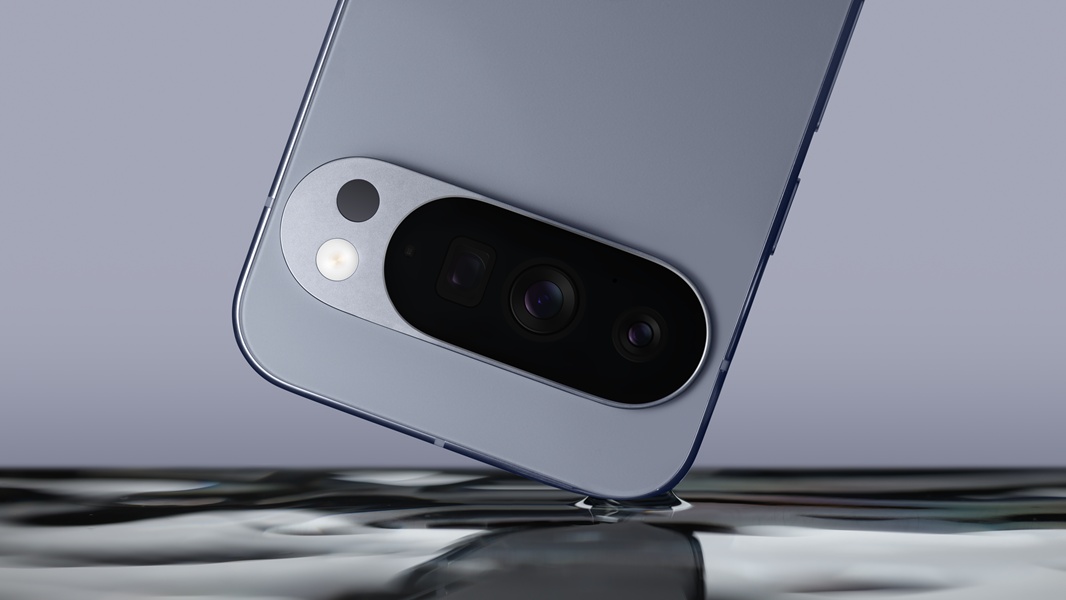
Well, this was unexpected: I had preordered a Pixel 10 Pro XL at great expense, but now Google is sending me a review unit. And not just one review unit: I’m also getting the Pixel 10 and the Pixel 10 Pro on loan. So I will be reviewing all three of the Pixel phones that launch this Friday.
It’s impossible to overstate how good this is. I typically buy a new flagship Pixel phone each year, but this gets expensive and I’m not really able to compare individual models against each other. So I’ve had to pick and choose.
This year will be different, as I can broaden the discussion considerably beyond the model I would (and did) purchase with my own money. It’s also good timing, as I will be in three far-flung destinations—Berlin, Germany for IFA, Mexico City, and then Maui, Hawaii for the Snapdragon Summit—over the next month. This gives me a great opportunity to test each phone on-the-go, especially the respective camera systems.
Here’s what’s happening.
? What Google announced
At its Made by Google 2025 event last week, Google announced a lot of new hardware, including the Pixel 10, Pixel 10 Pro, and Pixel 10 Pro XL smartphones, the Pixel 10 Pro Fold, a family of Qi2-compatible Pixelsnap accessories, Pixel Watch 4, Pixel Buds 2a, and the (otherwise unchanged) Pixel Buds 2 in Moonstone. It also announced several software innovations across Fitbit, Gemini Live, and Google Photos, as well as Gemini coming to Google Home smart displays and smart speakers in a later update. After the event, we all realized that Google had also slyly previewed a new Nest Mini smart speaker during the event.
The Pixel 10, Pixel 10 Pro, Pixel 10 Pro XL, Pixel Buds 2 in Moonstone and the Pixelsnap accessories are shipping to customers this Friday, though my preorder suggests that many will get them a day early, on Thursday. The Pixel 10 smartphones will include Android 16 with QPR1, a quarterly update that adds new Material Expressive 3 UIs across the system.
Other devices and software updates are coming later. The Pixel 10 Pro Fold and Pixel Watch 4 ship on October 9, for example, as do the Pixel Buds 2a. Gemini on Google Home and that mysterious Nest Mini speaker update are TBD.
? Pixel 10 series phones
In Pixel Matters (Premium), I wrote about my Pixel 10 Pro XL preorder, noting that this phone is one of the smallest year-over-year upgrades I can remember. This is fine on some levels, as its predecessor, the Pixel 9 Pro XL, is a nearly perfect smartphone with a modern design, incredible software and services capabilities, and one of the best camera systems I’ve ever used. But left unsaid was that the other Pixel 10 series phones are in many ways more interesting as upgrades for previous customers (or switchers). And that’s especially true of the Pixel 10.
? Pixel 10
Google has tinkered with its Pixel phone models over time, but the choices it offered last year–the Pixel 9, 9 Pro, and 9 Pro XL–continue forward this year, and each upgrade is roughly identical, physically, to its predecessor. Likewise, the base Pixel 9/10 and Pixel 9/10 Pro are all the same size (height, width, and thickness), though the Pros have higher resolution displays and other advantages.
As with the Pixel 9, the Pixel 10 provides a 6.3-inch Actua (OLED) display with a 2424 x 1080 resolution, 422 PPI pixel density, 20:9 aspect ratio, Gorilla Glass Victus 2 protection, and a variable 60 to 120 Hz refresh rate. The brightness is up, however, from 1800 nits to 2000 nits, and from 2700 nits of peak brightness to 3000.
The Pixel 10 battery is bigger than that of its predecessor, 4970 mAh vs. 4700, and you can now use a 30-watt or higher USB-C charger to achieve a 55 percent charge in about 30 minutes, whereas the Pixel 9 required a 45-watt or higher charger.
The Pixel 10 features the more efficient Tensor G5 processor, which enables Magic Cue, Camera Coach, Auto Unblur, Auto Best Take, Pixel Studio, Sky styles, Resize and move subjects, Portrait blur, Zoom Enhance, and other features (many of which, admittedly, will no doubt come to older Pixels in time).
Those are relatively minor changes, and what one might expect from a year-over-year upgrade. But Google is making major changes to the Pixel 10, too. And these make it the most interesting upgrade in this year’s Pixel family.
First, the Pixel 10 supports Qi2 wireless charging up to 15 watts. This is an improvement over the Qi-based wireless charging from the Pixel 9 because it supports all MagSafe (and Pixelsnap/Qi2) accessories via a built-in magnetic ring inside the phone’s back.
Perhaps even more impressively, the base Pixel 10 also provides a three-lens rear camera system for the first time. The 50 MP main lens from the Pixel 9 is replaced by a 48 MP main lens with very similar specs. The 48 MP ultrawide lens gets a downgrade to 13 MP, but is otherwise similar. And the new 10.8 MP telephoto lens, a first on the base Pixel, provides 5x optical zoom with 20x Super Res Zoom, compared to 8x on the Pixel 9 via its main lens. (The front-facing 10.5 MP selfie camera is unchanged.)
Beyond these big upgrades, much is unchanged. The Pixel 10 comes with 12 GB of RAM, 128 or 256 GB of storage, stereo speakers, on-device Gemini Nano, the Titan M2 security chip, and IP68 dust and water resistance just like its predecessor.
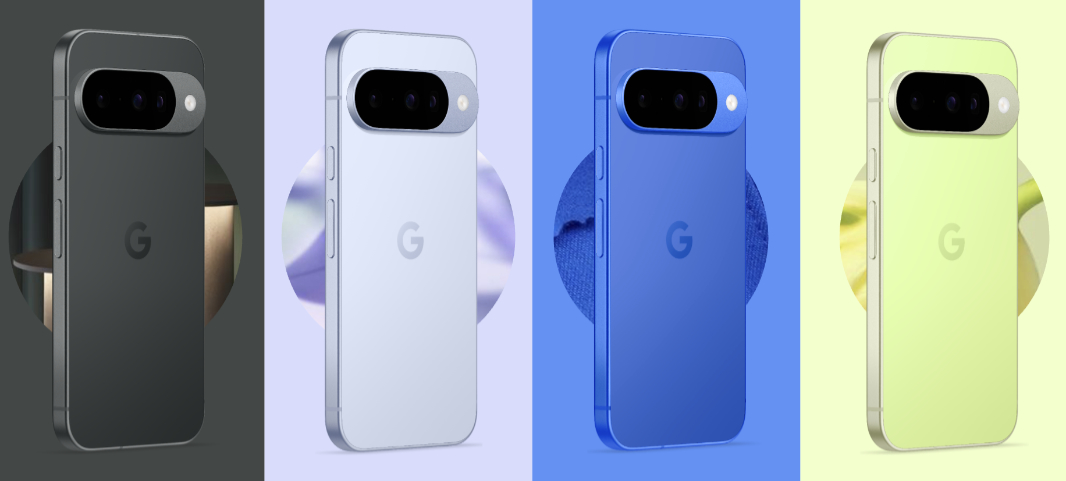
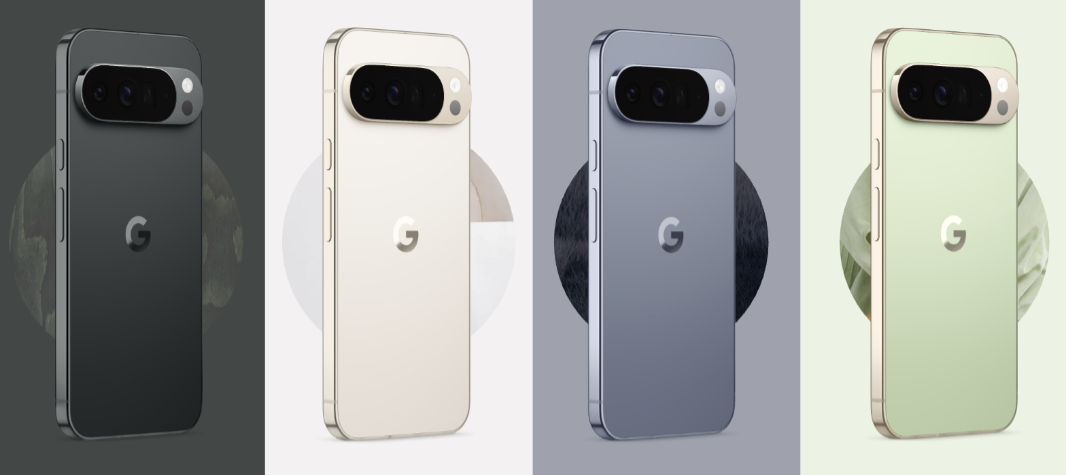
There are new colors, however, and one of them, Indigo, is particularly impressive. You can also purchase a Pixel 10 in Frost, Lemongrass, or Obsidian. The Pixel 9 was (and still is) available in Peony, Wintergreen, Porcelain, and Obsidian.
? Pixel 10 Pro
With the Pixel 10 stepping up to the plate with a faster Tensor G5 processor, Qi2 wireless charging, and a three-lens rear camera system, the differentiation between it and the Pixel 10 Pro is more subtle than was the case with last year’s Pixel 9 series models. And so anyone looking at the Pro will need to justify the $200 price difference: Where the Pixel 10 starts at $799, a great value, the Pixel 10 Pro starts at $999.
So what does $200 buy you?
The displays are the same size, but the Pixel 10 Pro display is a superior LTPO OLED panel with a higher resolution of 2856 x 1280 (495 PPI), an improved 1 to 120 Hz variable refresh rate, and slightly higher brightness (2200 nits) and peak brightness (3300 nits).
The form factors are identical in size, but the Pixel 10 Pro has a “silky matte back with polished finish spacecraft-grade aluminum frame,” whereas the Pixel 10 has a “polished back with satin finish spacecraft-grade aluminum frame.”
The Pixel 10 Pro has more RAM, 16 GB, and can be configured with more and faster storage: 128 GB and 256 GB as per the Pixel 10, but also 512 GB and 1 TB with Zoned UFS4 storage.
Like the Pixel 10, the Pixel 10 Pro has a three-lens rear camera system, but each lens is an upgrade: You get a 50 MP wide (main) lens, a 48 MP ultrawide lens, and a 48 MP telephoto lens with 5x optical zoom and 100x Pro Res Zoom.
The front-facing selfie camera is also superior, with a 42 MP resolution and a wider field of view. And the Camera app on the Pixel 10 Pro supports Pro controls, High-Res photos up to 50 MP, Video Boost, and Night Sight Video, features the Pixel 10 lacks.
These feel like meaningful upgrades to me, but I suspect the cheaper Pixel 10 will sell disproportionately well compared to previous generations because it’s closed the gap with the Pro so much this year.
? Pixel 10 Pro XL
The Pixel 10 Pro XL is the most incremental upgrade of the lot as it carries forward with basically the same display, and exactly the same camera system, storage, speakers and audio capabilities, and look and feel of its predecessor. Plus the starting price is now $100 more than it was a year ago because Google eliminated the 128 GB version. This makes sense given the quality of those three camera lens and the resulting file sizes of the photos one can take. But $100 is $100.
As noted, the Pixel 10 Pro XL form factor is physically unchanged, with the same dimensions, the same look and feel, the same iconic camera bar design as last year’s Pro XL. A year ago, I described this design as a “next-level” refinement that catapulted the Pixel, finally, into iPhone Pro Max territory. So the Pixel 10 Pro XL doesn’t move the needle at all. It comes in a few different colors, including the Moonstone of the unit I purchased, a pleasant blue gray color.
The Pixel 10 Pro XL is also heavier than its predecessor: It’s 8.2 ounces, more than the 7.8 ounces of the Pixel 9 Pro XL and the 7.99 ounces of my brick-like iPhone 16 Pro Max. The Samsung Galaxy S25+ weighs just 7.69 ounces, and while these numbers may all read as similar, the differences are dramatic. The S25+ is the only featherweight in the bunch. (My wife’s big Galaxy S24 Ultra weighs 8.18 ounces, so even that beast is less heavy.)
Granted, it’s as handsome as ever. This is a classy design, and maybe, just maybe, I can give Google as pass for wanting to keep it around a while longer without even minor tweaks.
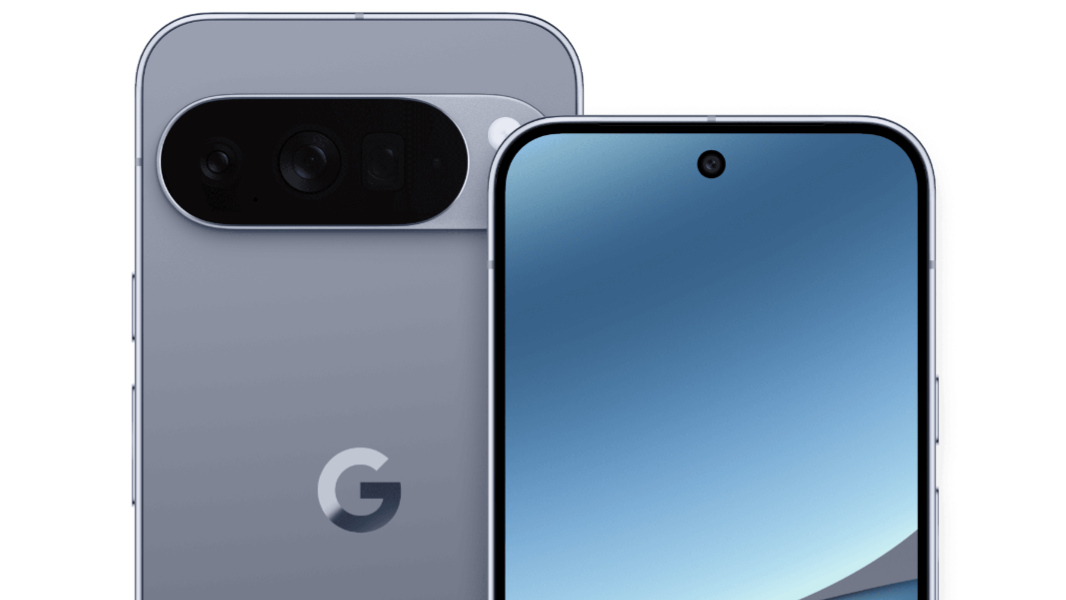
Well, there is one minor tweak: The “G” logo on the matte glass back of the device is noticeably bigger than that on previous Pixels, a change that’s true across all three phones. Like the camera bar and phone frame, it’s shiny and reflective and will catch people’s attention. Or would, had I not immediately protected by expensive new bauble with a case.
The screen, as noted, is mostly identical to that of its predecessor. It’s 6.8 inches on the diagonal, slightly smaller than the 6.9-inch display found on my iPhone. It still offers the same 2992 x 1344 resolution, with the same 486 PPI pixel density, the same 20:9 aspect ratio, the same Corning Gorilla Glass Victus 2 protection, and the same variable (1 to 120 Hz) refresh rate. But there is one difference, and this could make a small difference on those bright sunny days when it’s next to impossible to see the phone’s screen: The peak brightness has jumped from 3000 nits to 3300 nits. I know. Exciting.
Of far more interest, at least to me, is the new Qi2-based wireless charging. And unlike the Pixel 10 and 10 Pro, the Pixel 10 Pro XL supports the very latest Qi2 standard, meaning 25-watt wireless charging (as opposed to 15 watts). That and the improved wired charging capabilities–it supports up to a 45-watt PPS USB-C charger–and the slightly bigger 5200 mAh battery (which explains some of the weight increase), might help the overall battery life situation. And that’s important, as this has been a negative for Pixel in recent years.
What we’re left with is a bigger, heavier Pixel 10 Pro with a larger display and faster wireless charging. So with prices starting at $1199, $200 more than the Pro, it’s getting more difficult to justify. I very much prefer the larger display. But I would have liked to have seen a camera system upgrade, to be honest, a telephoto lens with 8x optical zoom, perhaps, as the coming iPhone 17 Pro Max is rumored to include. Maybe the 100x Pro Res Zoom will make up for that.
We’ll see.
⌚ What’s next?
I was invited to review the Pixel 10, 10 Pro, and 10 Pro XL a bit late in the game, and you will see the first reviews of these devices start appearing in other publications today. My review units arrive tomorrow, I believe, so I will publish a first impressions article soon thereafter, use the phones over the next month, and then review each of them at that time.
More soon.